EV Battery Manufacturers: Who Makes Them and What Matters
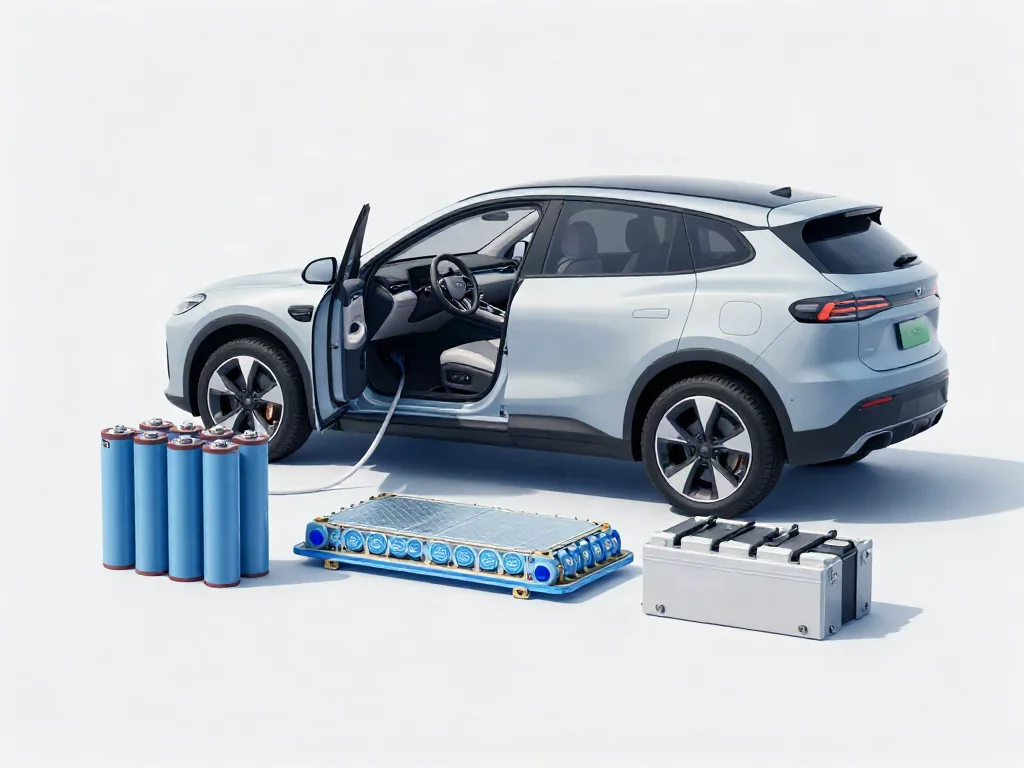
Battery EV companies sit behind every electric vehicle, even when the car badge is what shoppers notice first. Cell manufacturing, pack assembly, and vehicle integration are separate jobs, and the same automaker can use more than one EV battery supplier. Understanding CATL, BYD, LG, Panasonic, Samsung, and other EV battery makers helps explain range, charging, and longevity without treating any brand as a universal winner or an investment pick.
Who Makes EV Battery Cells and Assembles the Pack?
An EV traction battery pack starts with cell manufacturing, then battery cells are grouped into battery modules and assembled with structure, cooling, and a battery management system. Pack suppliers or automakers integrate that pack into the vehicle with thermal management and charging hardware. CATL, BYD, LG Energy Solution, Panasonic Energy, Samsung SDI, and SK On are established cell manufacturers and battery-system participants, and no single name covers every vehicle.
The vehicle badge alone does not identify the EV battery manufacturer. Automakers source cells from several EV battery companies and EV battery suppliers, use battery joint ventures, or assemble packs from purchased cells that can change by model year or factory. Claims about the largest EV battery manufacturers or the world biggest EV battery manufacturers need a defined measure, geographic scope, and reporting period before anyone can name top EV battery companies.
CATL, BYD, and EV Battery Manufacturing in China
China EV battery production includes independent cell makers and vehicle companies that also manufacture batteries. CATL supplies cells and battery systems to automakers, so a CATL EV battery appears under another company's vehicle badge. BYD builds vehicles and BYD EV battery products, including the Blade battery associated with lithium iron phosphate. EV battery manufacturers in China therefore follow more than one business model.
A supplier headquarters, a cell factory, and a vehicle assembly plant are separate facts, so a Chinese EV battery cell can be packed or installed elsewhere. Manufacturing origin alone cannot establish range, durability, or suitability. Lithium iron phosphate and nickel manganese cobalt cells appear in Chinese and non-Chinese supply, and usable battery capacity, thermal management, and the charging curve of the finished vehicle matter more than a factory's country.
LG Energy Solution, Samsung SDI, and Panasonic Energy
LG Energy Solution, still often found under older LG Chem battery EV and LG Chem EV battery pack names, is the LG EV battery cell business. Samsung SDI supplies Samsung EV battery cells to automakers. Panasonic Energy supplies Panasonic EV battery cells, including Panasonic lithium ion battery for EV programs historically tied to Tesla at specific factories and periods. Those relationships are program-specific, so one model year does not define every vehicle from that automaker.
Cylindrical, prismatic, and pouch describe cell shapes, not vehicle performance. Cylindrical cells appear in many Panasonic and Tesla packs, prismatic formats in some CATL and BYD packs, and pouch cells in various LG Energy Solution programs. A manufacturer's portfolio can include different chemistries and designs, so EV battery brands do not specify nickel manganese cobalt, lithium iron phosphate, or the finished charging curve.
What EV Battery Manufacturing in the United States Includes
US cell production, module assembly, and pack assembly are distinct jobs, and a plant may do only one. Panasonic Energy has produced cylindrical cells at Tesla's Nevada factory for Tesla programs. Ultium Cells, the GM and LG Energy Solution joint venture, has operated cell manufacturing in Ohio. SK On has operated cell plants in Georgia. Those commercial roles describe EV battery manufacturers in the USA without ranking quality.
Announced projects, construction, pilot production, and commercial output are different stages. A capacity target does not mean batteries are already in customer vehicles. Ford new EV battery plants and other joint-venture sites may still be planned or ramping while existing factories ship cells. US EV battery companies and interest in the top EV battery manufacturers in the USA should be judged by verified operator and activity, not as proof of the best EV battery.
How Tesla, Ford, GM, Hyundai, Kia, and Honda Source Batteries
Tesla EV battery supply mixes Panasonic, LG Energy Solution, CATL, and Tesla-made cells by vehicle version, factory, market, and period, so one nameplate can use different cells. Ford EV battery sourcing includes purchased cells, SK On joint-venture manufacturing, and licensed-technology announcements that are not packs already in customer vehicles. GM EV battery programs use joint-venture cells with LG Energy Solution and more than one pack design across the electric lineup.
Hyundai EV battery and Kia EV battery sourcing must be read vehicle by vehicle, because shared corporate ownership does not set the supplier, chemistry, or pack for every model. Honda EV battery programs are also vehicle-specific. Honda GS Yuasa EV battery work is a long industrial relationship, but any Honda EV battery supplier contract still has a scope and production status that may differ from batteries already in customer vehicles.
Battery Startups, Foxconn, and Huawei: Establishing Their Roles
EV battery startups can publish laboratory results that sound like a finished traction battery pack. A lab cell, a pilot line, customer validation, and commercial deployment in vehicles people can buy are different stages, and many battery companies for EV cars never reach series supply. Foxconn EV battery claims should be limited to confirmed battery or EV manufacturing with a stated production status, not assumed from broader electronics work.
Huawei EV battery searches often mix software, charging, and vehicle electronics with cell manufacturing. The documented role in a specific automotive project must be identified before attributing cell production, pack supply, or battery technology to Huawei. A partnership announcement or technology demonstration alone does not establish that an EV battery company already supplies traction cells for a vehicle consumers can buy.
What “Best EV Battery” Means for Range and Longevity
Who makes the best EV battery and who has the best EV battery are practical questions, not a single scoreboard. Best battery for EV use means adequate range, dependable charging, capacity retention, warranty coverage, and service support for that vehicle. Usable battery capacity and energy consumption set the range envelope, while temperature, speed, cabin conditioning, and load change real-world results, which is why the best EV car battery on paper can differ from the best EV battery range on a cold highway.
Chemistry, thermal management, charging controls, time, and use contribute to battery aging, so an EV battery maker's name is not a lifespan forecast. Charging curves and battery temperature shape charging stops, and temporary cold-weather range loss is not lasting capacity loss. Buyers comparing best battery EV claims should check the exact vehicle's battery specification, warranty, charging guidance, and any battery-health assessment. Traction packs are vehicle-specific systems, not interchangeable retail upgrades.