Engine Timing Chain Replacement: What Owners Should Know
Direct Answer
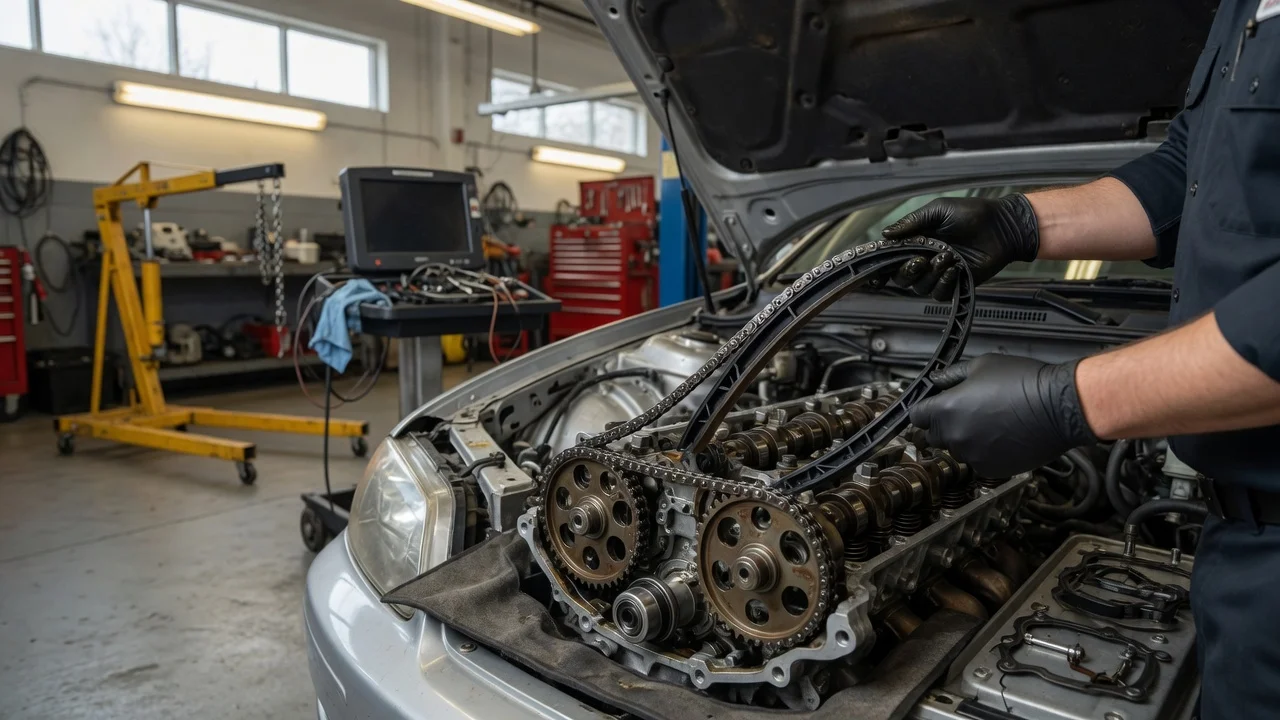
Engine timing chain replacement is a major mechanical repair that involves removing and installing the metal chain, guides, tensioners, and often the associated sprockets or gears that synchronize the crankshaft and camshafts. Unlike a timing belt, a timing chain is designed to last the life of the engine in many designs, but it can still wear, stretch, or develop problems from oil starvation, tensioner failure, or guide wear. Replacement is not routine maintenance; it is performed when a defect, excessive wear, or mechanical failure is diagnosed.
What a Timing Chain Replacement Covers
A complete timing chain repair usually includes the chain itself, the tensioner, the guide rails or shoes, and the sprockets. On engines where the chain drives the oil pump or balance shafts, additional chains, guides, and sprockets may need replacement at the same time. Accessibility varies widely by vehicle. On many front-wheel-drive models, the engine may need to be removed or lowered, while some rear-wheel-drive layouts allow the chain to be serviced with the engine in place.
Symptoms That Indicate a Possible Timing Chain Problem
Rattling or metallic slapping noise on cold start, especially for a few seconds after ignition; Diagnostic trouble codes for camshaft or crankshaft correlation, such as P0016, P0017, P0018, or P0019; Rough idle, misfires, or reduced power; Metal particles or plastic debris in the engine oil; Check engine light accompanied by timing over-advanced or over-retarded codes
Why Replacement Becomes Necessary
Wear is influenced by oil maintenance, oil pressure, tensioner design, and driving conditions. A stretched chain alters valve timing and can eventually skip a tooth. Broken plastic guide rails are a common failure point on engines that use them. Tensioner failure, sometimes caused by low oil pressure or a weak ratchet mechanism, can create slack that produces noise and accelerates wear. In interference engines, a skipped or broken chain can cause piston-to-valve contact and severe internal damage.
Typical Repair Scope and Complexity
Replacement is a labor-intensive repair because the timing cover, and often the valve covers, oil pan, and front accessory components, must be removed. The engine may need to be locked at top dead center before the old chain is removed. On some V-configuration engines, there is a primary chain and separate secondary chains for each cylinder bank, which increases parts and labor. Repair times can range from several hours to a full day or more, depending on packaging.
Parts and Cost Considerations
The total cost depends heavily on the engine type, repair kit quality, and labor rate. A partial kit may include only the tensioner and guides, while a full kit includes chain, sprockets, gaskets, and seals. Premium or aftermarket upgraded kits may be offered for engines known to have chain problems. Because the job exposes internal components, it is common practice to replace the front crank seal and timing cover gasket at the same time. The final bill is often higher than a timing belt service because disassembly is more extensive.
Timing Chain Replacement Versus Engine Replacement
If a chain failure has already caused valve or piston damage on an interference engine, replacing only the chain will not repair the mechanical damage. In that scenario, a rebuilt or used engine may be the more cost-effective repair. An inspection with a borescope, a cylinder leak-down test, or partial disassembly can help determine whether the engine is salvageable with a chain service alone.
Useful Evidence and Where Information Is Missing
The symptoms and repair scope described here are supported by common service procedures and failure modes reported for timing chain systems, but no vehicle-specific measurements or labor times are provided in the supplied material. Exact replacement intervals cannot be stated because most manufacturers do not publish a scheduled interval for timing chains. Cost estimates are intentionally omitted because labor rates and kit prices vary significantly by region, engine, and model year.
Practical Next Steps for an Owner
If a timing chain issue is suspected, avoid extended idling and high-load driving until the vehicle has been inspected. A professional diagnosis should include checking stored fault codes, inspecting oil condition, and listening for chain noise on a cold start. Request a written estimate that separates parts, labor, and machine work. Ask whether the quote includes gaskets, seals, oil, filter, and any required one-time fasteners or engine mount bolts.