Engine Overheating Warning Signs: Lights and Temperature Gauge
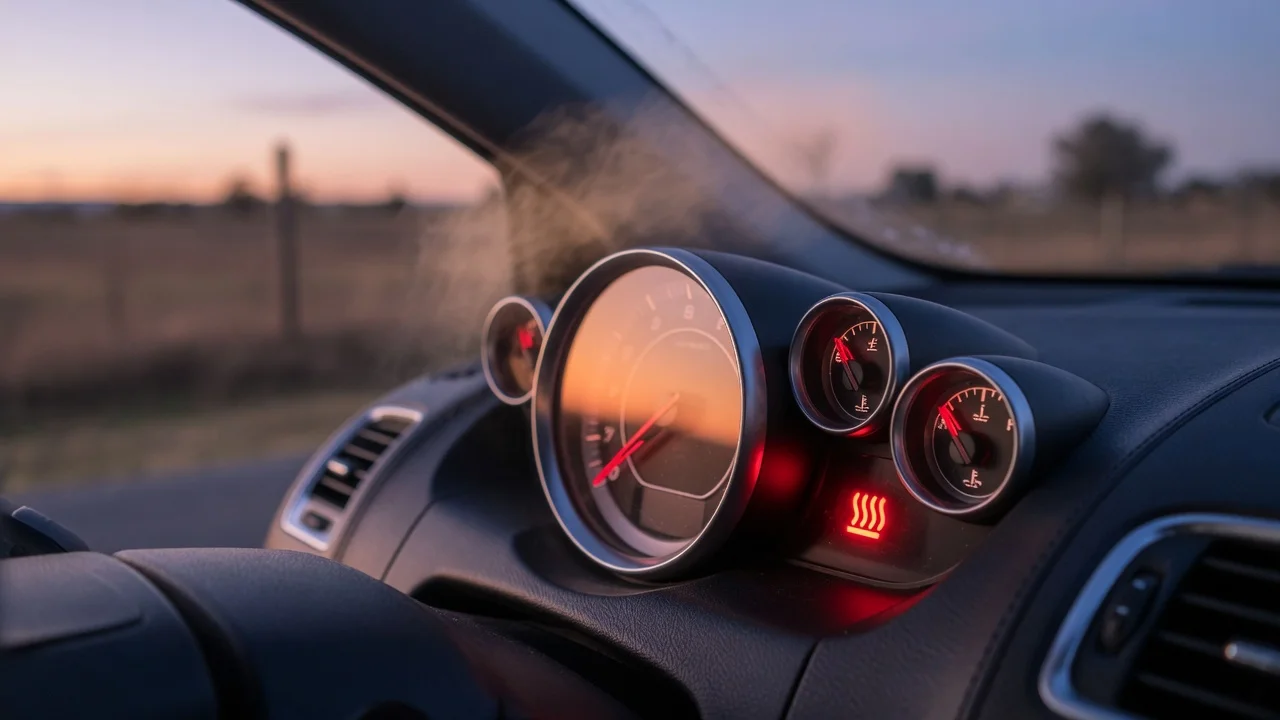
What does an engine overheating light actually mean?
An engine overheating light is a warning that requires immediate attention, but it does not identify a single root cause. The exact meaning can vary by vehicle make, model, model year and instrument cluster design. Depending on the vehicle, the warning may come from a dedicated engine temperature or overheating indicator light, a coolant temperature warning light, or a message in the driver information display. The same condition can be presented differently across manufacturers.
In general, the light means that the engine control system has received a signal indicating a coolant or engine temperature condition outside the expected range. On many vehicles, the warning strategy is based on the engine coolant temperature sensor and the programmed threshold values in the engine control module or instrument cluster module. A brief glow during bulb check at startup can be normal; a warning that stays on or appears while driving is not.
Be cautious about treating one version of the warning as identical on every vehicle. Some vehicles use a blue or green coolant temperature light to indicate that the engine is still cold, while a red light or flashing icon may indicate an overheat condition. If the symbol or behavior is unclear for a particular vehicle, the owner's manual or the specified model and year documentation is the most reliable reference.
How should the temperature gauge be read?
The temperature gauge is a secondary indication that can help confirm or monitor an overheating condition, but gauge scaling and needle position are not directly comparable across all vehicles. The gauge may show a normal warm operating range, a high zone and sometimes a cold range. The needle rising toward or entering the high zone, or a digital bar display approaching the maximum, is a sign to reduce load and stop the vehicle safely.
A gauge reading by itself usually has a calibration and time delay. It may not show a sudden overheat as quickly as a warning message, and some modern vehicles have a gauge with software-controlled damping or a simplified display that does not move proportionally with every small temperature change. For this reason, the gauge and warning should be interpreted together, especially when the warning strategy for the vehicle is unknown.
If the gauge is in the normal operating range and no warning is present, this does not by itself prove that all cooling system performance is correct. Some cooling system failures can be intermittent or can develop under specific load conditions such as sustained uphill driving, hot weather, heavy load or extended idling. A gauge reading from a typical warm vehicle on a moderate trip may not reveal every condition that could lead to overheating.
What conditions can produce an overheating warning?
The warning is a symptom, not a diagnosis. Possible contributing conditions include a low or contaminated coolant level, a leaking cooling system, a failed radiator fan or fan control circuit, a failed coolant pump or restricted coolant flow, a clogged radiator or condenser, a thermostat that is stuck closed or not opening fully, a defective radiator cap or cooling system pressure loss, and engine conditions that generate excessive heat or combustion gas entering the coolant system. Vehicle-specific wiring, sensor and programming faults can also trigger a warning without a simple mechanical overheat.
Which checks help distinguish possible causes?
Begin with the checks that are safe and do not require opening a hot pressurized cooling system. Observe the warning conditions, the ambient temperature, engine load, vehicle speed, air conditioning use and whether the gauge returns to normal at idle or at road speed. Check for visible coolant leaks, obvious hose damage, debris blocking the radiator or condenser front surface, and whether the cooling fan operates when expected. Each result supports some possibilities but does not necessarily prove one component has failed.
A low coolant level supports checking for leaks, coolant consumption or an incomplete fill, but it does not explain where the coolant went. A warning that appears mainly at low speed or idle with normal high-speed temperature is more consistent with a fan airflow issue than a simple thermostat failure, but the cooling load, fan strategy and driving conditions still affect the interpretation.
A warning that appears quickly after a cold start may point toward coolant circulation, coolant level or an incorrect gauge or sensor signal. A warning that occurs only under sustained high load can also fit a partially restricted radiator, a weak pump or a fan that cannot keep up, so the operating conditions matter. Do not replace a thermostat, water pump or fan control module solely because a diagnostic trouble code or warning appears. Codes identify monitored conditions and circuits; they are evidence, not by themselves proof that the named component needs replacement.
Where applicable, a scan tool can be used to read diagnostic trouble codes and compare the displayed coolant temperature or gauge input with a known-good or separate reference temperature, but the required operating conditions and test criteria vary by system. A temperature below the expected warmed-up range can suggest a sensor input or thermostat issue; a temperature that climbs under load while airflow and coolant level are known to be adequate can suggest restricted circulation. If the fault criteria, sensor location or normal range for the specific model year and engine are unknown, state that gap rather than treating a reading as conclusive.
What should a vehicle owner do when the warning appears?
When a warning appears or the gauge enters the high range, reduce acceleration, limit engine load and stop the vehicle safely once it is practical. Continuing to drive an overheating engine can create further damage. Do not remove a pressure cap or open a hot cooling system immediately; the system can remain hot and pressurized.
The appropriate next action after a warning depends on the known condition and the vehicle's documentation. In a significant overheat, the vehicle should generally be assessed before further use. A single warning that appeared and disappeared without any repeat or supporting evidence may still need inspection, especially if coolant level, leaks or operating conditions are unknown.
What remains uncertain?
This guide cannot identify the exact warning symbol, threshold values or failure point for a particular vehicle without its model, year, engine and configuration. Different vehicles can use different sensors, cluster logic, warning labels and shown messages, including an overheat indicator that is separate from the temperature gauge or is combined with another message. If the warning appears, use the owner's manual and vehicle-specific diagnostic information to interpret the exact symbol and the intended response.