Engine Oil Pressure Relief Valve: Function and Location
An engine oil pressure relief valve is a small but critical internal safeguard that prevents excessive lubricant pressure from damaging seals, filters, and bearings. Drivers often meet this component through an engine oil pressure relief valve location question, while the broader engine oil pressure regulator role is to stabilize flow. Understanding how this valve behaves helps interpret fluctuating gauge readings and cold-start noises. The following sections explain the device, identify where it is typically mounted, describe its operating principle, weigh its strengths and limits, outline inspection steps, and distinguish common pressure-related symptoms.
Essential answer
The engine oil pressure relief valve is a spring-loaded bypass that opens when lubricant pressure exceeds a set threshold, sending excess oil back toward the inlet side or sump. Its purpose is protective, not performance-enhancing. Without it, a cold engine producing thick, high-pressure oil could rupture the filter, damage the oil pump drive, or force lubricant past crankshaft seals. The valve is therefore essential to lubrication system durability, especially during startup and high-rpm operation when pump output rises faster than the engine can accept.
Although drivers may search for an engine oil pressure regulator, the relief valve is a purely mechanical limiter rather than an electronic controller. It does not continuously adjust pressure to a target under all conditions; it only caps the upper limit. This distinction matters because a stuck-open valve can cause low hot-idle pressure, while a stuck-closed valve can create dangerous pressure spikes. The component is normally located inside the oil pump or on the pump housing, though some engines place it in the block near the filter.
Identification and location
The engine oil pressure relief valve location varies with engine architecture, but it is usually found inside the oil pump body. On many overhead-cam engines, the oil pump is mounted at the front of the crankshaft behind the timing cover, so the relief valve is hidden internally. On some pushrod designs, the pump sits in the oil pan and the valve is accessed after pan removal. A few engines place the regulator assembly in the cylinder block near the oil filter adapter, where it can be serviced externally.
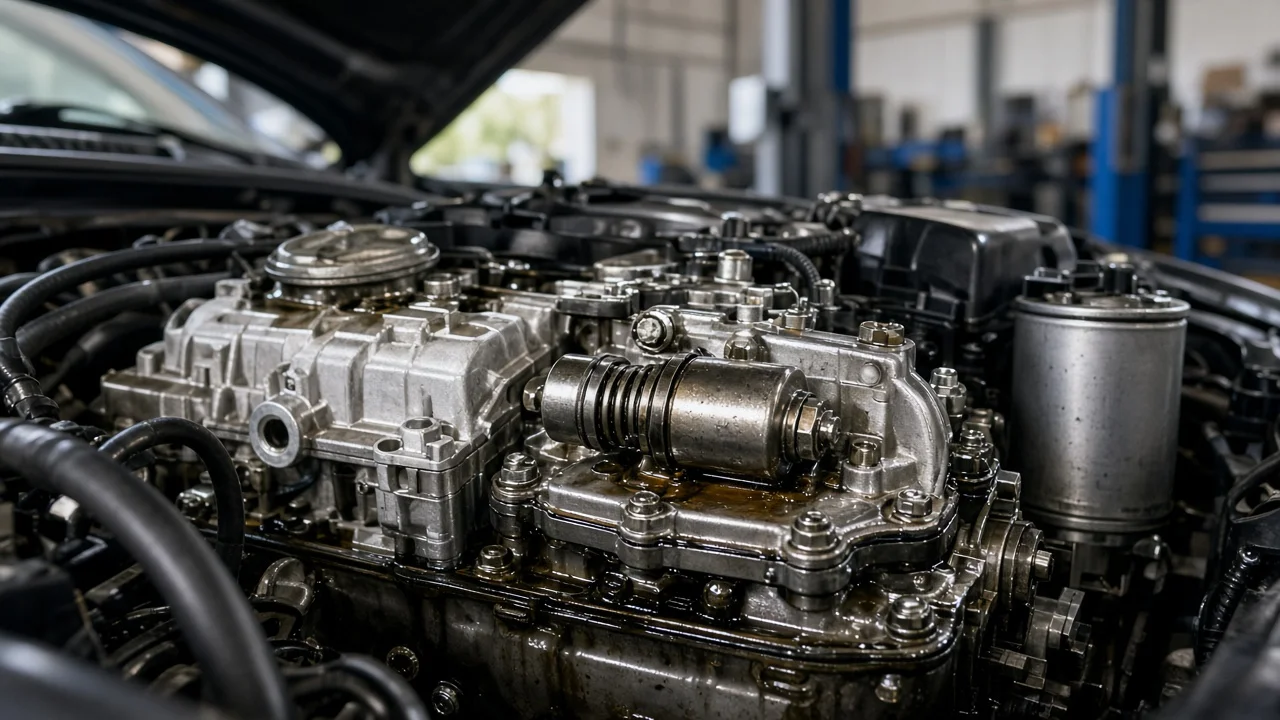
To recognize it, look for a threaded plug, cap, or retained piston and spring assembly near the pump outlet or filter mounting surface. The component often resembles a large bolt or plug with an internal spring and piston behind it. If visible from outside, it may sit close to the engine oil pressure sensor or the oil cooler lines. Vehicle-specific service information is necessary before removal because the same general location can differ between engine families, and installing the wrong spring or shim can alter maximum oil pressure.
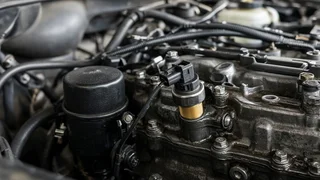
Because the valve is frequently internal, routine visual identification may not be possible without disassembly. On models with an externally accessible cap, you can sometimes identify the assembly by its alignment with the main oil gallery and the presence of a sealing washer. Do not confuse it with the oil pressure sensor, which is a smaller electrical sender with a connector. The relief valve has no wiring and is normally a machined metal plug designed for periodic service only when pressure testing suggests an issue.
How it works
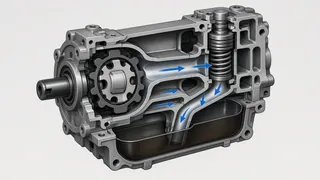
Operation begins with a spring holding a piston or ball against a seat. Engine oil enters one side and presses on the valve face. When pressure produces more force than the spring, the piston moves and opens a bypass passage. Excess lubricant then returns to the pump inlet or oil pan, limiting pressure downstream. As engine speed rises and pump volume increases, the valve opens further, maintaining a rough ceiling without starving the engine.
The practical effect is a stable oil pressure curve under most conditions. During a cold start, thick oil tries to build excessive pressure quickly. The valve opens early, protecting the filter media and reducing strain on the pump drive. As the oil warms and thins, pressure drops naturally and the valve returns toward its seat. This mechanical feedback loop is simple, but contamination or varnish can interfere with smooth piston travel, causing hesitation, chattering, or an incorrect pressure reading on the gauge.
Strengths, limitations and suitability
The key strength of a relief valve is passive reliability. It needs no electrical power, sensor input, or control module, and it responds instantly to pressure spikes. For most production engines this simplicity is ideal, because it protects the lubrication system without adding software complexity. It suits stock engines operating within the manufacturer's speed and load range, where oil pump output is matched to bearing clearance and the valve simply provides a safety margin.
The limitation is that it cannot correct high-pressure conditions to a precise target the way a more complex engine oil pressure regulator might. It reacts only to the upper threshold and does not compensate for clogged galleries, incorrect oil viscosity, or worn bearings. Engines modified for higher output may require a different relief spring, but changing the setting without supporting measurements can upset lubrication. The valve is durable, yet a small piece of debris or sludge can cause intermittent sticking that is difficult to isolate without a gauge.
Procedure
Inspecting an externally accessible relief valve begins with letting the engine cool and safely lifting the vehicle if access is from below. Locate the plug or cap and clean the surrounding area to prevent debris from entering the gallery. Remove the cap carefully because the spring is under tension. Inspect the piston or ball for scoring, varnish, and free movement in its bore. Reassemble in the same order and orientation, and use the specified sealing washer or torque value if the manufacturer provides one.
For internal pumps, the procedure involves oil pan or timing cover removal, which is a larger job. The general approach is to remove the pump, mark its orientation, and open the relief bore only if troubleshooting shows pressure that is too high or too low. Check the piston for straightness and the spring for collapsed coils. A polishing operation may restore smooth movement, but replacement is usually the practical repair. Any work inside the pump should be confirmed with a manual oil pressure check.
Diagnosing a problem
A stuck-open valve often causes low pressure at hot idle, sometimes accompanied by valvetrain noise. If the oil pressure warning light flickers when the engine is warm but not when cold, debris or spring fatigue may be preventing the valve from seating fully. Before condemning it, check the oil level and viscosity, because a low sump level or extremely thin oil can create similar symptoms. A mechanical gauge reading is more useful than the dash warning light for this diagnosis.
A stuck-closed or partially blocked valve may allow pressure to spike excessively, especially during cold startup. This can swell or crack oil filters, leak from the filter gasket, or trigger pressure variations on a manual gauge. If the valve moves but sticks intermittently, the needle may fluctuate erratically. Stop driving or keep engine speed low if pressure rises far above the expected range, because sustained overpressure can rupture seals. A fault code is not typically generated by this mechanical part, so observational checks and pressure testing remain the most direct diagnostic path.