Engine Oil Pan: Function, Leaks, Damage, and Replacement
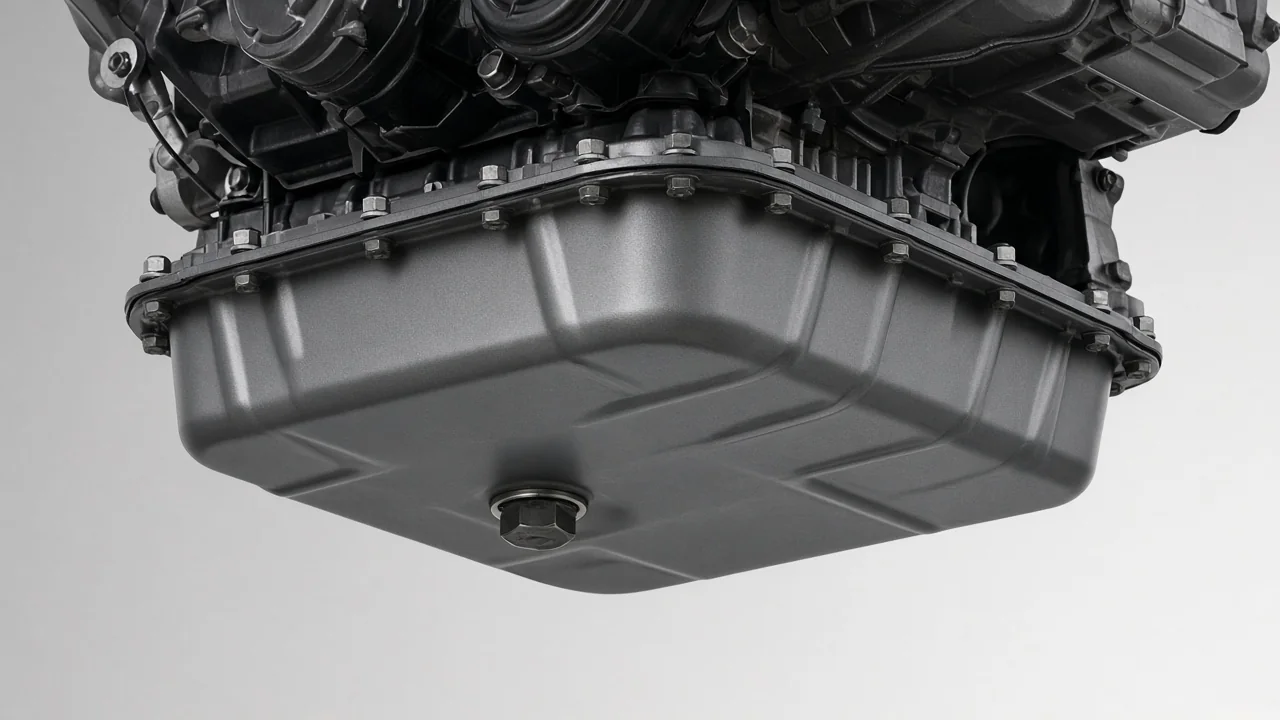
The engine oil pan sits at the bottom of the powerplant and holds the lubricant that keeps bearings, camshafts, and other internals supplied. That sump collects returning oil and forms the sealed lower boundary of the crankcase. Understanding how engine oil pans leak, get damaged, and get replaced helps you interpret driveway spots and discuss the oil pan in an engine with a shop.
What the Engine Oil Pan Does
On most passenger vehicles the engine oil pan bolts to the lowest part of the crankcase, forming a shallow reservoir under the rotating assembly. Oil that has been pumped through galleries and thrown off moving parts drains back by gravity and collects there. In a typical wet-sump layout, a pickup tube reaches into that stored volume so the pump can draw lubricant and send it back through the circuit. The pan is therefore both a collection tray and the working supply for circulation.
Not every engine uses the same oil-pan storage scheme. Some performance and certain production engines send returning oil to a separate reservoir instead of keeping the main volume in the sump. Even then, a lower cover still exists to close the crankcase. A common wet-sump pan includes a formed body, a perimeter seal against the block or a ladder frame, and a drain plug for service. Designs differ, so those three features describe a typical arrangement rather than a universal layout.
Pan Construction and Vehicle-Specific Fit
Engine oil pans are stamped steel, cast aluminum, or other alloys depending on the application, and their outlines are rarely generic. The shape has to clear the steering rack, subframe, exhaust, and axle while still presenting a low point where lubricant can gather. Internal baffles, windage trays, or pickup screens may be part of the pan or nearby hardware, intended to keep oil near the pickup during acceleration, braking, and cornering. Those details matter because a pan that looks similar from the outside may not manage oil the same way.
The joint at the pan sealing surface may use a conventional oil pan gasket, a formed elastomer, or a specified sealant, and that choice belongs to the engine design rather than a universal rule. Fastener count, dowel locations, and drain-plug thread form also follow the original application. Before ordering a replacement pan or sealing parts, confirm year, make, model, engine code, and any related options. An oil pan that fits one engine family can sit incorrectly on another, leaving the pickup poorly positioned or the perimeter unable to seal.
Where Oil Pan Leaks Can Start
An oil leak associated with the pan can start at the perimeter seal, at the drain plug and its washer or O-ring, or through a crack, puncture, or corroded area in the pan body. Seepage at the sealing surface often appears as wetness along the flange rather than a single stream. A loose, damaged, or poorly seated drain plug can wet the rear or lowest corner of the sump. Impact damage or rust-through can open a path that has nothing to do with gaskets at all.
Oil originating higher on the engine, from a valve cover, cam seal, oil filter housing, or cooler line, can travel down the block and collect on the pan, making the sump look like the source. An oily pan or a dark driveway spot therefore cannot by itself identify the failed component. A technician typically cleans the area, then watches for fresh leakage after a short run so the true path can be traced. That extra step avoids replacing an oil pan gasket when the real leak started above the flange.
Damage Symptoms and Safe Observations
Visible dents, cracks, corrosion, fresh drips, and a falling oil level are observations worth reporting, even when you cannot see the oil pickup itself. Substantial deformation of the pan floor or sides may reduce clearance around the pickup, but exterior appearance alone cannot prove how much room remains inside. Check oil level using the procedure in the owner's manual, and look for spots from outside the vehicle rather than crawling underneath. Those checks document the condition without putting you under a vehicle that may still be leaking.
An oil pressure warning, sudden heavy oil loss, or new engine noise is a reason to stop in a safe place, shut the engine off, and arrange assistance rather than continue driving to diagnose the pan. Oil level and oil pressure are distinct: the dipstick or level indicator shows how much lubricant is in the sump, while pressure reflects whether the pump is supplying the galleries. Adding oil can restore a low level, but it does not establish why a warning appeared or whether the pan, pickup, or another part is involved.
When Resealing or Pan Replacement May Be Needed
When a technician confirms leakage at the perimeter rather than from oil migrating down the block, gasket replacement or resealing may restore the joint if the pan and mating surfaces remain serviceable. The pan sealing surface on both the pan flange and the engine must be clean, flat enough to clamp, and free of deep nicks that a new oil pan gasket cannot fill. If those conditions exist, replacing the seal and using the specified gasket or sealant is often the intended repair rather than replacing the entire pan.
Cracks, significant deformation, corrosion damage, or damaged drain threads can push the decision from resealing toward pan replacement. A qualified technician should inspect sealing surfaces and thread condition before choosing that path, because a warped flange or stripped drain hole will leak again after a new gasket is installed. Tightening fasteners without diagnosis can stretch bolts, pull threads, distort the flange, or leave the actual leak unresolved. More clamp load is not a substitute for identifying whether the body, the drain plug, or the perimeter seal is at fault.
What to Ask Before Approving the Repair
Ask the shop to identify the confirmed leak source and explain why the proposed work addresses that path rather than every oily surface on the engine oil pan. Access, surrounding components, pan construction, and sealing requirements all influence labor and whether the subframe, exhaust, or other parts must be moved. Engine oil pans that sit above a cradle or use many fasteners take more time than a simple drop. Understanding that scope helps you compare an estimate with the actual job instead of a generic gasket replacement quote.
Request an estimate that covers applicable seals, the correct oil and filter if the system will be drained, required hardware, and any additional damage found once the pan is down. After reassembly, professional follow-up should include a check for leakage and correct oil level, with oil pressure testing when a warning, noise, or suspected pickup issue warrants it. Once the vehicle is back in service, watch for fresh spots or warning lights and report recurring symptoms promptly so a missed path or a new leak is not left to empty the sump.