Engine oil for BMW 325ci
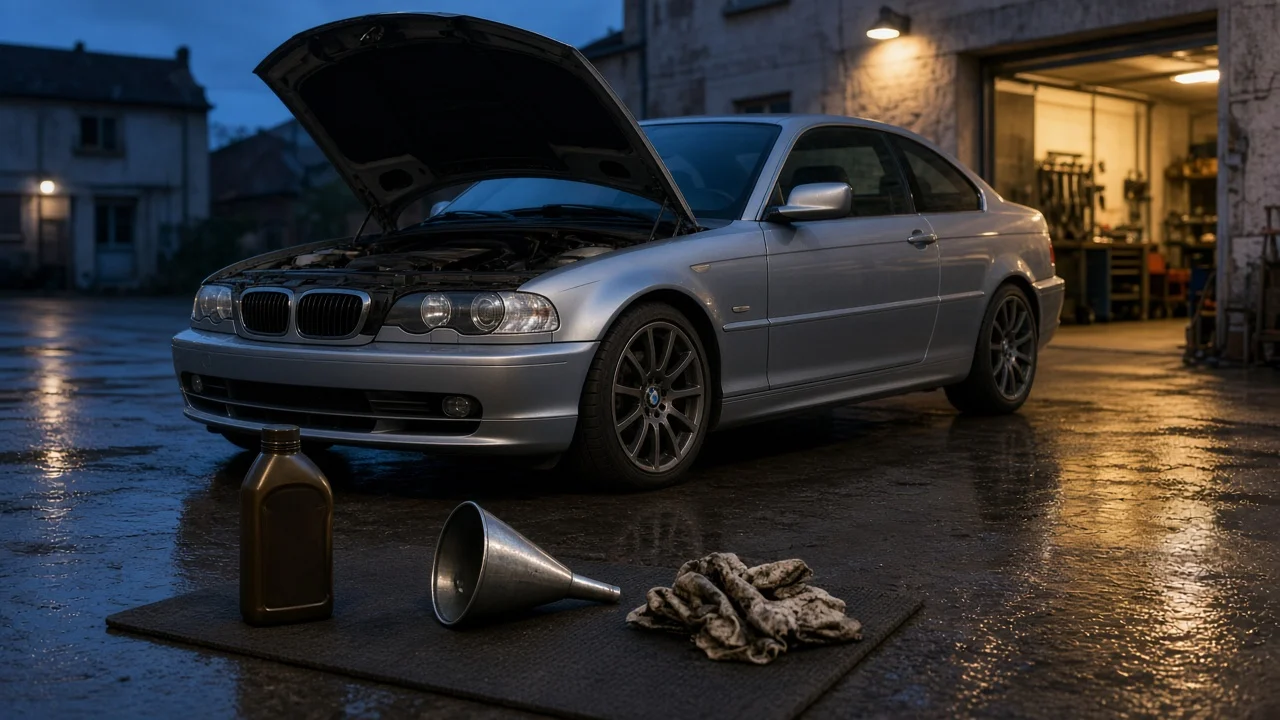
Choosing the right oil for a BMW 325ci means balancing the factory lubricant specification with how the car is actually driven and maintained. The E46 coupe’s inline-six depends on consistent oil pressure, correct viscosity, and detergent chemistry to protect bearings, vanos timing components, and hydraulic lifters. Owners often see conflicting fill quantities and approval lists, so the useful starting point is identifying the engine family and normal operating climate before selecting a licensed or broadly compatible synthetic. A proper level check and documented change interval then make the fluid choice work in everyday service.
Essential answer
For a US-market BMW 325ci, the essential answer is a high-quality full synthetic engine oil that carries an appropriate manufacturer approval or meets a widely accepted lubricant specification for the M54 engine. BMW’s historical guidance generally points to viscosities such as 5W-30 or 0W-40 depending on temperature range, emissions system compatibility, and oil consumption behavior. The safest approach is to use an oil explicitly listing BMW Longlife approval for the engine generation, while recognizing that later approval categories may not be backward-compatible without confirming the vehicle’s maintenance history and catalyst equipment.
Scope matters because the 325ci name does not identify a single model year or engine calibration. The E46 coupe sold for several years in North America, and the M54B25 inline-six typically requires a synthetic formulation that resists high-temperature shearing and keeps the camshaft area clean. Owners choosing oil for this car should treat the dipstick reading, the condition of the crankcase ventilation system, and the manner of use as part of fluid selection. A short-trip commuter car, a track-day coupe, and a high-mileage example may each respond better to a different viscosity within the approved range or a modest adjustment of the service interval.
Because no universal fill quantity or single part number is supplied here, the next practical action is to verify the engine designation and consult the owner’s manual or a dealer lookup for the original BMW recommendation. A commonly discussed sump capacity for the M54 is around 6.5 liters including the filter, but the exact amount must be confirmed from the dipstick rather than poured blindly. After a change, the engine should be run briefly, allowed to settle, and checked again so the oil level sits in the correct crosshatched zone without overfilling the crankcase.
The manufacturer approval printed on the bottle is more useful than marketing phrases alone. For an older BMW engine without factory extended drain intervals, a robust ACEA A3/B4 or API SL or later full synthetic can work well, especially if it matches the original viscosity recommendation. The oil choice is only part of the result; a clean filter, a functioning oil level sensor, and consistent record keeping determine whether the fresh lubricant continues protecting the engine over the miles that follow.