Engine oil 101

What engine oil is and why it matters
Engine oil is the lubricant that sits between moving metal parts inside an internal-combustion engine. Its job is not only to reduce friction. It also helps carry heat away from bearings, pistons and the valvetrain, suspends soot and wear particles so the filter can trap them, helps seal piston rings against the cylinder wall, and coats surfaces against corrosion when the engine is sitting. If the oil is the wrong grade, badly degraded, or too low in the sump, wear rises and the engine can overheat, knock, or fail.
This guide covers four-stroke petrol and diesel car and light-truck engines. Two-stroke mix oil, electric vehicles with no crankcase, and heavy-duty or racing oils sit outside that scope. The right oil for any given vehicle is the grade and specification printed in the owner’s manual or on the filler cap, not a generic “best oil” for every engine.
What oil actually does in the engine
Lubrication: a thin film keeps journals, cam lobes, piston skirts and timing components from metal-to-metal contact. Cooling: oil absorbs heat from parts the coolant jacket does not reach, then dumps that heat in the sump or an oil cooler. Cleaning: detergents and dispersants keep varnish, sludge and soot from plating onto galleries and the oil pickup. Sealing: oil on the cylinder wall helps the rings hold compression and combustion gas. Protection at rest: additives slow rust and acid attack on ferrous parts after shutdown.
Base oil is the bulk of the bottle. Additive packages do the rest: viscosity-index improvers, anti-wear agents, detergents, dispersants, antioxidants, anti-foam agents and, in many modern oils, friction modifiers. Those additives deplete with heat, fuel dilution, moisture and mileage, which is why oil that still looks dark can still be due for a change.
How to read a viscosity grade
Most passenger-car oils use an SAE multi-grade label such as 0W-20, 5W-30 or 10W-40. The number before the W describes cold-start flow. A lower winter number means the oil pumps and reaches bearings faster in cold weather. The number after the W is the high-temperature viscosity grade, measured under a standard hot-engine condition. Thicker hot grades generally hold a film more readily under load and heat; thinner hot grades generally reduce pumping losses and help oil reach tight clearances in modern engines designed for them.
A 5W-30 oil is not “5-weight mixed with 30-weight.” It is one oil that behaves like a light winter grade when cold and like a 30-grade when hot. Using a grade thicker or thinner than the manufacturer specifies can delay oil pressure at start-up, raise operating temperature, starve variable valve-timing solenoids, or leave hydraulic lifters noisy. Climate can justify a listed alternative grade in the manual; it does not justify inventing a grade the engine was not designed around.
Conventional, synthetic and blends
Conventional (mineral) oil is refined from crude. Full synthetic oil is built from more tightly controlled base stocks, typically with better high-temperature stability, better low-temperature flow and stronger resistance to oxidation. Synthetic blends sit between those two. “High-mileage” oils are usually the same viscosity family with extra seal conditioners and sometimes a slightly different additive mix; they can help with seepage on aged seals, but they are not a repair for a worn engine.
Synthetic is the default fill for many late-model engines, especially those that specify a thin grade such as 0W-20 or 5W-20, turbocharged engines, and engines with long factory drain intervals. Conventional oil can still be appropriate where the manual allows it and driving is moderate. The bottle’s performance claims only count if the oil also carries the specification the vehicle requires.
Specifications matter more than the brand name
Viscosity is only half the label. Service specifications tell you whether the oil’s additive chemistry matches the engine. Common marks include API service categories for petrol and diesel, ILSAC resource-conserving ratings, ACEA sequences used widely in Europe, and manufacturer approvals such as those from VW, BMW, Mercedes-Benz, GM dexos, Ford and others. A diesel with a diesel particulate filter, a petrol engine with a gasoline particulate filter, or a turbo engine with a catalytic converter may need a low-SAPS or specific mid-SAPS oil so ash and phosphorus do not poison aftertreatment.
Match the manual first: viscosity, then the listed API, ACEA and OEM approval. A premium oil that is the wrong spec can still be the wrong oil. If two listed specs conflict on a bottle, treat that as a reason to pick another product rather than assume both apply.
How to choose oil for your vehicle
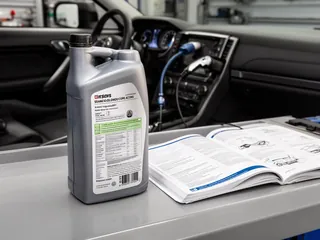
Read the owner’s manual and the oil-filler cap. Note the SAE grade and every listed specification or approval. If the manual lists more than one grade, use the one tied to your climate and the engine’s design notes, not a thicker oil “for protection” unless the manufacturer says so. Pick a bottle that states both the grade and the required spec. Brand is secondary to that match. For turbocharged, direct-injection, hybrid, start-stop or aftertreatment-equipped engines, stay with the exact modern spec. Older high-ZDDP oils meant for flat-tappet classics can damage catalysts and are the wrong chemistry for most current engines. If the vehicle is under warranty, keep receipts and use oils that meet the stated OEM standard.
Older engines, especially those with flat-tappet camshafts, sometimes need higher anti-wear additive levels than current resource-conserving oils provide. That is a separate case from a late-model car. When in doubt on a classic or a performance rebuild, use the oil the engine builder or the period manufacturer documentation specifies.
Checking level and condition
Park on level ground. For most dipstick engines, wait a few minutes after shutdown so oil can drain back to the sump, then pull, wipe, reinsert and read the stick. Fill only to the high mark. Overfilling can aerate oil, raise crankcase pressure and damage seals or catalytic converters. Some late-model vehicles have no dipstick and rely on a service-mode electronic level check; follow that procedure rather than guessing from the filler neck.
Colour alone is a weak test. Fresh oil can darken quickly in a diesel or a direct-injection petrol engine as it suspends soot, which is part of its job. Warning signs that need service rather than a top-up include a rising level (possible fuel or coolant dilution), a milky appearance (possible coolant leak), a strong fuel smell, metallic grit, or a persistent low-pressure warning. Those point to mechanical faults, not a different brand of oil.
Change intervals and filters
Follow the maintenance schedule for your model year, powertrain and market, including the severe-service schedule if you make short trips, idle in traffic, tow, drive in dust, or see frequent cold starts. Time limits matter as well as distance because moisture and fuel dilution accumulate even when the odometer barely moves. Oil-life monitors estimate remaining additive life from temperature, revs and trip length; they are a guide for that vehicle’s programmed algorithm, not a lab analysis of the oil in the pan.
Replace the oil filter at every oil change unless the manufacturer explicitly allows a longer filter interval. A clogged or bypassing filter sends unfiltered oil through the engine. Use the correct filter for the engine, with the right bypass and anti-drainback design. After a change, start the engine, confirm oil pressure, shut down, recheck the level and inspect the drain plug and filter for leaks.
Common mistakes
Choosing oil by price, colour or a single “synthetic” claim instead of the required grade and specification. Switching to a thicker grade to quiet lifters or reduce consumption without finding the cause. Stretching drain intervals because the oil “still looks clean.”; Mixing random leftover oils as a long-term fill. Small top-ups of a matching spec are usually acceptable; a sump full of mixed, unknown chemistry is not a plan. Ignoring consumption. Many engines use a small amount of oil between changes. Rapid use, blue smoke or a falling level between checks needs diagnosis. Putting engine oil in the coolant, automatic transmission, brake system or power-steering reservoir, or using those fluids in the crankcase.
What to do next
Look up the exact SAE grade and specification for your engine in the owner’s manual, confirm it on the filler cap, and buy oil and a filter that match. Check the level on a schedule you will actually keep, and change oil on the severe-service interval if your driving is stop-start or short-trip. If the engine warns of low pressure, overheats, or the level rises or turns milky, stop driving and have the engine inspected. The supported choice is the oil the manufacturer documented for that engine, not a universal grade for every car.