Energy Suspension Control Arm Bushings: Fitment and Selection
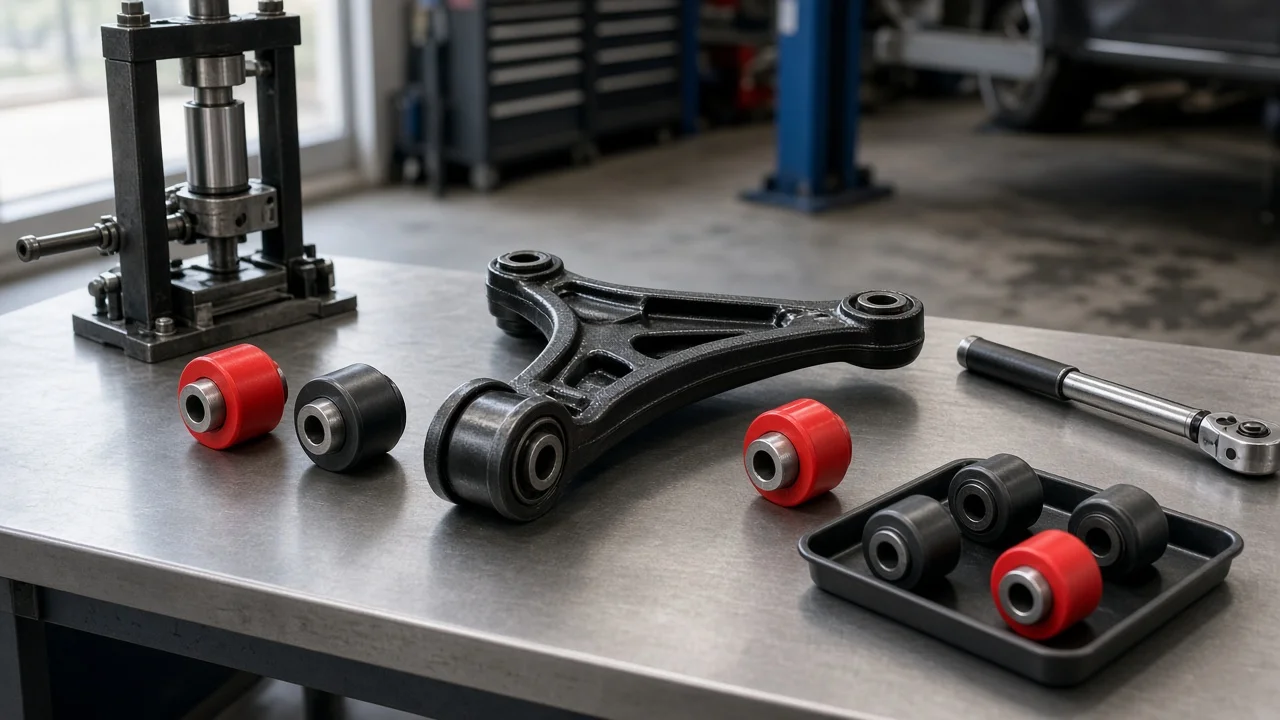
Energy Suspension control arm bushings replace the rubber pivots in your control arms with polyurethane. The swap can sharpen steering response and reduce arm deflection under load. It also changes noise, ride comfort and maintenance. This guide covers how to choose the right set for your vehicle: confirming fitment, weighing the material trade-offs and understanding what installation and ownership involve. With that information, you can decide whether these bushings suit the way you actually drive.
Define the job the product must do
Start with the reason you are replacing bushings. Worn rubber control arm bushings usually show cracked, torn or separated rubber, clunks over bumps, steering wander under braking or uneven tire wear. Similar symptoms can come from other parts. If the movement is joint play in a ball joint, a worn tie rod end or a bent arm, new bushings will not cure it. Raise the vehicle on proper vehicle support and inspect each pivot. Confirm where the movement originates before you order parts.
Next, match the material to your use. Polyurethane favors control over isolation. It makes the most sense when rubber deflection is the actual complaint. That covers cars driven hard on back roads or at track days, trucks that carry or tow heavy loads, and older vehicles where soft rubber lets the arms shift noticeably. For a quiet commuter on broken pavement, an OE-style rubber bushing may serve you better. Also weigh practical constraints. Do you have access to a press? Can you budget for an alignment? Is this vehicle your only transportation while the job is underway?
Check compatibility
Energy Suspension catalogs its bushings by vehicle application and position. Match the year, make, model and drivetrain. Where the listing calls for it, also match the production date or suspension package. Front lower, front upper and rear control arms each use different parts, and the bushings within one arm can differ front to rear. Some models used more than one arm design in the same year. Compare the listing notes against the arm on your vehicle rather than relying on the model name alone.
Fitment comes down to physical interfaces. The bushing must suit the bore of the arm. The inner sleeve must match the bolt diameter. The overall width must fit between the mounting points on the frame or subframe. Read what the kit includes. Some applications reuse the original outer shell, while others supply new shells or sleeves. Aftermarket or modified control arms may not accept the stock-application bushings at all. If your vehicle is lifted or lowered, ride height changes the angle at which the arm sits at rest, so check the application notes and the instructions for that situation.
Decide between a master kit and individual positions. A master kit covers many bushings across the chassis and may include parts you do not need yet. Buying by position lets you target the worn control arm joints and keep the rest of the suspension unchanged.
Features that affect the choice
The core trade-off is material behavior. Polyurethane resists oil and weathering, and it deflects less than rubber. Arm geometry therefore stays more consistent under cornering, braking and load. The cost is more road noise, more vibration and a firmer feel over sharp impacts. Function differs too. A bonded rubber bushing twists as the arm moves, while a polyurethane bushing typically pivots around its inner sleeve. That difference is why lubrication matters so much with these parts.
Energy Suspension supplies grease with its bushings. Applying it correctly to the surfaces named in the instructions is your main defense against squeaks. Color choices are cosmetic, so do not infer hardness from color unless the listing states it. Treat labels such as performance or heavy duty as marketing, not measurements. The useful evidence is the exact fitment listing, the list of included components, the installation instructions and reports from owners of the same vehicle who describe noise and ride quality after the change.
Limitations and ownership costs
Installation is more involved than bolting on a part. Most control arm bushings require removing the arm, pressing out the old bushing and pressing or fitting the new one. That job usually calls for a hydraulic press or a suitable bushing tool. Support the vehicle on jack stands at the manufacturer's lift points, and never work under a vehicle held only by a jack. On some suspensions the control arm retains coil spring or torsion bar load. Follow the model-specific service procedure for releasing and restoring that load.
Use the fastener specification from the service information for your vehicle, and do not guess torque values. Many control arm pivot bolts are final-tightened with the suspension at normal ride height. Follow whatever the instructions specify for your application. Replacing control arm bushings can change camber, caster and toe, so schedule a professional wheel alignment afterward and include its cost in your budget.
Ongoing ownership includes periodic inspection, and some owners need to re-lubricate if squeaks develop. You may also accept more cabin noise than you had with rubber. Bushings cannot compensate for worn ball joints, tired shocks, sagging springs, a bent arm or damaged tires. Address those parts separately, or the new bushings will not deliver the handling improvement you paid for.
Build a practical shortlist
Before buying, run through a short checklist. First, the part number matches your vehicle and the exact arm position. Second, you know whether shells, sleeves and grease are included. Third, you can press the bushings yourself or have a shop quote for the labor. Fourth, you have budgeted for an alignment. Fifth, you have chosen between a master kit and individual positions. Finally, you have accepted the noise and ride trade-off for your type of driving. If any item is uncertain, resolve it before ordering rather than after the arm is apart.
Compare the polyurethane option against two alternatives: OE-style rubber bushings and a complete control arm assembly with new bushings and ball joint already installed. If the ball joint is also worn, a complete arm can reduce labor and avoid pressing work. If you choose Energy Suspension bushings, replace them in pairs side to side so both sides of the axle behave the same. Then verify the result with an alignment and a careful road test.