Electronic Stability Control Off Light: What It Means and What to Do
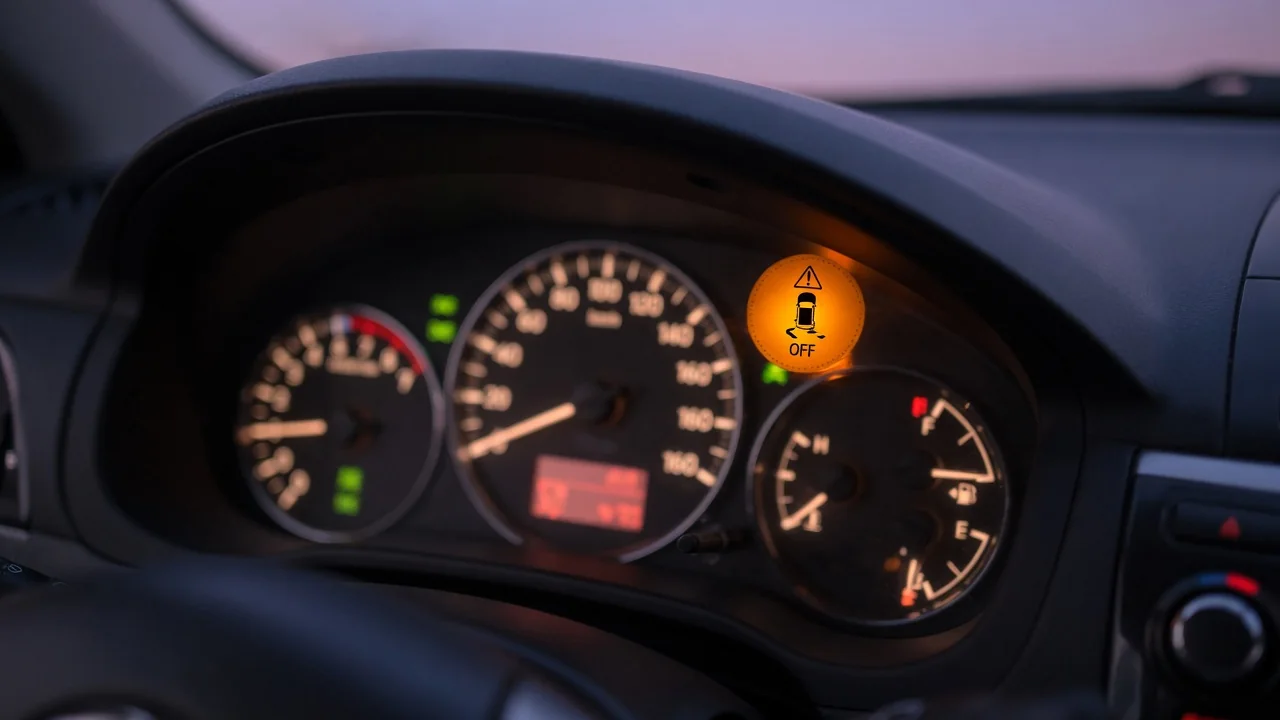
When the electronic stability control off light appears on your dashboard, your car is telling you that one of its most important safety aids is either switched off or unavailable. Sometimes you or a passenger turned it off on purpose. Other times it means the system found a problem. Here's what the warning means, how to turn electronic stability control off and back on, when that makes sense, and when the light needs a professional diagnosis.
What the Electronic Stability Control Off Light Is Telling You
Electronic stability control watches wheel speed, steering angle and how the car is rotating. When the car starts to slide or wheel slip builds, it brakes individual wheels and cuts engine power. A steady ESC off light usually means this skid control has been switched off or isn't available, so the car will do less to correct oversteer or understeer. A flashing stability control indicator means something different: the system is actively stepping in on a slippery surface. A separate fault message, often amber or worded as a service warning, points to a detected problem rather than a driver's choice.
Manufacturers name and draw this dashboard warning symbol differently. You may see ESC, ESP, VSC, DSC, StabiliTrak or vehicle stability assist. It's usually a car with wavy skid lines, sometimes with the word OFF underneath. Colors and wording vary, so check your owner's manual to confirm what your symbol means. In most cases the car is still drivable with the electronic stability control off warning light showing. Leave more following distance, brake and steer smoothly, and take extra care on wet, icy or gravel roads.
Common Reasons the ESC Off Light Comes On Without Pressing the Button
Many drivers see the light even though they never touched the ESC button. On many vehicles, stability control shuts itself off when a system it depends on reports trouble. ESC uses wheel speed sensor signals, steering angle sensor input, brake pressure data and engine management information to work out what the car is doing. If one of those readings looks wrong, the system may switch itself off rather than act on bad data. That's why the ESC light often comes on with the ABS warning light, traction control light or check engine light. Several lights at once can point to a shared input.
There are less serious causes too. A button bumped by a knee or a passenger, low battery voltage while starting, or a recent battery disconnect can make the indicator act up temporarily on some models, though not on every vehicle. Some cars also need a short drive or some steering movement after a battery disconnect before the system recalibrates. A few safe checks help: see whether the light clears after a normal restart, note which other warning lights are on, and notice whether the brake pedal or steering feels different than usual.
How to Turn Off Electronic Stability Control and Turn It Back On
How you turn off electronic stability control depends on the make, model and year. Most vehicles use an ESC button on the dashboard or center console, often marked with the skid symbol. Newer models may put the setting in an infotainment or instrument cluster menu instead. On many cars a short press only partly turns the system off, usually relaxing traction control first. A longer press or a separate mode cuts stability control further. Your owner's manual explains exactly what each press does on your vehicle.
Turning the system back on is usually just as simple: press the same button again or reselect the setting. Many vehicles turn stability control back on automatically when you restart the engine. Others remember the driver's last choice, so don't assume it has reset itself. Turn ESC back on as soon as the situation that needed it is over, and make sure the off indicator has gone out before driving normally. Depending on the manufacturer, some systems also switch back on by themselves once the car reaches a certain speed.
How to Get the ESC Off Light to Go Out
To turn off the electronic stability control light, first figure out why it's on. If you or a passenger switched ESC off, turning the system back on should clear the indicator on most vehicles. If nobody did, start by parking somewhere safe, switching the vehicle off, waiting a short time and restarting. A brief glitch, such as a voltage dip at startup, may clear on its own. If it does, the light should go out after the short self-check when you start the car and stay off while you drive.
If the light comes back or won't clear, the system has usually detected a fault, and you can't just reset it away. Don't disconnect the battery, pull fuses or clear stored codes to make the warning disappear. Those shortcuts can erase stored fault data that a technician would use to find the cause. Meanwhile the real problem, which could be a sensor, wiring or brake system issue, is still there. The light will often return anyway once the system runs its self-checks again.
When Turning Off Stability Control Can Make Sense
Knowing when to turn off electronic stability control matters as much as knowing how. The classic case is being stuck in snow or mud, deep sand or slush, where traction control cuts power the moment the wheels spin. In those conditions, some controlled wheel spin can clean out the tire tread and help rock the car free, so temporarily turning down traction or stability control may help. Many vehicles also have a snow, sand or off-road mode that changes throttle response and how much wheel slip is allowed. Those modes are often a better choice than turning ESC fully off.
For normal driving on public roads, keep ESC on, including in rain, ice and snow. Those are exactly the conditions where skid control helps most, because it can catch a slide before you even notice it. Once the car is moving freely again, turn the system back on. Track or performance modes that loosen the system's control are designed for closed courses and controlled settings, not daily driving. Don't use them on public roads, even if the car feels capable.
When an ESC Light Needs Professional Diagnosis
Some ESC warnings need professional testing rather than more restarts. Have the car checked if the light stays on after several restarts, if it appears with ABS or brake warning lights, or if braking, pedal feel or steering seems different. Stability control fault codes are often specific to the manufacturer, so a code's meaning has to be checked against that vehicle's service information before acting on it. For example, a code pointing to a wheel speed sensor circuit is a clue to investigate, not proof that the sensor itself has failed.
A basic code reader that handles engine faults may not be able to talk to the brake, ABS or chassis modules at all. So a clean engine scan doesn't rule out a stability control fault. A full diagnosis may need a scan tool that can read those systems, show live sensor data and run calibration steps, such as a steering angle sensor reset where required. Because ESC works through the brake hydraulics, don't attempt home repairs on the hydraulic unit, brake lines or control modules. Leave those systems to a qualified technician.