Electronic Rust Protection for Cars: How It Claims to Work and What Evidence Shows
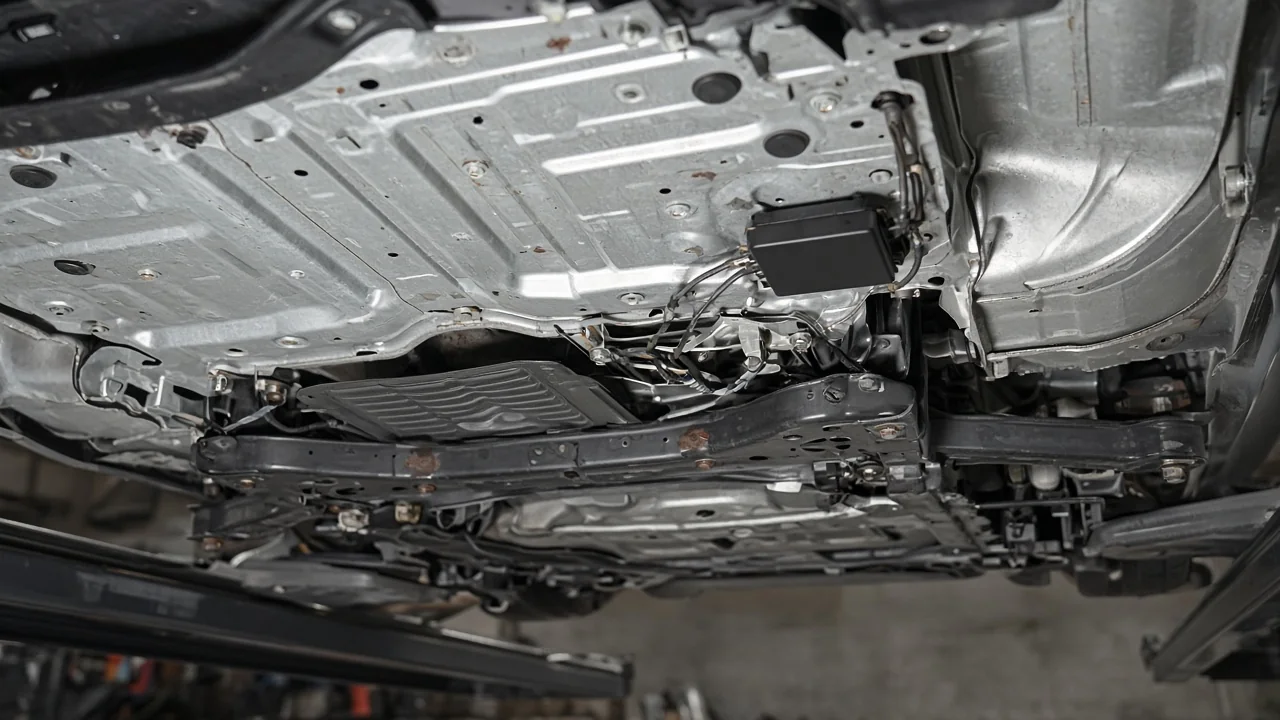
You may have spotted a small device wired under the dash or hood, with an LED promising to stop rust before it starts. Car electronic rust protection modules are sold as dealer add-ons, aftermarket kits, or bundles with corrosion warranties. They claim to send a weak current through the sheet metal to neutralize the electrochemical reaction that eats steel. This article examines how those modules are supposed to work, where their claims borrow real engineering from ships and pipelines, and what to look for before buying.
What Electronic Rust Protection Modules for Cars Are
A typical car electronic rust protection module is a compact unit that connects to the 12-volt electrical system through fused wiring. It often includes adhesive-backed pads or small anode plates mounted on inner fenders, door skins, or other body panels. The marketing language says the device sends a low-voltage signal through the steel, slowing or preventing corrosion on the body and chassis. Some kits are marketed as dealer-installed accessories, while others are sold as do-it-yourself packages or bundled with a rust warranty.
It is important to separate the underlying idea from the sales pitch. These products do not remove existing rust or repair damaged metal. Instead, they claim to change the electrochemical conditions at the surface so that oxidation cannot easily proceed. Because many vehicle owners first hear about the technology from a dealership finance office or an aftermarket accessory catalog, the decision often comes with little time for research. Understanding what the module actually does, and what it cannot do, is the first step in judging the offer.
The Claimed Science: Cathodic Protection and Impressed Current
Rust is an electrochemical process. For steel to corrode, it needs an anode, a cathode, and an electrolyte such as salty water connecting them. Electric current flows through the metal and ions move through the electrolyte, leaving behind iron oxide. In expensive industrial applications, impressed-current cathodic protection forces a flow of electricity onto the structure, making the entire metal surface behave as a cathode and suppressing the anodic reaction. This works on ship hulls, buried pipelines, and tank farms because the entire structure sits in a continuous conductive medium.
The other major method is a sacrificial anode, usually zinc or magnesium, which corrodes instead of the protected steel because it is more electrically active. Car modules sometimes claim to create a similar effect, but they are not simply sacrificial anodes. Instead, they usually describe capacitive coupling or an electronic field that is said to extend protection through the painted body panels and air gaps. Standard cathodic protection does not work through an insulating paint film, so this claim is a major departure from proven engineering.
Why a Car Body Is Different From a Ship Hull or Pipeline
For cathodic protection to work, a continuous electrolyte must connect the protected metal to the anode or to the power supply's ground. A ship hull is immersed in seawater, and a buried pipeline sits in moist soil. A car body in open air has no such continuous path. Even when roads are salted, the metal sees only intermittent films of brine spraying up from the tires. That patchy moisture cannot reliably carry a protective current into door seams, rocker panel cavities, or the inside of a frame rail.
Painted panels create another obstacle. Factory e-coat, primer, topcoat, and clearcoat are electrical insulators. Plastic trim, rubber seals, and seam sealer further break the circuit. Any current delivered by a module would travel only through bare metal contact points, leaving most of the sheet metal isolated. Hidden areas where rust often starts, such as behind plastic cladding or inside welded flanges, are exactly the places where a thin, interrupted electrolyte and poor electrical connectivity make electronic protection least plausible.
What the Evidence Says and How to Judge Product Claims
Independent, peer-reviewed evidence that these modules meaningfully reduce corrosion on road vehicles is limited. Automotive corrosion engineers and materials scientists have widely questioned the basic premise, noting that the conditions required for impressed current protection do not exist on a typical car body. This is not the same as saying every unit is defective; it means the burden of proof rests with the seller, and that proof is seldom published in a form that can be checked.
Owner reviews are difficult to interpret because rust formation depends heavily on climate, washing frequency, factory galvanizing, and how long the vehicle is kept. A car that remains rust-free after five years may simply have been well built and garaged, not protected by a module. Before buying, ask what testing was done, who conducted it, and whether an untreated control vehicle was used under identical conditions. Be wary of before-and-after photos showing different cars, lighting, or time periods, and of vague 'lab tested' claims without a method.
Practical Concerns: Installation, Battery Draw and Rust Warranties
Because the module connects to the vehicle's electrical system, installation should be performed or inspected by a qualified automotive electrician. The unit must be mounted securely, kept away from heat and moving parts, and wired so that it cannot short or interfere with other circuits. An always-on device will draw a small amount of current even when the car is parked. Most are designed to be negligible, but owners who store a vehicle for weeks at a time should have the installer measure the parasitic battery drain and confirm it will not strand the car.
If the purchase includes a corrosion warranty, read every exclusion and obligation before signing. Some warranties require annual inspections, documented rustproofing treatments, or notification within a short time after damage appears. Transfer rules may reduce the value if you sell the car. The warranty may also duplicate or conflict with the factory corrosion coverage, so check what the manufacturer already provides and how aftermarket electrical devices might affect the base vehicle warranty. The module itself is rarely covered for more than a few years.
Rust Prevention Methods With Stronger Support
Regular washing, especially of the underbody, remains one of the most effective ways to slow rust. Road salt absorbs moisture and accelerates electrochemical corrosion, so rinsing wheel wells, suspension components, and the inside of body cavities during and after winter driving removes the electrolyte that starts the reaction. Pay attention to areas that trap mud and leaves, because these hold water against the metal for days.
Cavity wax and oil-based rustproofing sprays are applied inside doors, rockers, and frame voids to creep into seams and displace moisture. Undercoatings can protect large exposed surfaces, but they must be applied to clean, dry metal and inspected periodically because trapped moisture can make things worse. Touch up paint chips and scratches quickly, and keep drain holes clear so water can escape. A professional should assess any structural rust on frames, subframes, brake lines, or suspension mounts before it becomes a safety issue.
Deciding Whether Electronic Rust Protection Is Worth Considering
The gap between the marketing claims and the basic physics of a car in open air is wide. An electronic module cannot create the continuous electrolyte or full-surface electrical continuity that proven cathodic protection systems require. At best, it should be treated as an unproven add-on that may provide psychological comfort but should never replace washing, rustproofing coatings, and regular inspections. The money spent on a module might be better used for professional cavity wax or more frequent underbody washes.
Judge any offer by its cost, warranty obligations, and the evidence the seller can actually show. If you live in a region with heavy road salt, plan to keep the vehicle for many years, or already see surface rust starting, practical prevention and inspection will likely deliver far more value. Consider how long you expect to own the car and what its current condition is. Without independent test data, treating an electronic rust protection device as a substitute for proven methods is a gamble against well-understood corrosion science.