Electronic Parking Brake Stuck On: Safe Checks and What to Do Next
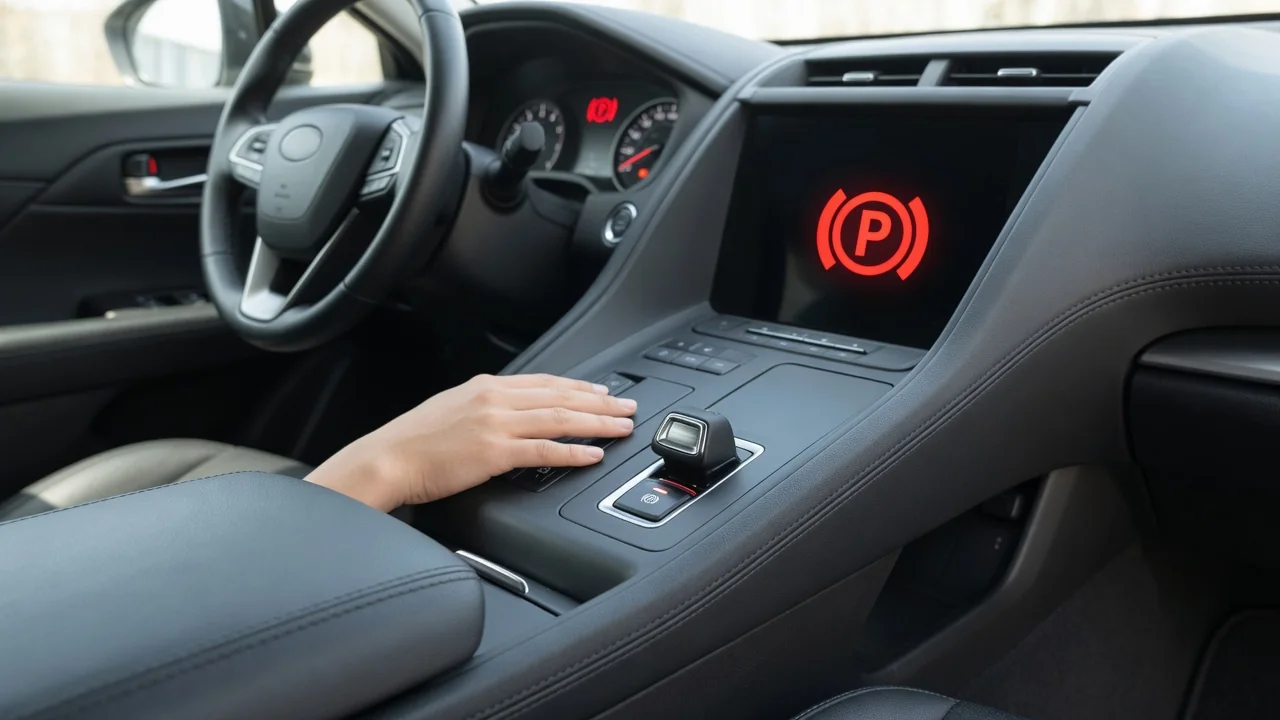
An electronic parking brake stuck on can leave a car immobile in a driveway or parking lot, with no lever to pull and no obvious cable to free. Whether you drive a Mazda CX-5, a VW Passat, or something else, the safe response is the same: observe carefully, try the documented release steps, and know when a tow is the smarter choice.
Signs Your Electronic Parking Brake Is Stuck On
The first clue is usually on the dashboard: the EPB warning light stays lit after you operate the switch, or a parking brake fault message appears in the instrument cluster. The car may squat and resist when you ease onto the accelerator, or one rear wheel may feel held back while the other rolls freely. A brake that will not release at all usually stops the car from moving, while one that releases only partly lets it roll but produces brake drag, sluggish acceleration, and heat.
Both conditions matter, but a partial release is easier to overlook and easier to drive on by mistake. Without any tools, listen when you press the electric parking brake switch; most systems make a brief whirring sound at the rear wheels as the motors run, and silence is a useful detail to report. Note whether ABS, stability control, or battery warnings light up at the same time. Do not keep driving against an applied brake, because the rear pads, rotors, and calipers can overheat and be damaged quickly.
How to Try Releasing a Stuck Electronic Parking Brake Safely
Before trying anything, park on level ground and place wheel chocks, since a sudden release could let the car roll. Then work through the conditions most systems expect: ignition on or the vehicle in ready mode, your foot firmly on the brake pedal, the driver's seat belt fastened, and the driver's door closed. These requirements vary by vehicle, and features such as auto hold can change how the switch behaves, so confirm the exact sequence in the owner's manual rather than assuming.
Low 12-volt battery voltage is a reasonable thing to rule out early, because the motors that retract the brake need healthy current and the control module may refuse to act when voltage sags. Charging the battery or jump-starting with the correct procedure for your car is a sensible first step. If the manual describes an emergency release procedure, follow only that documented method. Dismantling rear calipers, unplugging brake motors, or forcing the mechanism is not a roadside fix and can leave the car with no working parking brake.
Mazda CX-5 and Other Mazda Models With a Stuck Parking Brake
For a Mazda electronic parking brake stuck in the applied position, the release conditions and any emergency method depend on the model and year, so a CX-5 owner should use the manual written for that exact vehicle. The general checks still apply: confirm the battery is in good condition, repeat the switch sequence slowly with the brake pedal pressed, and note every warning light or message that appears alongside the parking brake indicator. Those details help narrow the problem later.
It is tempting to assume a known defect, but nothing about the symptom alone proves a specific part has failed or that a recall applies to your car. If you have access to a capable diagnostic scan tool, record any stored fault codes and check what each one means for your specific Mazda before drawing conclusions. When the brake still refuses to release, or the codes point toward the control module or actuators, a Mazda dealer or qualified shop with the right diagnostic equipment is the appropriate next step.
VW Passat Electronic Parking Brake Stuck On
When a VW Passat electronic parking brake is stuck on, start with the owner's manual for that exact car, because release steps and warning messages differ between Passat generations and markets. Safe checks are straightforward: assess battery health, especially if the car has sat unused or cranks slowly, then repeat the correct pedal-and-switch release sequence with the ignition on. Write down any other warnings or text messages shown in the cluster, including the order in which they appeared.
Putting the rear brakes into brake service mode, which retracts the caliper pistons for pad work, or recalibrating the system afterward usually requires suitable diagnostic software. That job belongs with someone trained to use it, since a wrong step can leave the brake misadjusted. Avoid relying on forum claims about failure rates or particular parts for your car. To learn whether an open recall applies, check your VIN through official manufacturer or government channels rather than guessing from another owner's experience.
Possible Causes and the Limits of Guessing at Home
Several broad faults can produce the same stuck brake. Low system voltage, a faulty switch, damaged wiring or a corroded connector, a failing rear caliper motor or parking brake actuator, seized rear brake parts, and a control module fault are all possibilities. Because one symptom can come from many sources, swapping parts without testing often wastes money; a new actuator will not help if the real problem is a broken wire or a weak battery.
Fault codes need the same caution. A code linked to the parking brake can mean different things for different manufacturers, so it must be checked against the vehicle's own service information before anyone interprets it, and even then it points to a circuit or condition to test rather than a guaranteed bad component. Cold weather, moisture, or a long period parked can also affect rear brake parts, though none of these should be assumed to be the cause in any particular case.
When to Stop and Get Professional Help or a Tow
If the parking brake won't release after the basic checks, have the car towed instead of driving it, ideally on a flatbed if the rear wheels are locked, since dragging locked wheels damages tires and brakes. If the car does move, stop right away when you smell burning, see smoke from a rear wheel, notice heavy drag, or feel the car pulling to one side. Let the brakes cool where the car is safely parked, and do not touch the wheels.
A technician will typically measure system voltage, read stored codes, test the switch and wiring circuits, command the actuators to check their operation, and inspect the mechanical condition of the rear brakes. That sequence separates electrical faults from seized hardware before any parts are ordered. After the repair, confirm that the parking brake holds the car on a slope and releases fully, with no warning light and no dragging, before normal driving resumes.