Electronic Parking Brake Control Module: Function and Identification
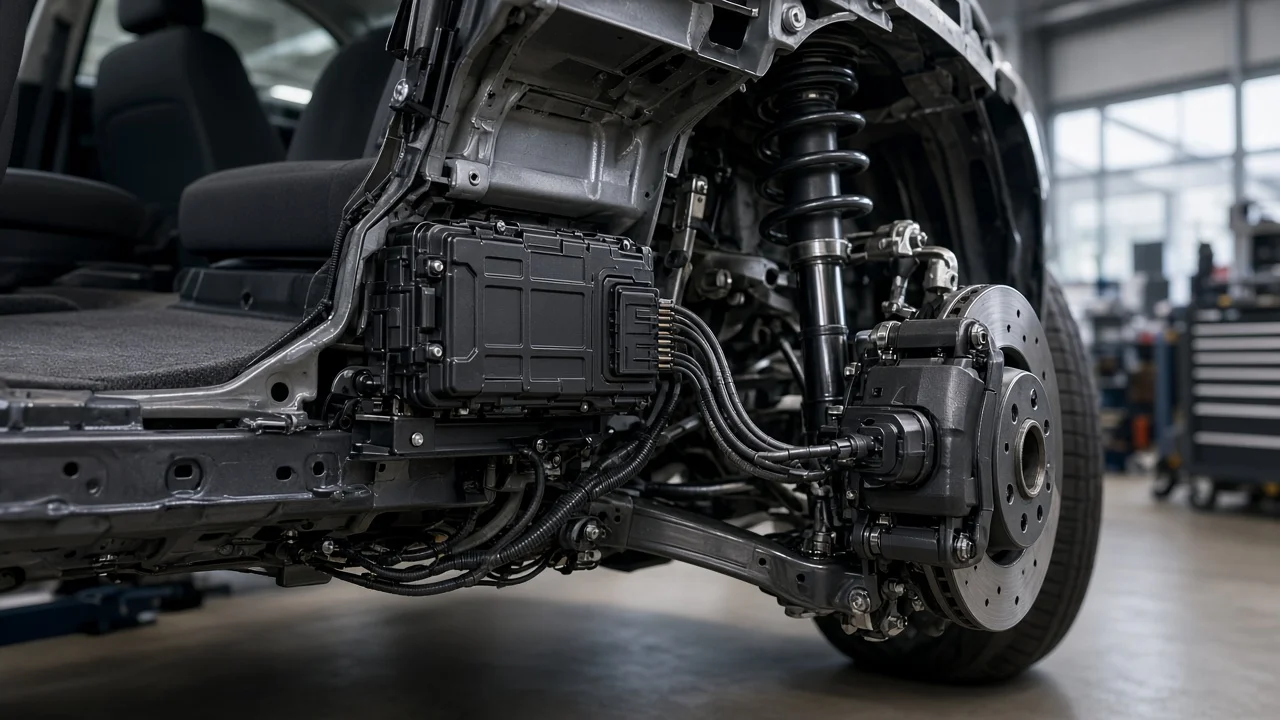
An electronic parking brake replaces the hand lever or foot pedal with a switch. The part that makes it work is the parking brake control module, which decides when to apply or release the rear brakes, monitors the actuators and reports faults. This guide covers what the module does and how to tell where it lives on your vehicle. It also explains the J540 label on Volkswagen Group models and when a parking brake problem needs a shop rather than a new part.
What the parking brake control module does
The module is the electronic controller for the parking brake. When you pull or press the switch, it reads the request and checks conditions such as vehicle speed and ignition state, plus door or seat belt status on systems that use them. It then powers the actuator motors to clamp or release the rear brakes. It also handles automatic functions, such as applying the brake when the engine is switched off on some vehicles, releasing it as you drive away, and running auto-hold where fitted. If it detects an open circuit, a motor drawing too much current or a position that does not match the command, it stores a diagnostic trouble code and lights the parking brake or brake warning lamp.
Identification is the second half of the question. On some vehicles the module is a separate unit with its own part number. On many newer designs, the parking brake logic is built into the ABS or stability control unit, so there is no standalone part to buy. Knowing which arrangement your vehicle uses tells you whether replacing the module separately is even possible.
How the system applies and releases the brake
Most current systems use a small electric motor and gearbox mounted on each rear caliper. The module sends current to the motor, which turns a spindle that pushes the caliper piston and presses the brake pads against the rotor. Because the spindle mechanism holds its position, the brake stays applied with the power off. To release, the module reverses the motor. The module watches motor current to judge when enough clamping force has been reached. That is why a weak battery, a corroded connector or a seized caliper can show up as a module fault even when the electronics are fine.
Other designs use a single central actuator that pulls conventional parking brake cables, or a small drum brake inside the rear rotor hat. Whatever the layout, the module depends on stable supply voltage, the switch signal, wheel speed information shared over the vehicle network and feedback from the actuators. A problem with any of those inputs can stop the parking brake from working.
What J540 means on Volkswagen and Audi vehicles
In Volkswagen Group wiring diagrams and repair information, J540 is the component designation for the electromechanical parking brake control module. It is a diagram label, not a part number. When J540 appears in a fault description or scan report, it tells you which component the code refers to but not which physical part fits your car. On some models J540 is a stand-alone module, while on others the ABS control unit handles the parking brake function. Diagnostic tools may still list the parking brake as its own system in either case. Before ordering anything, match the actual part number, software version and coding to the vehicle identification number.
Configurations that change the answer
Several factors change what applies to your vehicle. Whether control is integrated or stand-alone determines whether you can replace the module separately. Whether the system uses caliper-mounted motors or a cable-pulling actuator changes which parts wear and how the brakes are serviced. Vehicles with auto-hold or hill-hold use the parking brake system more often and may share fault codes with stability control. Updates between model years sometimes bring different software or hardware under the same model name, so checking vehicle fitment by make and model alone is unreliable.
Replacement is also not plug-and-play on many vehicles. A new or used control module often has to be coded, adapted or registered to the car, and some manufacturers require online access through a dealer-level tool. A used module from another vehicle may be locked to its original car. After installation, the system usually needs a basic setting or calibration routine to learn the actuator positions.
What you can check and do as an owner
Start with the warning lights and messages. If the parking brake fault light is on but the brake still works normally, there is a stored code that needs reading. If the brake will not release, releases on only one side or makes a grinding motor sound, deal with it before driving further. Check the battery, since low voltage is a common cause of parking brake errors. Note whether the fault appeared after a battery replacement, a jump start or a brake job. A scan tool that supports the parking brake system gives far more useful information than a generic engine code reader, which usually cannot see that system.
If you service the rear brakes yourself, retract the actuators before removing the caliper. Use the vehicle's maintenance mode for this, either through a scan tool or a procedure in the owner's manual where one exists. Forcing the piston back with an ordinary spreader can damage the motor or spindle. Check the brake pads against the manufacturer's wear limits and the rotors for minimum thickness and scoring. Make sure the caliper slides and piston move freely. Contaminated or glazed friction material or a sticking caliper can cause clamping fault reports that a new module would not fix.
To identify the module for parts, read the label on the unit if you can reach it. Record the part number and where the unit is mounted, then confirm fitment by VIN with a parts supplier or dealer. Do not order based on a diagram label or a photo match alone.
When to stop and get professional help
Some parking brake faults are a safety issue. Stop using the vehicle until it has been inspected if the brake will not hold on a slope or will not release fully. The same applies if a rear wheel drags with heat or a burning smell, or if the main brake warning light is on together with low brake fluid. A parking brake that cannot be released electrically may need the manufacturer's emergency release procedure, which varies by model and should be done as described in the vehicle's service information.
General advice has limits. Module locations, release procedures, coding requirements and wear limits differ between manufacturers and even between model years, and none of them should be guessed. If the codes point to the control module itself, or the job needs coding and calibration you cannot perform, take the vehicle to a shop with the right diagnostic equipment and service information. Before agreeing to a new module, make sure the wiring, supply voltage, actuators and calipers have been checked, since they are often the real cause.