Electric Cars With 300 Miles of Range or More and the 400-Mile Club
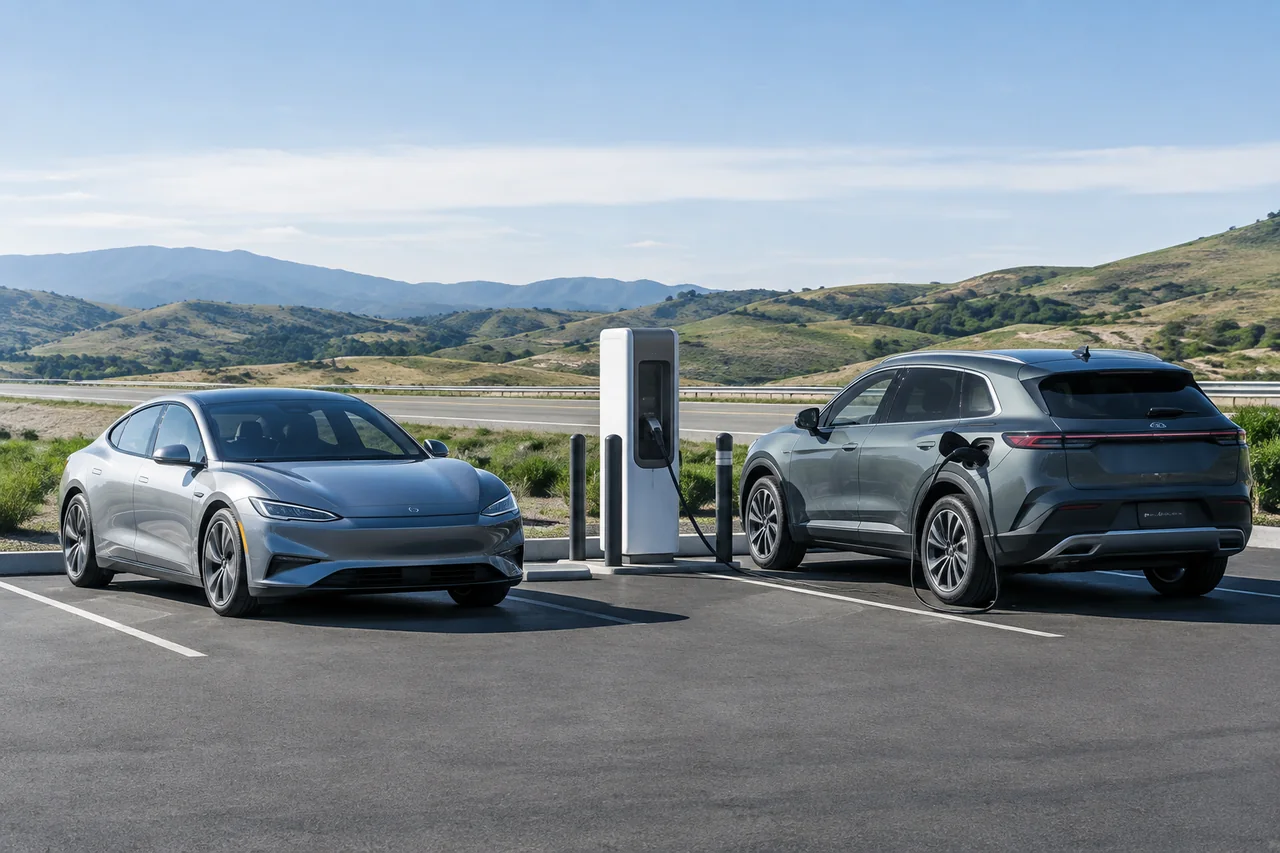
Shoppers comparing a 300 mile range ev, an ev with 300-mile range, or an ev with 400 mile range are matching US EPA combined ratings to a specific model year and configuration. That EPA-rated range is a standardized full-charge figure. Highway driving, cold-weather range, state of charge, and an arrival charge reserve still determine the distance a particular trip can use.
What a 300-Mile EV Range Rating Actually Means
An ev 300 mile range claim is only meaningful when it refers to the US EPA combined range rating published for a particular model year, trim, drivetrain, battery configuration, and wheel size. That official EPA-rated range is a laboratory result under a fixed procedure. It is not the same number as the dashboard estimate, which updates with recent driving, climate settings, and remaining state of charge. The distance available on a given trip is narrower still, because speed, temperature, and route profile never match the test cycle exactly.
The rating describes standardized full-charge driving range from a complete fill, not the miles a driver should plan to use. Many people keep an arrival charge reserve so the vehicle is not driven to a low state of charge at the destination or at charging stops. Here, an ev with 300 mile range and ev cars with 300-mile range include configurations rated at exactly 300 miles. An ev with more than 300-mile range, an ev with range over 300 miles, and ev cars with over 300 mile range need a certified figure above that mark.
Electric Cars and SUVs Rated for 300 Miles or More
US-market electric cars and SUVs that qualify as a 300-mile range ev do so one configuration at a time. A Tesla Model 3 sedan, Hyundai Ioniq 6 sedan, Ford Mustang Mach-E crossover, and Kia EV9 three-row SUV each offer several trims, drivetrains, and battery configurations; only packages whose EPA-rated miles meet the threshold belong. Model year, drive type, battery pack, and wheel size must be confirmed, because a larger wheel or extra equipment can drop a sibling trim below 300 miles.
Those names illustrate body styles rather than a ranked catalog. The Model 3 and Ioniq 6 are five-seat passenger cars with a low, sedan-like profile. The Mach-E is a five-seat crossover SUV. The EV9 is a larger SUV with three-row seating for families who need extra passenger space. Ev cars with 300 mile range and an ev with 300-mile range can therefore be a compact sedan or a three-row utility vehicle; eligibility still follows the certified label for that exact equipment, not the model family as a whole.
EV Configurations That Reach the 350-Mile Mark
An ev with 350 mile range is still a configuration story. Some long-range packs and efficient aero packages carry verified EPA ratings of at least 350 miles, but the same model name in another year, with dual motors, larger wheels, or a different battery configuration, may sit well below that line. A shopper cannot treat the badge as proof. Usable battery capacity in kilowatt-hours and energy efficiency in miles per kilowatt-hour jointly set the certified figure; more stored energy helps only when the vehicle also uses that energy sparingly.
A 350-mile EPA-rated range also does not promise a 350-mile highway leg if the driver wants an arrival charge reserve. Highway driving at sustained speed typically uses more energy than the combined test mix, so the usable window between a chosen departure state of charge and a planned reserve is shorter than the window-sticker number. Ev cars with over 300 mile range that also reach 350 miles remain useful for stretching charging stops farther apart, yet the trip still has to be planned around remaining energy, not around the headline rating alone.
The 400-Mile Club and Vehicles Near the Threshold
Membership in the 400-mile club is limited to configurations with a final EPA rating of at least 400 miles, not a manufacturer estimate or an announced target. Among US-market families, certain Lucid Air passenger cars, Tesla Model S sedans, and Chevrolet Silverado EV pickups are the ones to check, but only the model year and equipment that actually received a certified 400 mile ev range belong in the confirmed group. An ev with 400-mile range and ev cars with 400 mile range are label-verified vehicles, not vehicles described by a press figure.
Near-threshold cars, SUVs, and pickups should be labeled with their exact EPA-rated miles and kept outside the confirmed 400-mile group. An ev car with 400-mile range is a passenger car; a 400-mile range ev can also be an SUV or truck if that body style carries the certified number. Shoppers seeking an ev with 400 mile range or ev cars with 400-mile range should read the window sticker for the intended VIN. Estimated range alone does not establish membership, even when a configuration sits only a few miles short of 400.
Battery Capacity and Efficiency Behind Long Range
Usable battery capacity is the energy the pack can actually deliver, measured in kilowatt-hours, after software buffers and thermal limits. Energy efficiency is the distance the vehicle travels on each kilowatt-hour. Multiplying usable capacity by efficiency gives an approximate range relationship that is useful for comparing battery configuration and aero packages, yet it is not a substitute for official certification testing. Two vehicles with similar pack size can post very different EPA-rated range if one is more efficient on the combined cycle.
Aerodynamic drag, tire compound, wheel size, vehicle mass, and drivetrain losses all raise or lower energy consumption. A larger wheel often increases rolling losses and can change whether a 300 mile range ev stays above the line. Battery capacity alone cannot establish range, charging duration, or whether the vehicle suits a particular trip, because a heavy dual-motor layout may empty a large pack faster than a lighter single-motor layout empties a smaller one. Efficiency and usable energy have to be read together, then checked against the certified label.
Planning Real Trips Around a 300- or 400-Mile Rating
Sustained highway speeds, cold temperatures, cabin conditioning, wind, elevation, cargo, and towing can all reduce the distance available from a full charge, and the effect is not a single universal percentage. Cold-weather range suffers because the pack is less willing to give energy and the cabin needs heat. Headwinds and mountain grades add load that the EPA combined cycle does not reproduce. A 400-mile range ev still needs a condition-specific check before a long highway day, just as an ev 300-mile range car does.
The practical distance is the gap between a chosen departure charge and the arrival charge reserve, not the full-charge rated range. A useful route check uses the vehicle's trip planner, confirms compatible charging stops, accounts for expected weather and speed, and keeps an alternate stop if a station is busy or offline. Home charging access shapes daily use, while charging-stop duration and the manufacturer's charging guidance shape long-distance pacing. Drivers who treat the sticker as a planning ceiling, then subtract reserve and conditions, get a more honest picture of both 300- and 400-mile trips.