Electric Car Road Trips: Route Planning, Charging Stops and Hotel Charging
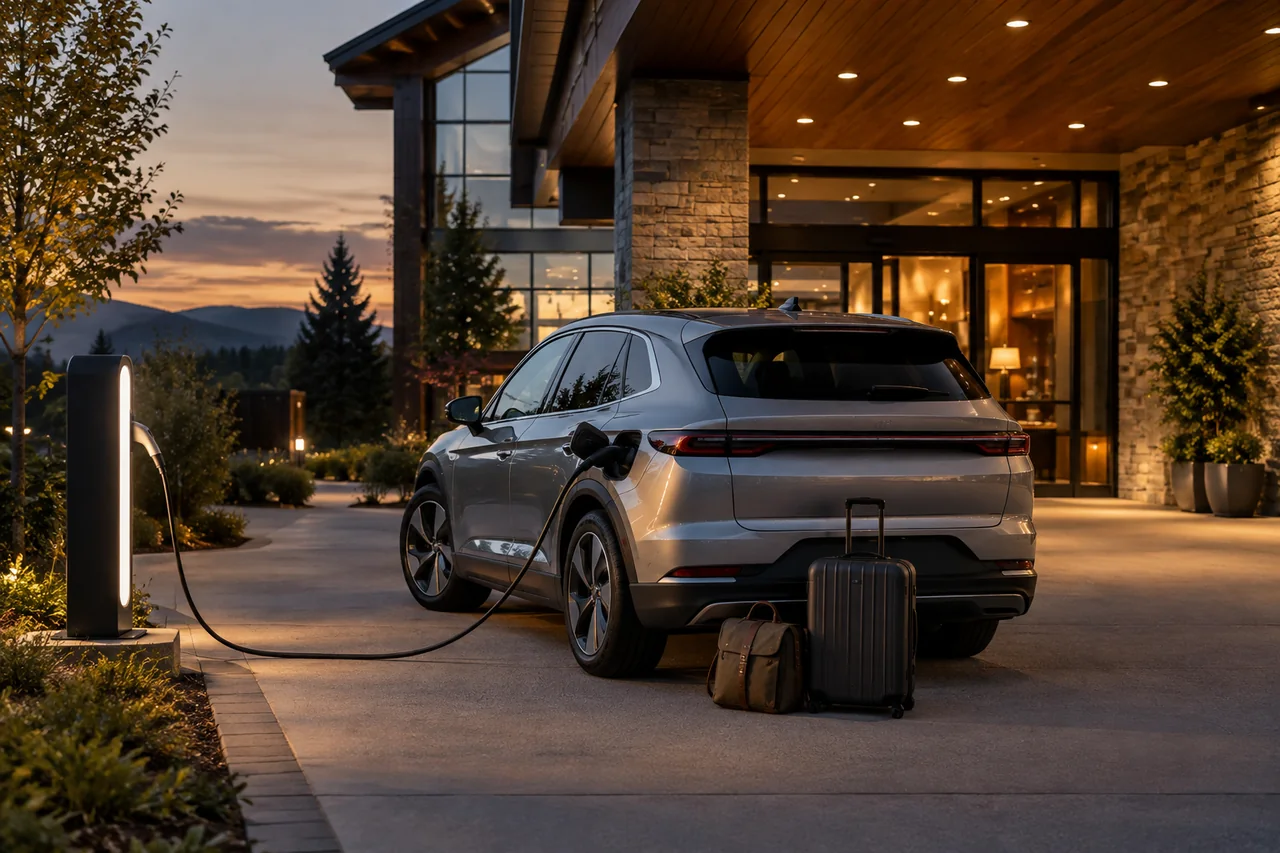
An electric car can handle a long drive well when the route, charging stops and overnight stays are planned together. The main difference from a gas-powered trip is how you add energy: quick highway sessions during the day and slower charging while you sleep. With realistic range estimates and hotel charging confirmed before you book, a promising itinerary becomes a dependable one.
Can Your Electric Car Make the Trip?
Most electric cars can make a road trip when three things line up: enough usable range to reach each charger, compatible charging locations along the way, and a schedule with room for charging breaks. Whether a trip works depends less on the car's advertised range than on how those pieces fit your specific route. A well-covered interstate corridor may feel routine, while the same car on a rural route could need much more careful planning.
Start with your vehicle's charging port and charging capability, a realistic highway range rather than the rated figure, your destination, and where you expect to stop each night. Long gaps between compatible stations, remote parks and towns with only one or two chargers can force shorter legs or extra stops. Plan to stop more often than you would in a gas car, and keep the itinerary flexible instead of committing to a fixed daily distance.
Build a Route With Charging Stops and Backups
An EV route planner, or the car's built-in navigation if it supports charging stops, does the first pass. Enter the exact vehicle, your starting battery charge, the destination and the charge you want left when you arrive at each stop and at the end of the day. The planner then suggests charging locations and estimates how long each session will take. Charging-network apps and station listings act as a second check, showing connector types, prices and user reports that a general planner may miss.
Look closely at each proposed stop. Make sure the equipment fits your vehicle, note the access hours for chargers in parking garages or at businesses, and read recent check-ins for signs of broken units. Restrooms, food and lighting matter too, especially after dark. Because availability can change, pick a backup charger you can reach from the previous stop, and plan to arrive with enough battery left to drive on to it if the main site is crowded or offline.
Find Compatible Chargers and Start a Session
DC fast charging does most of the work on travel days, adding a lot of range during a highway break. Level 2 charging is slower and suits longer stays, such as a museum visit, dinner or overnight charging at a hotel. Before relying on any location, check that the station's connector fits your vehicle's charging port, or that you have a manufacturer-approved adapter. Also confirm that the network accepts your vehicle and account.
At the station, park in the charger's space so the cable reaches without strain. Then follow the on-screen or app instructions to connect and pay. Watch the vehicle's display to confirm that energy is actually flowing before you walk away. Set up network accounts and payment methods at home, since some stations only work through an app with a cellular signal. If a session keeps failing, call the station's support line, and never use a cable or connector that looks damaged.
Allow Enough Time for Each Charging Stop
How long a stop takes depends on your starting charge, your target charge, the battery's temperature, the vehicle's own charging limits and the power the station actually delivers. The power rating shown on the charger is a maximum, not a promise. A car that accepts less power, a cold battery or a station that splits power between stalls can all make a session slower than the sign suggests. Treat the planner's estimates as rough guides.
Charging usually slows down as the battery fills, which is why the charging curve (how fast the car charges at each battery level) matters for trip planning. Instead of waiting for a full battery, charge enough to reach the next stop with a comfortable reserve, then leave. Allow time for the detour off the highway, a possible line, plugging in and starting the session. Choosing stations near restaurants or rest areas lets charging overlap with breaks you would take anyway.
Manage Range on Long Trips and in Cold Weather
Energy use on a long trip changes with conditions. Higher highway speeds, mountain climbs, headwinds, cold temperatures, heavy cargo and roof boxes all increase consumption, and cabin heating adds a steady drain in winter. Together these can leave you arriving with much less charge than the planner first estimated. On a cross-country drive, compare your actual energy use with the navigation's forecast after each leg, and adjust the upcoming stops instead of trusting the original plan.
If your vehicle supports it, preconditioning can warm the battery before a fast-charging stop, which may help it charge better. It can also warm the cabin while the car is still plugged in. Follow the owner's manual, and remember that preconditioning while driving uses battery energy. In cold weather or on routes with few chargers, keep a bigger reserve and allow more time. If your projected arrival charge drops too low, go to an earlier charger you can reach instead of pressing on.
Confirm Hotel Charging Before You Book
Finding hotels with electric car charging usually starts with the charging filter on booking sites or a charging map that shows lodging. Treat those results as a shortlist, not a confirmation. Call or message the property before booking. Ask which connector type is installed, how much charging power it provides, how many charging spaces there are, whether the equipment is working, and whether the chargers are on site or at a partner lot down the street.
Ask who is allowed to use the chargers, whether spaces can be reserved, and what parking or charging fees apply. Some properties limit access at night, set time limits or expect guests to move the car once charging ends. Even a confirmed charger doesn't guarantee an open space when you arrive or a full battery by morning, especially with slower Level 2 equipment. Find a nearby backup charger and make sure you can cover the next morning's first leg either way.
Prepare for Departure and Recheck Each Travel Day
Before leaving home, charge to a level that suits the first leg, following your vehicle's guidance on everyday and trip charging limits. Confirm the first planned charger and its backup. Set up charging accounts and payment methods on your phone, and pack any adapters or portable charging equipment the manufacturer approves. Save station addresses, access notes and support numbers offline for stretches with weak cell reception, so a dead zone doesn't leave you guessing.
Each morning, check the weather, road closures, construction and any mountain climbs on the day's route. Then confirm the evening's hotel charging and your expected arrival charge. If you miss a stop or change routes, let the planner recalculate before you continue. If your battery gets so low that you can't safely reach any charger, pull over somewhere safe, away from traffic, and call roadside assistance. That's better than running out of charge on the highway.