Choosing a Turbo Blanket for the Hyundai Elantra N
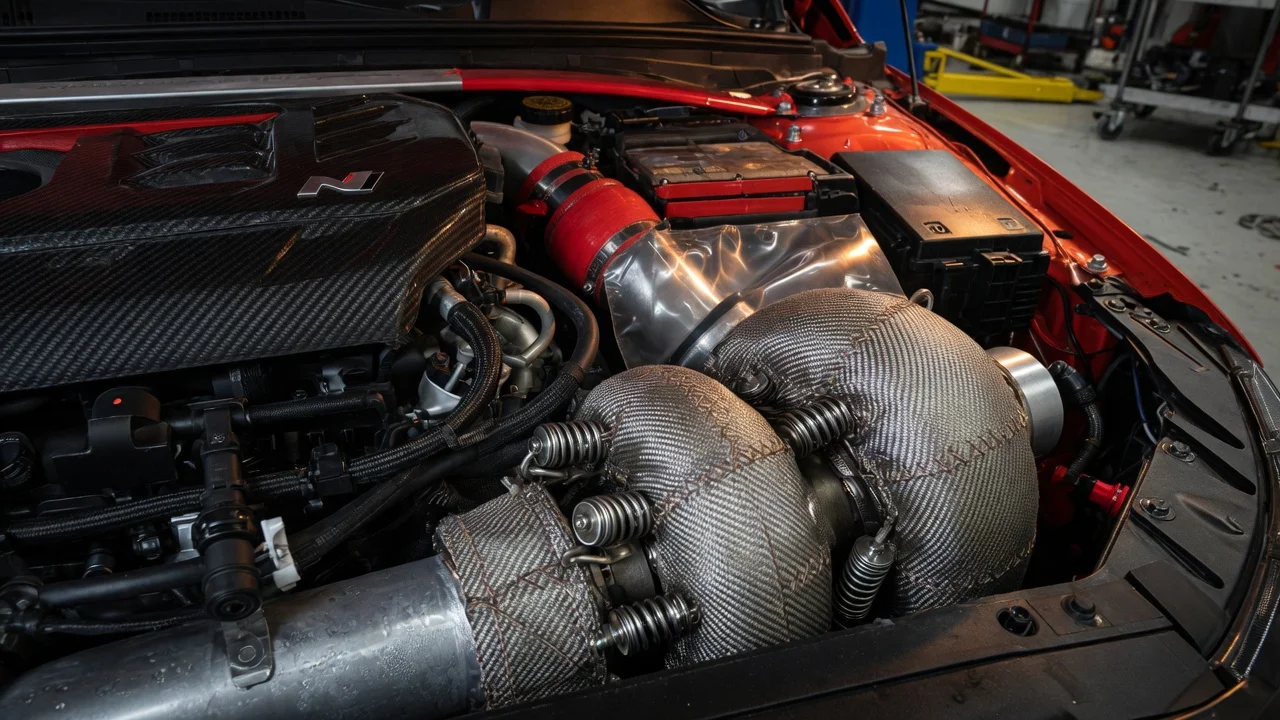
A turbo blanket wraps the turbine housing on the Elantra N's 2.0-liter turbocharged four-cylinder. It keeps more exhaust heat inside the hot side, so less of it radiates across the engine bay. For owners who fight heat soak on track days or in hot climates, it can be a sensible purchase. It will not fix every temperature complaint, though. This guide covers how to decide whether you need one, how to confirm it fits your turbo, and how to compare options without leaning on marketing claims.
Define the job the product must do
Start with why you want a blanket, because that shapes the right choice. Most owners want to cut radiant heat reaching nearby hoses, wiring, intake components and charge piping. Others want to protect parts they have added close to the turbo. A daily driver in a mild climate may see little practical difference. Repeated hot laps, long climbs in summer and heavy stop-and-go traffic are where heat soak usually shows up. Be honest about your driving. A blanket built for frequent removal and track abuse has different priorities from one you install once and leave alone.
Separate symptom reports from verified problems before you spend money. Feeling that the car is sluggish after a hot idle is a symptom. Logged intake air temperatures that climb and stay high, along with reduced ignition timing, are evidence. Use an OBD-II logger to record the same symptom conditions, such as ambient temperature, route and session length, so you have a baseline to compare against after installation. If the check engine light is on or diagnostic codes are stored, diagnose those first. A blanket cannot cure a boost leak, a failing sensor or a wastegate fault, and an unresolved fault will make any before-and-after comparison meaningless.
Check compatibility
Turbo blankets are shaped to a specific turbine housing, not to a car's name. A listing that says Elantra N is a starting point, not proof of fit. Confirm your engine configuration first. The Elantra N uses a 2.0-liter turbo engine, while the Elantra N Line uses a smaller 1.6-liter turbo, so a blanket made for one will not suit the other. Products sold for related Hyundai N models may or may not share the same housing. Ask the seller what housing the pattern was made from, and whether it has been checked against your model year, particularly if your car is a later refreshed version.
If your car has an upgraded or replacement turbo, the blanket must match that unit, not the factory one. Check clearance around the oxygen sensor, the downpipe flange, the wastegate actuator and its linkage, and the oil and coolant lines. Cut-outs should line up without forcing the material against moving parts. Find out whether the factory heat shield has to come off and whether it can go back on later. When you refit any fasteners, follow the manufacturer specifications for torque rather than guessing, because exhaust-side hardware sees repeated heat cycles.
Features that affect the choice
Construction matters more than the label. Most blankets have an insulating core, often fiberglass or silica-based material, inside an outer woven layer. Sellers market that outer layer under names such as basalt, lava or titanium. Those names describe the fabric. They do not tell you how well the blanket performs. A useful temperature rating says whether it is a continuous or peak figure. A single large number with no context tells you little. Some outer layers are coated to shed oil and coolant. That helps under the hood, where a drip that soaks into the insulation becomes a hazard.
Retention is the next trade-off. Springs and hooks allow faster removal for inspection, but springs can lose tension over time. Stainless ties hold firmly but are harder to undo and often need replacing each time. Coverage is a balance too. A blanket that wraps tightly around the housing traps more heat but can crowd sensors and actuators. Treat claims such as race-proven, or a specific percentage drop in engine-bay temperature, as marketing unless the seller explains the test conditions. Better evidence includes clear construction details, installation photos on the same housing, a stated continuous rating and a reasonable return policy if the fit is wrong.
Limitations and ownership costs
Installation is rarely quick. Expect to remove the factory heat shield and work around hot-side fasteners that may have seized from heat cycling. Penetrating oil, patience and anti-seize on reassembly help. The blanket itself is a consumable. Outer fabric can fray, insulation can break down, and retaining hardware wears. A blanket soaked in oil or fuel should be replaced right away, not cleaned and reused. Budget for eventual replacement rather than treating the part as permanent.
A blanket also hides what it covers. Oil weeping at the feed or return lines, coolant seepage and cracks in the turbine housing are harder to spot. Remove it during routine inspection, and record its condition in your service history so later owners or technicians know it was fitted. Turbine housings normally run very hot, and trapping more heat there is a deliberate trade-off. If you run an aftermarket turbo, check that supplier's guidance on insulation. Keep the factory heat shield in case a warranty claim or diagnosis requires the stock setup. A blanket will not lower coolant temperature, add intercooler capacity or clear fault codes.
Build a practical shortlist
Narrow your options with a short checklist. First, confirm the blanket is patterned for your exact turbine housing, factory or aftermarket, and your model year. Second, check that cut-outs clear the oxygen sensor, wastegate hardware and fluid lines. Third, look for a stated continuous temperature rating and a clear description of the layers, not just a fabric name. Fourth, choose a retention method that suits how often you plan to remove the blanket for inspection. Fifth, prefer an outer layer that resists oil, and check the return policy in case the fit is off.
Before buying, log intake air temperatures under repeatable conditions and clear any stored diagnostic codes, so you can judge the result on data rather than impressions. After installation, repeat the same drive and compare. If the numbers barely move, your heat issue may lie elsewhere, such as intercooler efficiency or airflow through the front of the car. If they improve and the blanket stays intact through several heat cycles, add an inspection of its condition to your regular service routine.