EGR Valve Cleaners, Sprays and Kits: What Actually Works
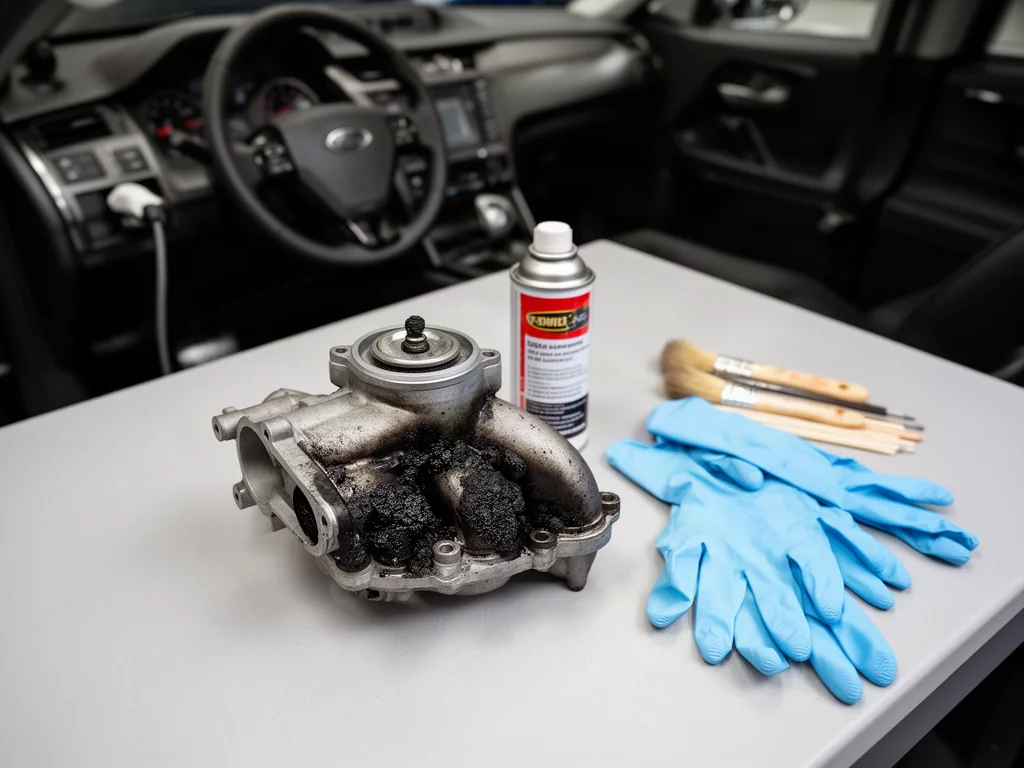
An EGR valve that sticks or leaks can make an otherwise healthy engine idle roughly, hesitate, or turn on the check engine light. Cleaners are a cheap fix, and sometimes they work. Whether one helps depends on what is fouling the valve, whether the engine burns gasoline or diesel, and whether the valve still works mechanically and electrically.
What an EGR Valve Cleaner Is Meant to Remove
The exhaust gas recirculation system sends a metered amount of exhaust back into the intake to lower combustion temperatures. That exhaust carries soot and unburned fuel, and it picks up oil mist from crankcase ventilation along the way. The mix bakes onto the pintle, the valve seat and nearby passages as sticky carbon. Once enough builds up, the valve can no longer close fully against its seat or move smoothly when commanded. Products sold to fix this come as aerosol solvent sprays, liquid soaking solutions, and kits that pair solvent with brushes or adapters.
A solvent cleaner can realistically dissolve light to moderate varnish and soften loose carbon so it can be wiped or brushed away. Thick, glassy layers that have baked on for years often need mechanical removal, and some valves are too far gone to be worth the labor. Keep in mind that a cleaner only treats deposits. If the position sensor has failed, the pintle is worn, the seat is burned or the actuator is damaged, the valve will still misbehave no matter how clean it looks afterward.
Spray Cleaners: How They Work and Where They Fall Short
Aerosol EGR cleaning sprays use strong solvents that soak into carbon and soften it, so the loosened material can be wiped off or flushed out. Most labels say to spray a valve that has been removed, and some describe an access point for limited cleaning on the engine. Removing the valve usually works better because the deposits that matter sit on the pintle, the seat and the inner passage walls. Spraying from outside the housing can't reach those surfaces or keep solvent on them long enough to break the carbon down.
Even a perfectly cleaned valve may not fix the problem if the restriction is somewhere else. A spray does nothing for a clogged EGR cooler, carbon-lined intake runners, or a packed passage between the valve and the manifold, so the engine can still be short of recirculated exhaust. Handling matters too. These solvents are flammable, and they can damage some plastics, paint and sensor coatings. Following the product's directions and warnings exactly, rather than improvising with extra product or heat, protects both the parts and the person doing the work.
Diesel EGR Valve Cleaners and Why Soot Behaves Differently
Diesel engines recirculate much more exhaust than gasoline engines, and that exhaust is full of soot. Mixed with oil vapor, it forms a thick, tar-like layer instead of the thinner, drier carbon typical of gasoline engines. That's why diesel-specific cleaners are often sold with stronger or longer-acting solvents. On many diesels, though, most of the buildup isn't in the valve. The EGR cooler and intake manifold often hold far more soot, so cleaning only the valve may bring a small or short-lived improvement before the symptoms return.
Match your expectations to the condition of the part. On a lightly fouled diesel valve, solvent can restore free movement and a proper seal. A valve packed with hardened soot usually needs mechanical cleaning, and one that has been sticking for a long time may be worn enough that replacement makes more sense. Before buying anything, check that the product says it is suitable for your type of valve. Many modern diesel EGR valves have electronic actuators and built-in position sensors, and solvent on those parts can cause the very damage you were trying to avoid.
EGR Valve Cleaning Kits: What Comes in the Box and When They Make Sense
A typical EGR cleaning kit includes solvent, brushes or picks, gloves, and sometimes gaskets or adapters, though contents vary widely between products. The extra tools are worth having when deposits are too heavy for solvent alone and need scrubbing to break up. A kit also makes sense when the valve is coming off anyway, because a disturbed gasket should generally be replaced rather than reused. Having one on hand means the vehicle doesn't sit apart while you wait for parts.
The catch is that kit gaskets and adapters are generic. Flange shapes, bolt patterns and sealing surfaces differ between engines, so check the fit against your actual valve instead of trusting the packaging. A gasket that almost fits can leak and bring back the same symptoms. Just as important, no kit can diagnose anything. It can't tell you whether the real fault is deposits, a failing sensor, a vacuum or electrical actuator problem, or a blocked cooler, so buy the kit after diagnosis, not in place of it.
Choosing a Cleaner: What 'Best' Means for Your Engine
Choosing a cleaner starts with the type of deposit and the fuel. Gasoline engines tend to leave varnish and fairly light carbon, while diesels produce heavier, oilier soot that needs a stronger product or a longer soak. It also matters whether the valve will come off the engine or be cleaned in place. After that, the label tells you most of what you need: whether it is meant for gasoline or diesel, any sensor-safe or plastic-safe claims, how long it needs to sit, and whether residue has to be rinsed or wiped off before the valve is reinstalled.
There is no single best cleaner, because results depend on how bad the deposits are, how easily the valve can be reached, and whether the valve is mechanically sound to begin with. A product that works well on a lightly varnished gasoline valve may barely touch a soot-caked diesel valve. Judging a product against those conditions is more useful than trusting a ranking. Be especially careful with fuel-tank additives sold as EGR cleaners. They work on combustion deposits as the fuel burns and can't free a pintle that is already stuck.
Symptoms, Limits of Cleaning, and When Professional Testing Is Needed
Common signs of EGR trouble include a rough idle, stalling at idle, hesitation when accelerating, reduced power, extra smoke on diesels, and a check engine light. None of these is unique to the EGR system, since vacuum leaks, ignition problems, fuel delivery faults and sensor issues can cause the same complaints. A stored EGR fault code is evidence to interpret, not proof of a dirty valve. What each code means, and what triggers it, varies by manufacturer, so confirm the meaning for your specific vehicle before buying a cleaner.
Looks can mislead in both directions. A valve that looks clean can still fail electrically, and a flow-related code may come from a cooler, a restricted passage, a sensor or a cracked vacuum line rather than the valve itself. Get professional testing when codes come back after cleaning, when the valve won't move when commanded, when there are signs of coolant in the intake on a cooled EGR system, or when reaching the valve means disturbing fuel or coolant lines. Those situations call for testing, not more solvent.