Choosing a Turbo Blanket for a Duramax Engine
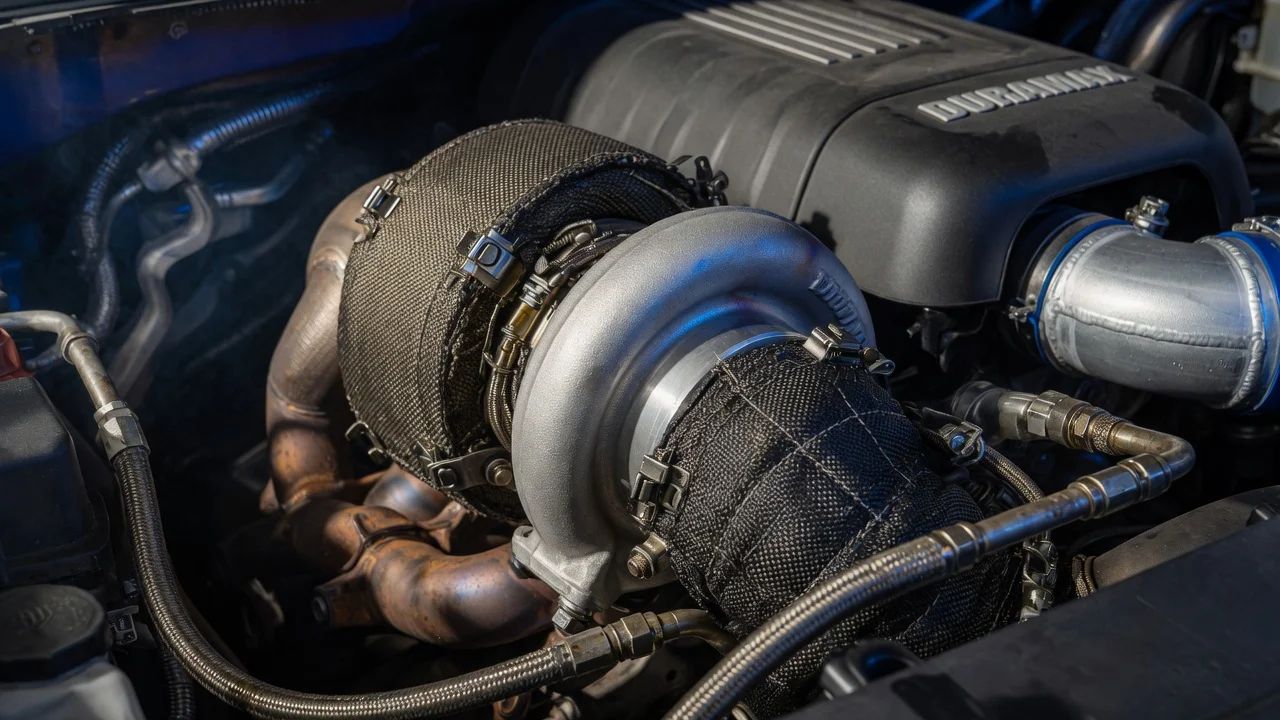
A Duramax turbo blanket is a fitted insulating cover for the hot turbine side of the turbocharger. It keeps more heat inside the housing so less of it radiates onto wiring, hoses and nearby components. Whether one is worth buying depends on your engine generation, how the truck is used and what problem you are trying to solve. This guide covers fitment, materials, trade-offs and ownership costs so you can choose one that fits your truck.
Define the job the product must do
Start with the reason you want a blanket. The most common goals are reducing radiant heat around the turbo, protecting nearby wiring, connectors and fluid lines, and keeping engine bay temperatures in check during heavy towing, long grades or extended idling. Modified trucks that run higher exhaust temperatures are another common case. If your truck is stock and mostly used for light commuting, a blanket may offer little practical benefit. Be honest about that before spending money.
Separate symptom reports from verified failures. Forum stories about melted connectors or heat-related faults describe individual trucks, not a confirmed pattern for yours. If you are buying a blanket to address a problem, confirm the problem first. Do a visual inspection of the harness and connectors near the turbo and read any stored diagnostic codes. Note the symptom conditions: only after towing, only after a hot shutdown, or all the time. A blanket will not repair a damaged harness, a failing actuator, sticking vanes or a boost leak. Those need to be diagnosed and fixed on their own.
Also consider practical constraints: your budget, whether you will install it yourself, and how much disassembly you are willing to do. Access around the turbo is tight on every Duramax generation. If your truck still has its factory heat shielding, decide whether the blanket will supplement it or replace it. Some blankets are not designed to fit under the original shields.
Check compatibility
The Duramax name covers several engine configurations. The main 6.6L generations are the LB7 (roughly 2001–2004), LLY (roughly 2004.5–2005), LBZ (roughly 2006–2007), LMM (roughly 2007.5–2010), LML (roughly 2011–2016) and L5P (2017 onward). There is also a separate 3.0L inline-six. Turbo housing shape, mounting and surrounding hardware differ between them, so a blanket made for one generation will not necessarily fit another. The LB7 uses a fixed-geometry turbo, while later 6.6L engines use variable-geometry turbos with an actuator mounted on the unit. On those engines the blanket must clear the actuator, its wiring and any linkage. Because some model years were split between two engines, identify yours by the engine RPO code on the vehicle's service parts identification label rather than by model year alone.
Check the service history for turbo replacements or upgrades. A stock-style replacement turbo generally takes a stock-fit blanket. An upgraded unit, a different turbine housing or a compound setup usually does not. For aftermarket turbos, shop by the turbo maker's frame size and housing rather than by truck application. Also check clearance to the up-pipes, downpipe, oil feed and return lines, and EGR plumbing on generations that use it. Read the blanket maker's specifications for the exact housing it covers. If the listing names only a broad year range without engine codes, ask before buying.
Features that affect the choice
Material and construction matter more than branding. Common options are woven fiberglass, basalt fiber (often marketed as lava) and silica-based fabrics, usually layered around an insulating core. Look at how the temperature rating is stated. A continuous rating is more useful than a peak or intermittent figure, and a rating without any explanation tells you little. Stitching should use heat-rated thread or wire, because ordinary thread is a common weak point. Some outer layers are treated to resist absorbing oil and fluids, which is worth having in a diesel engine bay.
Fastening and coverage affect both fit and future service. Springs hooked through metal eyelets, safety wire and stainless straps are common. Designs that come off without cutting anything make later inspection much easier. Most blankets cover only the turbine housing and leave the compressor side and center section uncovered. Follow the maker's coverage guidance rather than wrapping more of the turbo on your own initiative.
Treat performance labels such as faster spool, more power or lower exhaust temperatures as claims, not evidence. A documented before-and-after comparison on the same truck under the same conditions is evidence. Most product listings do not include one. More useful signs of a well-made product are a fit list that names engine codes, clear installation instructions showing actuator clearance, a stated material specification, and written warranty and return terms.
Limitations and ownership costs
Install only on a fully cold engine. Expect to remove the intake tube, shields or other parts for access, depending on the generation. Before covering the housing, inspect the up-pipe and downpipe connections for soot trails or other signs of exhaust leaks, because a blanket will hide them afterward. Fix any oil leak around the turbo, its lines or nearby seals first. An oil-soaked blanket sitting on a hot housing is a fire risk, and it also hides the leak from view.
A blanket is a wear item. Repeated heat cycles can make the fabric brittle, fray the edges and weaken the springs or straps. Check it during routine service, make sure it has not shifted onto wiring or hoses, and replace it once it degrades. It also has to come off for any turbo work, which adds a little labor each time. By design, a blanket keeps more heat in the turbine housing. If your turbo maker or warranty terms say anything about insulation, follow them. A blanket does not lower exhaust gas temperatures at the source, clear codes or substitute for proper diagnosis.
Build a practical shortlist
Narrow your options with a short checklist. Confirm the engine RPO code and whether the turbo is stock, a stock-style replacement or an upgrade. Keep only blankets whose fit list names your generation or exact turbo. On variable-geometry engines, confirm the design clears the actuator and its connector. Decide whether the blanket must work with your factory heat shielding. Compare material, how the temperature rating is stated, stitching and fastening method. Prefer listings with clear installation instructions and written warranty and return terms. Finally, weigh the total cost, including the labor or time to install it and the likelihood of replacing it later.
If you are chasing a heat-related problem rather than adding general protection, do the inspection and code reading first and fix what you find. Then choose a blanket that fits your engine and turbo correctly as a supporting measure, not as the repair itself.