Duramax Glow Plug Relay Selection: Fitment, Features and Real Costs
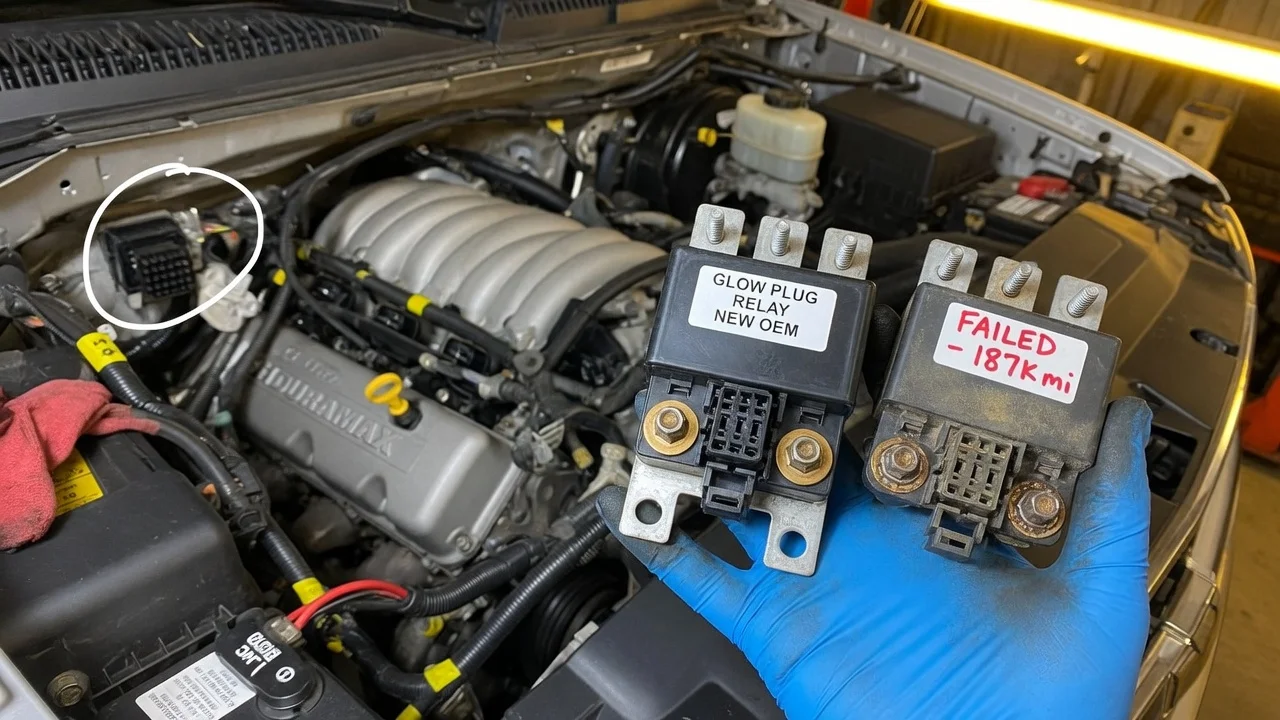
A Duramax glow plug relay, or the glow plug control module that replaces it on later engines, decides whether the cylinders get heat before a cold start. Buying the wrong part, or replacing a good one, wastes money and leaves the hard-start problem in place. This guide explains how to confirm the relay is actually at fault, match a replacement to your engine, compare the features that matter and budget for the work around it.
Define the job the product must do
Duramax engines are diesels that rely on compression to ignite fuel. In cold conditions the glow plugs preheat the combustion chambers so that compression heat is enough to light the fuel. The relay or module switches high current from the battery to the plugs for a timed period, based on coolant temperature and other inputs from the engine computer. On a warm day a truck may start normally with a dead relay. Problems show up in cold weather as long cranking, rough idle, white smoke, a glow plug warning light, or codes such as P0380 or the P0670 range. How you use the truck matters: one parked outside through a northern winter depends on reliable preheat every morning, while a garaged truck in a mild climate may rarely need it.
Before buying, confirm the problem is electrical rather than fuel delivery. Hard cold starts can also come from a restricted fuel filter, air entering the supply side, a weak lift fuel pump, low rail fuel pressure, or an injector returning too much fuel. A scan tool that shows desired versus actual rail pressure during cranking, along with injector balance or fuel trim data once the engine runs, helps separate these causes. Common rail Duramax systems operate at extremely high pressure. Never loosen injector lines or fittings to bleed or test the system while the engine is running or just after shutdown; leave any high-pressure leak check to the correct procedure and equipment. Anti-gel additives help prevent fuel waxing in cold weather, but they do not repair a fault in the preheat circuit.
Check compatibility
Fitment starts with engine identification, not just model year. GM has built several Duramax versions identified by RPO codes such as LB7, LLY, LBZ, LMM, LML, LGH, L5P and the 3.0-liter inline six. Engine configuration changes the part: the 6.6-liter V8 runs eight glow plugs, while the 3.0-liter inline six runs six. Early LB7 trucks generally use a conventional high-current relay, while later engines use an electronic glow plug control module that reports circuit faults to the engine computer. Confirm your engine with the RPO code on the service parts label in the glovebox or the eighth character of the VIN, then compare the part number printed on the unit you are replacing.
Next, check the physical and electrical interfaces: connector shape and pin count, mounting bracket or bolt pattern, harness length if the part ships with pigtails, and the type of control signal it expects. A module designed for a different control strategy will not work correctly just because the plug fits. Chassis cab and van versions can also differ from pickups with the same engine in mounting location and harness routing, so verify the listing covers your exact body style.
Features that affect the choice
The meaningful differences are current handling, diagnostic capability, environmental sealing and terminal quality. All glow plugs draw substantial current at the same time during preheat, so a unit with undersized internals or poor terminal crimps can overheat or fail early. On module-equipped engines, a replacement that keeps individual circuit monitoring lets the engine computer flag a single failed plug instead of leaving you to test all of them by hand.
Treat labels such as heavy duty, upgraded or performance as marketing unless they are backed by a published current rating, a stated operating temperature range, a sealing specification or a part-number cross-reference to the original. Original equipment and OE-supplier units usually cost more but have a known fit, while aftermarket quality varies widely. Useful evidence includes a clear cross-reference list, written warranty terms and photos of the actual connector rather than a generic product image.
Limitations and ownership costs
A new relay or module cannot fix glow plugs that have failed open, a corroded harness, a blown fuse or fusible link, a bad ground, or a weak battery that sags during cranking. Check plug resistance and voltage at the plugs during the preheat cycle before blaming the controller. Glow plugs can also seize in the cylinder head after years of heat cycling. If you plan to replace plugs along with the relay, allow time for penetrating oil and careful removal, and accept that a broken plug may mean a shop visit.
Plan for small extras: dielectric grease for connectors, spare fuses, possibly new pigtails, and a scan tool that can read and clear glow plug codes. Ask the supplier whether a later-model module needs any setup or relearn step before you buy. A block heater is a worthwhile companion in severe cold, but it does not replace a working preheat system. After installation, verify the preheat cycle with a meter or scan data and confirm that codes stay cleared through several cold starts.
Build a practical shortlist
Use these points to narrow the options: a diagnosis that points to the relay or module rather than plugs, wiring, battery or fuel supply; a match on engine RPO code and original part number; an identical connector, pin count and mounting; a published current rating or OE cross-reference; retained diagnostic feedback on module-equipped engines; sealing suited to under-hood moisture and road salt; clear warranty terms; and a total cost that includes any harness, fuses or plugs you will replace at the same time.
If two candidates pass every item, choose the one with clearer documentation rather than louder claims. A part that matches the original specification and is installed on clean, tight connections will usually outlast an unverified upgrade. Keep the old unit and the receipt until the truck has started reliably through a run of cold mornings.