Duramax Glow Plug Control Module: How to Choose the Right Replacement
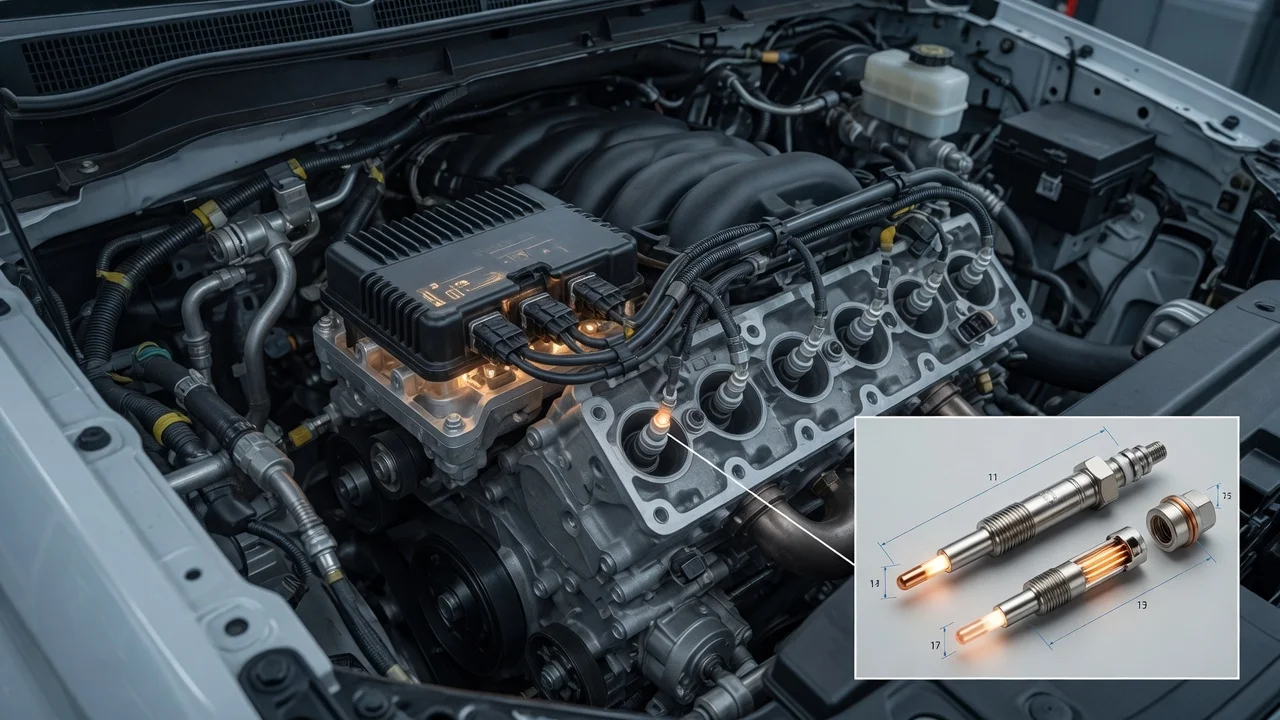
A failing glow plug control module on a 6.6 Duramax usually shows up as hard cold starts, white smoke, a rough first minute of idle and a wait-to-start lamp that behaves oddly. Choosing a replacement depends mostly on correct diagnosis and fitment, not on brand. This guide explains how to confirm the module is actually at fault, match it to your engine generation, judge the features that matter and keep ownership costs realistic.
Define the job the product must do
The module switches heavy battery current to the eight glow plugs of the V8 during cold cranking and the afterglow period, then reports circuit faults to the engine computer. How much you depend on it varies with your use. A truck that starts outdoors through northern winters, a fleet unit that must start every morning without fail, and a towing rig parked in a heated shop all need the same function. They do not carry the same risk if the part is marginal. Be clear about your climate, how long you plan to keep the vehicle and how much downtime you can accept before you compare parts.
Confirm the diagnosis before buying anything. Many cold-start complaints come from the fuel side rather than the glow system: a restricted fuel filter, air entering the supply side, a weak lift pump or high-pressure fuel pump, low rail fuel pressure during cranking, or an injector with excessive return flow. A scan tool can compare desired and actual fuel pressure while cranking and show injector balance rates. These rates work much like a fuel trim and point to an injector that needs large corrections. On the electrical side, generic codes such as P0670 for the module control circuit, P0671 through P0678 for individual cylinder plug circuits and P0683 for module-to-ECM communication narrow the problem. Measure plug resistance at the harness with the engine off. Never loosen high-pressure fittings to check fuel delivery. A common-rail system can hold dangerous pressure, so use scan data and the manufacturer procedure instead.
Check compatibility
The 6.6 Duramax has been built in several generations, including the LB7, LLY, LBZ, LMM, LGH, LML and L5P. Glow plug control hardware, connectors, mounting and communication differ between them, and some changes happen mid-year. Identify your engine using the eighth character of the VIN and the RPO codes on the service parts identification label. Then compare the part number printed on your existing module with the replacement listing. Also check the vehicle platform, because heavy-duty pickups, chassis cabs and vans with the same engine configuration do not always share identical parts.
The physical interfaces matter as much as the listing. Check connector pin count and keying, bracket and bolt pattern, and the condition of the harness-side connector, power feed and fuse. On later engines the controller exchanges diagnostic data with the ECM. A unit that bolts on but does not match the expected communication can set new codes. Check the service information for any setup or relearn step after installation instead of assuming the part is plug-and-play.
Features that affect the choice
The main options are a genuine factory part, a remanufactured unit and a new aftermarket module. A factory part gives the most certain match to connectors and ECM behavior at the highest price. A remanufactured module can cost less but usually carries a core charge, and its quality depends on what the rebuilder replaces. A new aftermarket unit may be cheapest. Fitment detail and documentation vary widely between sellers, so weigh price against how easily you can return a part that does not work.
Separate real evidence from marketing labels. Words like heavy duty, upgraded or OEM quality tell you nothing unless the listing also gives a clear cross-reference to the original part number and photos of the connector and mounting. Warranty and return terms should cover electrical failure. Look closely at sealing at the housing and connector, because truck electronics see water, road salt and repeated heat cycles. Some sellers bundle the module with plugs or a connector pigtail. A bundle helps only if your own tests show those parts also need replacement.
Limitations and ownership costs
A new controller cannot fix worn glow plugs, a chafed or corroded harness, low compression or poor fuel delivery. A shorted plug or damaged wiring can also stress the replacement, so test each circuit before installing it. Winter fuel treatments can help prevent gelling in cold weather, but no additive repairs an electrical fault, a failing injector or a fuel pressure problem. Treat additives as prevention, not a diagnosis.
Budget for more than the module. Possible extra costs include plugs, connector repair parts, labor and scan tool time to clear codes and confirm the repair. Glow plugs on high-mileage engines can seize, so follow the service procedure if plug replacement becomes part of the job. While you are working near the engine, do a visual leak check around the fuel filter housing and supply lines. Report any wet fittings for proper repair rather than tightening anything under pressure. Keep the battery and charging system healthy, because the glow cycle draws a large current on every cold start.
Build a practical shortlist
Use this checklist on each candidate. Is the diagnosis confirmed with codes, plug resistance and fuel-side scan data? Is the part matched to your engine code, model year and platform? Does the listing cross-reference your original part number? Do the connector and mounting match what is on the truck? Do you know whether any setup step is required? Are the warranty and return terms clear? Are the plugs and harness proven good? Have you estimated the total cost including labor and related parts? A candidate that leaves any of these unanswered should drop down your list, whatever the price.
After installation, clear the stored codes and check the wait-to-start behavior on a cold start. Recheck for codes after the first few cold mornings. A clean result over several cold starts confirms the repair better than a single successful test in the driveway.