Dual In-Tank Fuel Pump Setup
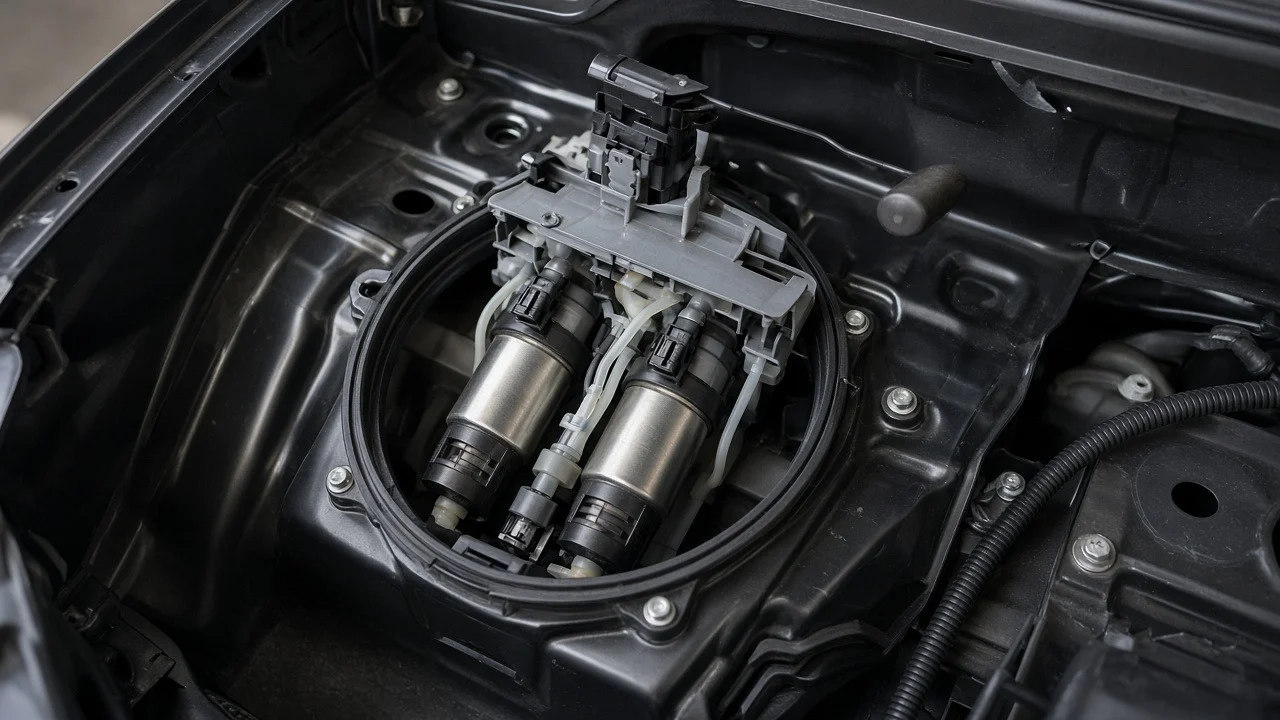
A dual in-tank fuel pump setup uses two pump assemblies mounted inside the fuel tank to deliver fuel under pressure to the injectors, instead of relying on a single module. This configuration appears in vehicles that need steady volume and fuel pressure across a wider demand range, such as high-performance builds, forced induction applications, or certain trucks with complicated tank shapes. The second pump can run continuously, stage in under load, or provide transfer between tank sections. Understanding the layout helps clarify how fuel delivery, fuel trim, and pump control differ from a conventional single-pump return or returnless system.
Essential answer
The essential answer is that a dual in-tank fuel pump arrangement places two fuel pump assemblies inside the tank so the system can maintain adequate fuel pressure and volume when one pump alone may be marginal. This is not simply two identical parts bolted together; the modules may share a pickup, use separate hangers, or sit in opposite saddle sections of the tank. The reason for the layout is usually demand driven. High-flow injectors, forced induction, or engine configurations with aggressive fuel requirements can outrun a single pump, and the second in-tank pump provides additional flow without moving the primary supply outside the tank.
A dual setup also changes how the fuel system behaves under normal driving. Depending on the control strategy, one pump may operate at idle and low load while the second activates at a throttle or pressure threshold. Some designs run both pumps together but vary voltage. The vehicle may still use a single fuel filter and one supply line, or it may split the plumbing. For a reader researching whether the term applies to a stock vehicle or a modified one, the key distinction is not just the number of pumps but how the fuel pump control module stages them and whether the hanger assembly is engineered for two modules rather than adapted from a single pump.