Drivetrain Communication Codes: U0102, U0103, U0114, U0136 and U0138
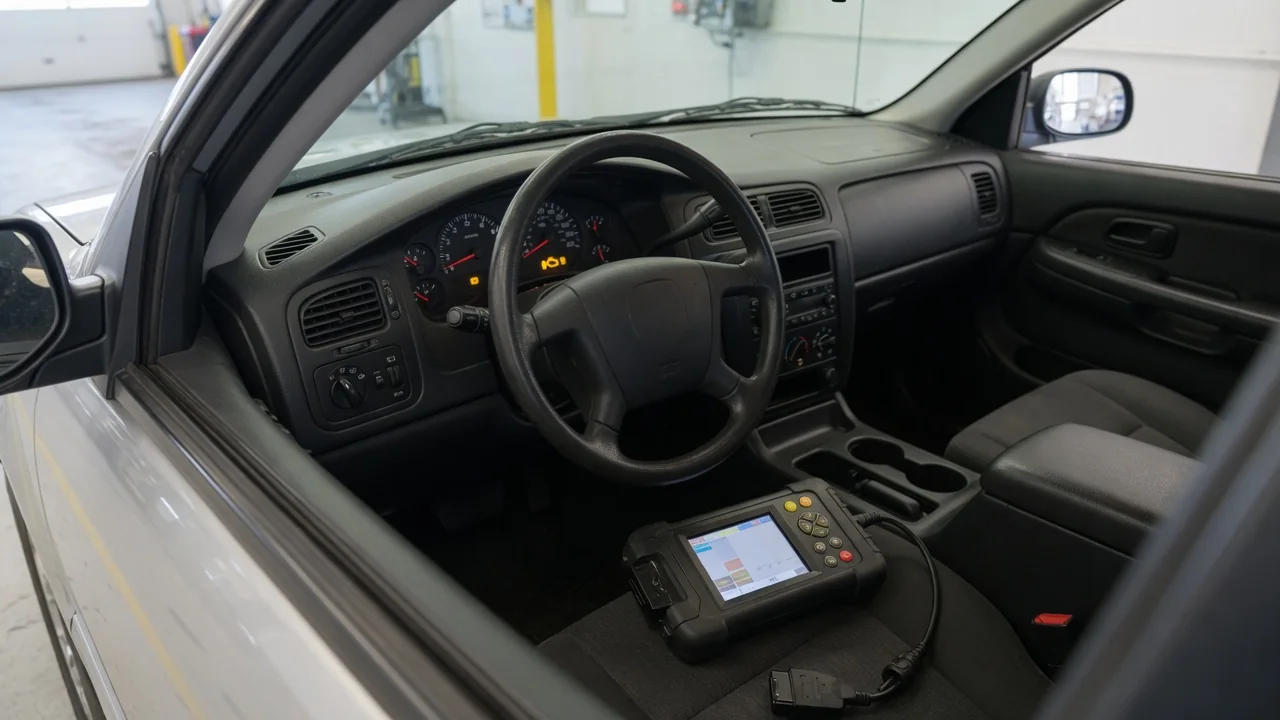
Lost-communication codes U0102, U0103, U0114, U0136, and U0138 record that expected drivetrain-module messages did not arrive on the vehicle communication network. They may appear with a warning after a battery event or an intermittent communication fault. Confirm each vehicle-specific definition first, because module names and network layout vary by year, make, model, and equipment.
What a drivetrain communication code can tell you
A lost-communication code means a controller did not receive expected messages from a named module on the vehicle communication network. That record is missing traffic, not proof that the transfer case control module, gear shift control module, four-wheel-drive clutch control module, differential control module, or all-terrain control module has failed. Interrupted module power and ground, a loose connector, network damage, or software disruption can all silence those messages while the hardware remains serviceable.
Before interpreting any code in this group, confirm the exact definition and module designation for the vehicle's year, make, model, and drivetrain, because manufacturers reuse numbers. The reporting module shows who noticed the silence. Current versus stored status, accompanying codes, and the warning that appeared with them help separate a one-time voltage dip from an ongoing network problem. A stored code with no matching symptom still needs that same context before any part is condemned.
U0102: Transfer case control communication
U0102 is often linked to a transfer case control module, but only after the vehicle-specific definition and installed transfer-case equipment are confirmed. Some four-wheel-drive layouts use a dedicated controller; others fold the function elsewhere or omit it. Treating U0102 as a failed transfer case without that check aims diagnosis at the wrong assembly. The code still reports missing messages, so power, ground, connectors, and network integrity remain open until tested.
Interrupted transfer-case communication may bring a drivetrain warning or make mode selection unavailable. Those effects are possible, not guaranteed, and they do not identify a failed actuator. Note the selected mode, the displayed mode, when the warning appeared, and whether a battery disconnect, jump-start, or low-voltage event came first. Repeatedly changing modes to provoke the fault can add extra stored codes and is not a substitute for a structured scan.
U0103: Gear shift control communication
Verify the vehicle-specific U0103 definition and the gear shift control module designation for that selector and transmission before explaining the code. Some vehicles use an electronic shifter controller; others map the same number to a different network node. Once confirmed, U0103 still means expected gear-shift messages were missing. It does not prove a failed shifter, a failed transmission, or a mechanical park-lock fault.
A selector warning, unavailable gear selection, or disagreement between the selector and the gear display can appear, yet those signs do not identify a failed component. If engagement feels uncertain, the vehicle moves when it should not, or Park cannot be confirmed, stop using it and arrange professional assistance rather than forcing a range change. A stored U0103 after a battery event may not return once voltage is stable, but that still needs a full-system scan to confirm.
U0114: Four-wheel-drive clutch control communication
Confirm that the vehicle-specific U0114 definition identifies communication with a four-wheel-drive clutch control module and that the vehicle actually has that controller. All-wheel-drive and part-time systems may use a clutch or coupling, but layouts differ and some never use this module. Reading U0114 as a worn clutch skips that confirmation. Reporting module, code status, and companion network codes still matter more than the number on a basic reader.
A four-wheel-drive warning or unavailable traction function can accompany U0114, but the code does not reveal clutch design or a fallback operating mode. Communication loss cannot establish clutch wear, mechanical damage, or which wheels are receiving drive. Professional testing must show whether the coupling still applies and releases as commanded. Until that is done, treat traction capability as uncertain rather than as a confirmed mechanical failure.
U0136: Differential control communication
Tie U0136 to a differential control module only after verifying the vehicle-specific definition, the module designation, and the equipped differential system. Some axles use electronic locking or torque distribution; others are mechanical and would not set this communication code for that reason. Matching the code text to installed hardware is the first filter. Even then, U0136 records missing messages, not a broken gear set or a seized unit inside the housing.
A differential-related warning or unavailable electronically controlled function may appear, without proving a locking feature is fitted or that it has failed. Communication loss also does not prove internal differential damage. Binding on pavement, severe vibration, or abnormal noise is a separate mechanical concern; if those appear with U0136, stop and seek assistance. Note whether the warning arrived in a turn, on a high-traction surface, or after a low-voltage event.
U0138: All-terrain control communication
U0138 belongs with an all-terrain control module only after that terminology and the vehicle-specific definition are confirmed. Terrain-mode control coordinates transfer-case, differential, and traction responses the vehicle already has; it does not add hardware that was never installed. A code on a vehicle without selectable terrain modes, or with a different factory module name, needs that mismatch resolved first. Missing messages remain an incomplete hardware diagnosis.
A terrain-mode warning or unavailable mode selection can follow an intermittent communication fault, with effects limited to installed systems. A warning does not reveal the status of every drivetrain function. Record the displayed message, the mode requested, and whether U0102, U0103, U0114, or U0136 appeared on the same scan, because a shared network or voltage problem can silence several controllers together. Do not rely on a mode the vehicle has already marked unavailable.
Safe observations and the professional diagnostic path
Preserve exact warning messages, current or stored code status, symptom timing, and recent battery or repair history before codes are cleared. Low supply voltage, missing module power or ground, connector problems, and network faults are diagnostic possibilities, each needing evidence. A basic reader may not access every relevant module. A vehicle-capable full-system scan, vehicle-specific network information, and electrical testing show which controllers are silent and which are only reporting that silence.
Multiple communication codes can arise from one shared fault such as a voltage drop or a damaged network segment, so module replacement or programming requires a confirmed diagnosis. Electrical checks of power, ground, and network integrity belong with someone who has the correct diagrams and a capable scan tool. Avoid probing network wiring, bypassing shift or park interlocks, or working beneath the vehicle. Arrange assistance when shifting, engagement, or vehicle control is uncertain.