DOT 5 Silicone Brake Fluid: Labels, Compatibility, and Safe Use
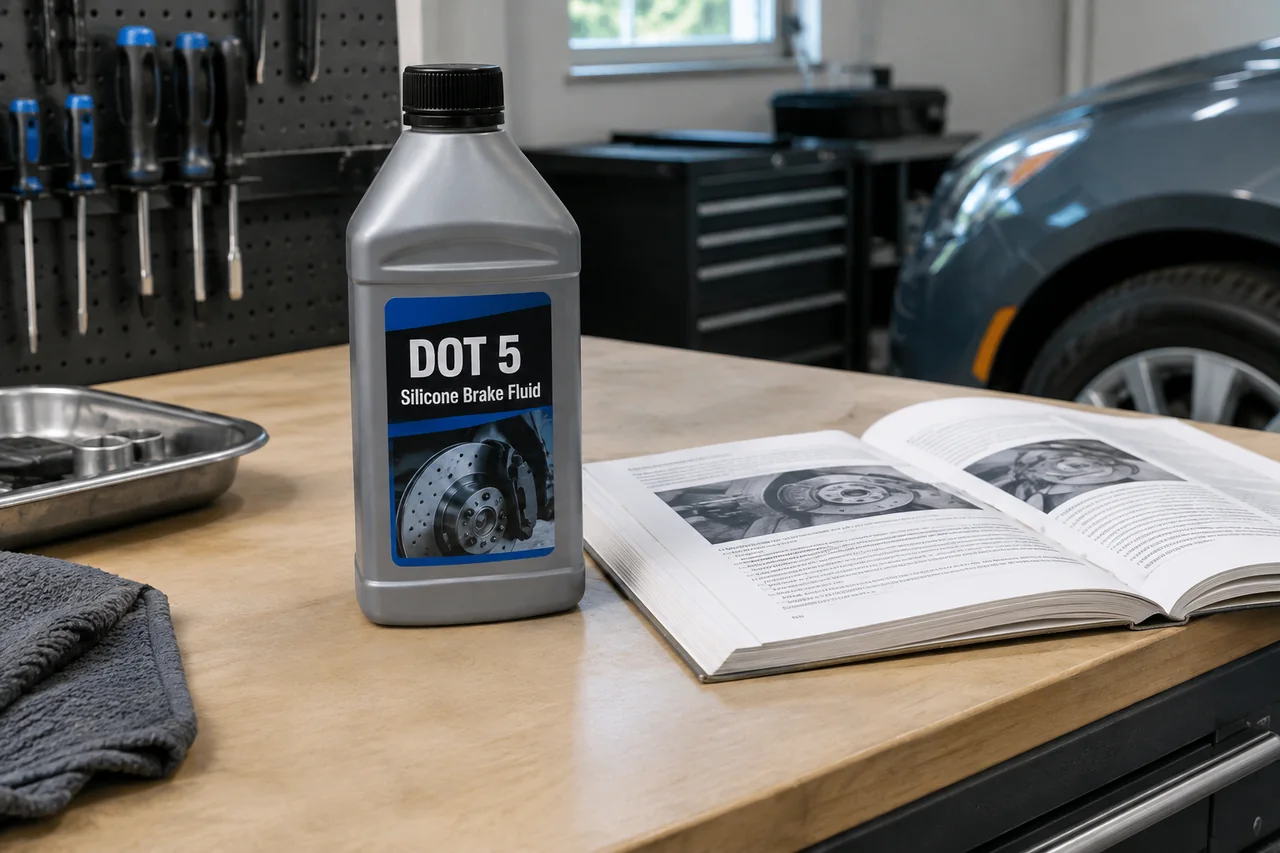
DOT 5 and DOT 5.1 brake fluid sit side by side on store shelves, but they are very different chemicals. DOT 5 brake fluid has a silicone base, while DOT 5.1 brake fluid is glycol-based. Mixing them up can put an incompatible product into a hydraulic brake system. This guide explains what each label means, why the two must not be mixed, where silicone fluid belongs and when to stop driving.
What the DOT 5 Label Identifies
The DOT 5 label identifies a brake fluid specification with a silicone base rather than the glycol chemistry most modern vehicles use. Seeing dot5 brake fluid on a container tells you what the product is, not whether it belongs in your car. A higher number does not mean a better or more universal fluid. It simply names a separate formulation with its own properties. Whether it suits your car depends on what the brake system was designed and approved to use, including its seals, hoses and any electronic control parts.
To confirm the required fluid, check the owner's manual, the label on or near the master cylinder cap and the manufacturer's service information for your vehicle. When those sources agree, you have a clear answer. If the reservoir cap is worn, missing or swapped for a generic part, or the service history is unknown, you still don't know which fluid is in the system. Color and texture are not reliable clues because dyes vary and old fluid darkens. How a fluid looks can never prove it is compatible.
How Silicone Fluid Handles Moisture and Air
Silicone DOT 5 brake fluid repels water, which means it does not absorb moisture into solution the way glycol-based brake fluid does. People often take that to mean the system is protected from moisture. It isn't. Water can still get into a hydraulic brake system through condensation, worn seals, a loose reservoir cap or careless servicing. The difference is what happens next. The water does not spread through the fluid. It stays separate, and that changes where and how it causes damage.
Because separated water does not disperse, it can collect in places such as caliper bores, wheel cylinders or line junctions. Pooled water sitting against metal can cause corrosion in that spot. Under heavy braking, a pocket of water can boil at a much lower temperature than the fluid around it, which creates vapor and a sudden change in pedal feel. Air mixed into the fluid as small bubbles can also make the pedal feel soft. A spongy pedal should be checked by a professional, not guessed at.
What DOT 5.1 Means on a Brake Fluid Container
Despite the similar name, DOT 5.1 brake fluid is glycol-based. A container marked brake fluid 5.1 or dot5.1 does not contain silicone, and it is not a version or improvement of DOT 5. The decimal marks a separate glycol specification. Reading 5.1 brake fluid as "DOT 5 plus a bit more" is exactly the mistake that leads people to buy the wrong fluid. Always look for the full grade on the label, along with any wording that states the base chemistry.
The decimal does not make the two fluids interchangeable, and it does not create an upgrade path for a system filled with silicone fluid. A vehicle specified for DOT 5 cannot simply take DOT 5.1, and a system designed for glycol fluid should not get silicone. Before buying or topping off, confirm the exact approved grade in the manufacturer's documentation and check that the container matches it exactly. If the paperwork and the reservoir label disagree, sort that out before adding any fluid.
Mixing Restrictions and Unknown Fluid History
DOT 5 silicone fluid must not be mixed with glycol-based brake fluids, including DOT 5.1 and the other glycol grades. The two do not blend into one uniform liquid. A mixed fill can separate, trap contaminants and behave unpredictably under heat and pressure. Residue from one fluid can also harm seals or parts designed for the other. Because both labels start with "DOT 5," this mistake is especially easy to make at a parts counter.
Adding the correct fluid cannot fix an existing fill of unknown origin. If a previous owner or shop may have used the wrong fluid, topping off with the right grade only dilutes what is there and leaves the incompatible fluid in the system. If you suspect the wrong fluid has been added, don't drive the vehicle until a qualified technician has inspected it. The technician can check for contamination, look at seal condition and parts compatibility, and decide what repair work is actually needed.
Where DOT 5 Use Requires Explicit Approval
Silicone fluid has been specified for some military vehicles. It also appears in some collector or restoration cars whose brake systems were deliberately built around it. Those are specific engineering choices. They do not show that DOT 5 silicone brake fluid suits older vehicles in general. A car's age, infrequent use or restoration status alone is not a reason to choose it. An original system designed for glycol fluid is still a glycol system, even if the car spends most of the year in storage.
Silicone brake fluid should only be used where the manufacturer explicitly approves it for that particular system, including any ABS or stability control equipment. Their valves and pumps may be designed around a specific fluid. Modified or rebuilt systems need a professional evaluation, because replacement seals, hoses and master cylinders may differ from the original parts. Switching fluid types affects the whole system, from parts compatibility to reservoir labels and future servicing. It is not just a matter of changing what's in the reservoir. Keep a record of the change so later technicians know which fluid is in the system.
Safe Observations and Reasons to Stop Driving
Some checks are safe to do without opening or disturbing the hydraulic system. Review the service records and owner's manual. Read the reservoir cap and any fluid containers kept with the vehicle, and note whether a brake or ABS warning light is on. Look for wet spots near the wheels, on the inner sides of the tires or under the master cylinder. These observations help a technician. Still, a warning light or damp residue is a clue to investigate, not proof that a specific part has failed.
A soft pedal, longer pedal travel or weaker braking cannot tell you which fluid is in the system. No single symptom points to one cause either. Air, moisture, leaks or worn parts can all produce a similar feel. If braking weakens, the pedal sinks toward the floor or you suspect a leak, stop safely and get professional help instead of driving on. For routine maintenance, follow the manufacturer's guidance and the system's service history, not a replacement interval taken from a different vehicle.