DOT 3 Brake Fluid at AutoZone: Choosing a Compatible Product
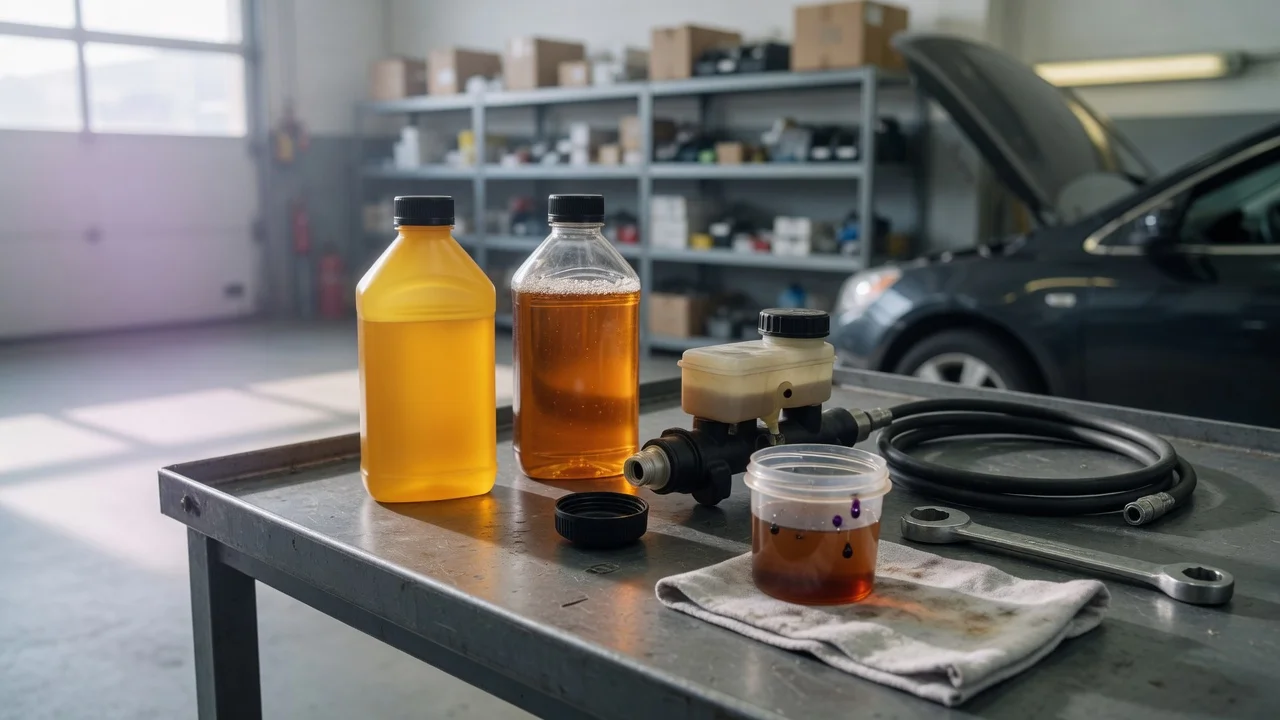
The Direct Answer
AutoZone carries DOT 3 brake fluid, but the suitable product depends on what your vehicle's brake system specifies. For most older cars and many light trucks, a standard DOT 3 fluid that meets FMVSS No. 116 or SAE J1703 is appropriate. The purchase decision changes if the reservoir cap or owner's manual lists DOT 4, DOT 5.1, or a specific OEM specification, because using the wrong fluid can affect braking performance and seal life.
What DOT 3 Fluid Is
DOT 3 is a glycol-based hydraulic brake fluid. Its key performance points include a minimum dry boiling point of about 401 degrees Fahrenheit and a minimum wet boiling point of about 284 degrees Fahrenheit. Wet boiling point refers to the fluid after it has absorbed some moisture, which is useful in judging protection as the fluid ages. DOT 3 is commonly specified for vehicles with conventional braking systems and moderate heat loads.
Before You Commit: Compatibility and Condition Checks
Start with the reservoir cap and owner's manual. If the cap says DOT 3, choose a DOT 3 fluid that meets the required federal or SAE standard. If the manual permits DOT 3 and DOT 4, DOT 3 is compatible, but DOT 4 generally has higher boiling points and may be preferable for harder use. DOT 5 is silicone-based and normally should not be mixed with DOT 3 or DOT 4 systems unless the manufacturer specifically allows it.
Check the age and condition of the existing fluid. Brake fluid absorbs moisture over time, lowering its boiling point and increasing corrosion risk. If the fluid looks dark or contaminated, flushing the system before adding fresh fluid is a safer next step than simply topping off.
What Matters for Total Cost
The cost of DOT 3 brake fluid at AutoZone varies by brand, container size, and local market conditions. Do not base a decision on a recalled price because advertised prices can change. Small containers are convenient for a top-off, while larger bottles may lower the per-ounce cost if you are doing a full flush or maintaining multiple vehicles. The total ownership cost should also include disposal of old fluid and any shop labor if you are not doing the work yourself.
Choosing Between DOT 3, DOT 4, and DOT 5.1
DOT 3, DOT 4, and DOT 5.1 are all glycol-based and are generally compatible in systems designed for them. DOT 4 has higher dry and wet boiling points than DOT 3, while DOT 5.1 has even higher boiling points and may suit vehicles with advanced electronic stability control or high-performance braking. DOT 5 is silicone-based and does not absorb water in the same way, but it is not interchangeable with DOT 3 or DOT 4 unless the vehicle manufacturer explicitly approves it.
|| Fluid | Base | Dry Boiling Point | Wet Boiling Point | Common Use |; | DOT 3 | Glycol | About 401°F minimum | About 284°F minimum | Everyday cars and light trucks |; | DOT 4 | Glycol | About 446°F minimum | About 311°F minimum | Heavier use and some ABS systems |; | DOT 5 | Silicone | Varies by spec | Varies by spec | Select specialty applications |; | DOT 5.1 | Glycol | About 500°F minimum | About 356°F minimum | High-heat and advanced systems |
Making the Purchase
Buy the fluid that matches the specification, not simply the lowest price. Compare the label against the vehicle's required standard and check the resealable container if you plan to store leftover fluid. Brake fluid absorbs moisture once the container is opened, so a partially used bottle should be stored tightly sealed and preferably used soon. If you are unsure which fluid the vehicle requires, verify the cap or owner's manual before purchasing.