Does Ford Use CVT Transmissions? Freestyle, Escape, and Focus
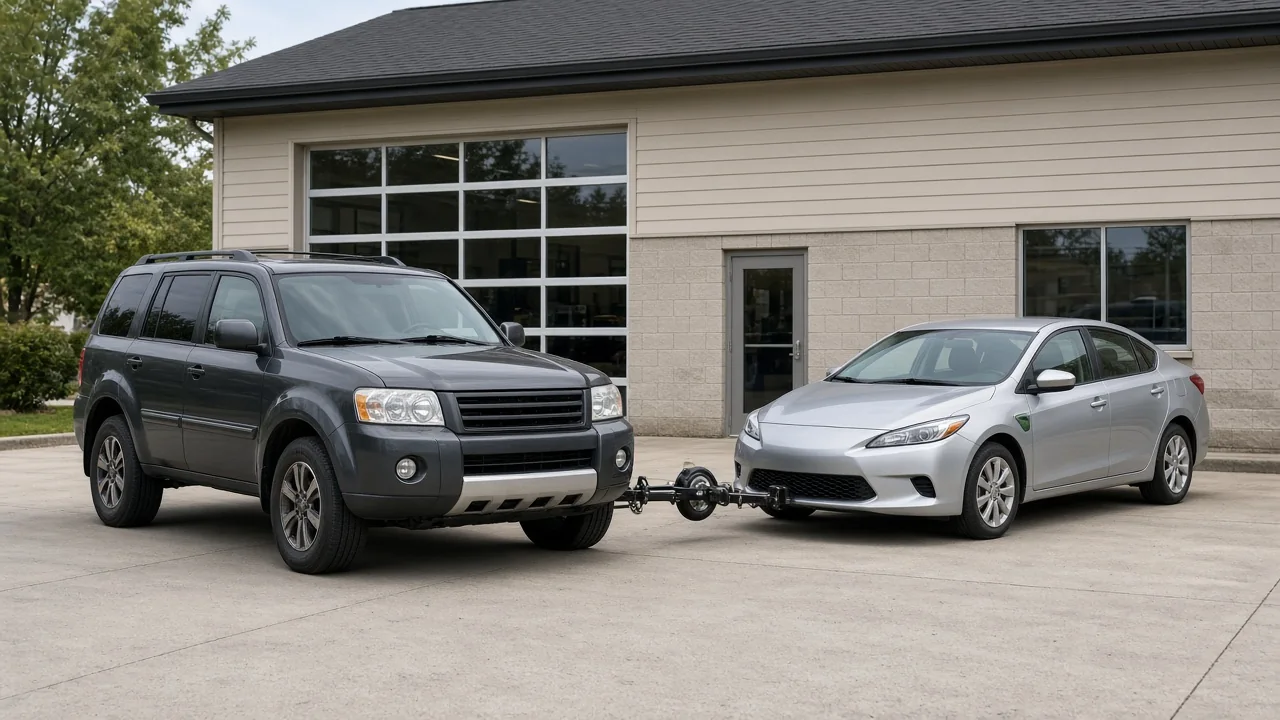
Ford has equipped selected models with continuously variable transmissions, but the technology does not appear across the entire lineup. The 2005 Ford Freestyle CVT transmission and its 2006 and 2007 siblings use a mechanical chain-type unit, while the Ford Escape Hybrid employs an electrically controlled power-split system that many owners also call a CVT. The Ford Focus saw CVT availability only in specific market and engine combinations. Understanding these distinctions helps when interpreting used-car listings, diagnosing symptoms, and identifying exactly what a particular vehicle has.
Where CVTs Fit in Ford’s Transmission History
Ford’s transmission history shows CVTs used selectively rather than as a universal replacement for traditional automatics. The 2005–2007 Freestyle crossover received a mechanical continuously variable unit, but most other Ford models of that era retained stepped-gear automatics. Availability depended on the vehicle platform, intended use, and market, so two vehicles sharing a Ford badge can have very different transmission designs. The CVT label is only a broad category, not a model number or a promise of identical internal components.
The Ford Escape Hybrid introduced a different technology often called an eCVT, which blends an internal combustion engine with electric motors through a planetary gear set. This design is unrelated to a belt-and-pulley mechanism, yet search terms like “ford escape cvt transmission” usually point to the hybrid version. A conventional gasoline Escape from the same years typically used a stepped automatic, so checking the exact powertrain is essential before comparing behavior, maintenance needs, or replacement parts.
The 2005–2007 Ford Freestyle CVT
The 2005, 2006, and 2007 Ford Freestyle used a CFT30 continuously variable transmission, a chain-driven unit designed to hold the engine near its optimal rpm while vehicle speed changes continuously. That removes fixed gear steps, so acceleration can feel smooth but sometimes unfamiliar because engine noise does not follow the usual rise-and-fall pattern. Normal operation includes slight engine-speed variation under load, but harsh jerking, hesitation, and whining are not typical and deserve inspection.
Accurate identification starts with the vehicle’s emissions label, owner’s manual, and underhood stampings, because the CFT30 was not installed in every Freestyle powertrain combination sold globally. Service records matter more than mileage alone: fluid changes and any prior transmission work influence how a unit behaves today. Before replacement, a professional should confirm that the transmission is indeed a CFT30 and evaluate its mechanical and hydraulic condition. Age alone does not prove failure, but a twenty-year-old Freestyle benefits from a thorough inspection.
Understanding the Ford Escape Hybrid’s eCVT
When a search mentions a CVT transmission Ford Escape, the most likely match is the Ford Escape Hybrid or plug-in hybrid, depending on model year and market. A conventional gasoline Escape from the same generation commonly used a six-speed automatic instead, so the Escape badge alone does not identify the transmission. The hybrid’s eCVT is a power-split system that uses a planetary gear set to combine engine torque and electric motor torque, adjusting the blend continuously as driving demands change.
This eCVT has no belt, pulley, or chain running between variable-diameter sheaves, so common mechanical CVT failure patterns do not directly apply. Instead, the hybrid transmission control strategy and electric motor cooling become more relevant to long-term reliability. Confirming the exact year, engine, trim, and market is necessary because plug-in hybrid versions may have different electrical and transmission hardware. Service needs should be based on the specific eCVT found in that vehicle, not on generic CVT advice.
Identifying CVT-Equipped Ford Focus Models
Ford Focus CVT availability was limited to certain market and powertrain combinations, often smaller displacement gasoline engines sold outside North America. The Durashift CVT name appears on some of these units, but it does not identify a single transmission across all Focus models. A North American Focus from many model years used a conventional automatic, making it easy for used-car listings to incorrectly label a car as having a CVT. Confirming the original build specifications and physically checking the unit is the only reliable method.
The Focus also used a Ford PowerShift dual-clutch transmission in certain versions, and its well-known shuddering and hesitation complaints must not be confused with a CVT problem. A dual-clutch transmission contains automated manual-style gears and clutches, unlike a continuously variable unit. The most accurate resolution for an ambiguous listing starts with the vehicle identification number, the data sticker, and dealer or owner documentation that state the transmission code. A professional who can inspect the unit will confirm whether it is a Durashift CVT, a PowerShift, or a stepped automatic.
Symptoms and Reported Problems That Need Proper Diagnosis
Owners of the 2005–2007 Freestyle and other CVT-equipped Fords should record symptoms without jumping to a failed transmission. Delayed engagement after shifting from Park, shuddering during light acceleration, an unusual whine that changes with speed, or a sudden loss of propulsion all warrant professional diagnosis, but each can have multiple causes including low fluid, software calibration, or worn mounts. Dashboard messages such as a wrench light or transmission warning indicate that the control module has stored fault codes, which a scan tool can retrieve.
For the Freestyle’s CFT30, internal wear, bearing noise, and hydraulic control issues are known concerns, but not every high-mileage unit develops them. Safe observation includes noting when symptoms occur, whether they appear only when cold or hot, and whether any fluid spots appear under the vehicle. If the vehicle loses propulsion or begins shaking severely, the driver should pull over safely and have it towed rather than continue driving. Mechanical testing and code scanning by a qualified technician can isolate the failing component without opening the transmission.
Checking Ford’s Current Transmission Options Before Buying
Ford’s current lineup uses several transmission types depending on the vehicle and powertrain. Many gasoline and diesel models use stepped automatic transmissions with eight or ten speeds, while hybrid versions of the Maverick, Escape, and F-150 use a power-split eCVT similar in principle to earlier Ford hybrids. Manual transmissions remain available on select performance models in some markets, but they are not universal. A shopper cannot assume a new Ford has a CVT simply because the brand has used them in the past.
Battery electric vehicles like the Mustang Mach-E and F-150 Lightning use a single-speed reduction gear rather than a CVT, because electric motors deliver torque over a wide rpm range without needing variable ratios. Before buying any new or used Ford, confirm the exact model year, trim, engine or electric motor, and market specification, then inspect the transmission identification label if possible. Reviewing service records and having a technician road-test the vehicle will clarify whether the transmission matches the owner’s expectations and the listing’s description.