Does Car Glass Block UV? Windshield vs. Side Windows Explained
The short answer
Car glass blocks some ultraviolet (UV) light, but not all of it, and not evenly around the vehicle. Most automotive glass stops nearly all UVB, the shorter-wavelength UV most associated with sunburn. Protection against UVA, the longer-wavelength UV that penetrates deeper into skin and contributes to skin aging and eye exposure, depends heavily on which window you are looking at. The windshield generally blocks most UVA, while ordinary side and rear windows typically let a meaningful share through.
Why the windshield and side windows differ
The difference comes from how the glass is built. Windshields are made of laminated glass: two layers of glass bonded to a plastic interlayer, usually polyvinyl butyral (PVB). That interlayer exists mainly for safety, holding the glass together in a crash, but it also absorbs most UVA.
Side and rear windows on many vehicles are tempered glass instead. Tempered glass is a single heat-treated sheet designed to break into small, blunt pieces. Without a laminated interlayer, it blocks UVB well but filters UVA less effectively unless the manufacturer has used a UV-absorbing glass formulation or coating.
Glass location | Typical construction | UVB | UVA; Windshield | Laminated with plastic interlayer | Largely blocked | Largely blocked; Side windows | Often tempered, sometimes laminated or UV-treated | Largely blocked | Partially blocked; varies by vehicle; Rear window | Usually tempered | Largely blocked | Partially blocked; varies by vehicle; Sunroof or panoramic roof | Varies by design | Varies | Varies; check manufacturer data
Qualifications that change the answer
Vehicle-specific glass: Some manufacturers fit laminated or UV-reducing side glass on certain models or trims, often for noise reduction or security, which can raise UVA protection beyond typical tempered glass. Tint and aftermarket film: Factory privacy glass and window films can change UV transmission, but darkness alone does not indicate UV performance; it depends on the specific product's rating. Window position: An open window provides no filtering at all. Age and damage: The brief supplied no evidence on whether UV performance changes as glass ages, so this is not addressed here.
What this means for drivers and passengers
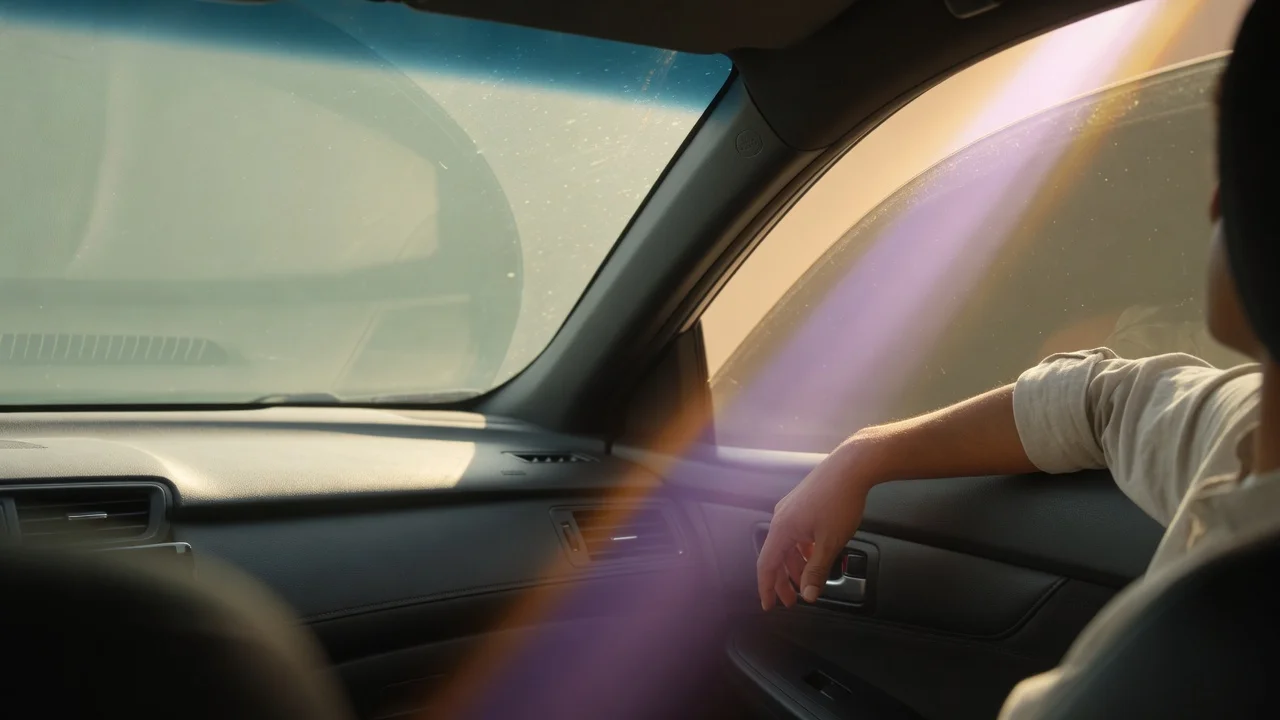
Sitting behind the windshield offers substantial UV protection, but the side of the body nearest a side window may receive more UVA than many people expect, especially on long or frequent drives. Because performance varies by make, model year, trim and market, the reliable way to know what your vehicle provides is to check the manufacturer's glass specifications or ask a dealer or glass supplier for the UV transmission rating of each window. If side-window protection is low, options include a UV-rated window film where local tint laws allow, or ordinary sun protection such as sunscreen and covering clothing.
Evidence gaps
No measured transmission figures for specific vehicles or glass products were supplied for this article, so it gives no percentages. The general pattern described here, strong UV blocking at the windshield and weaker, more variable UVA blocking at tempered side and rear glass, should be confirmed against data for the individual vehicle before relying on it.