Does a Tesla Need a Differential Fluid Change? Drive Unit Gear Oil Explained
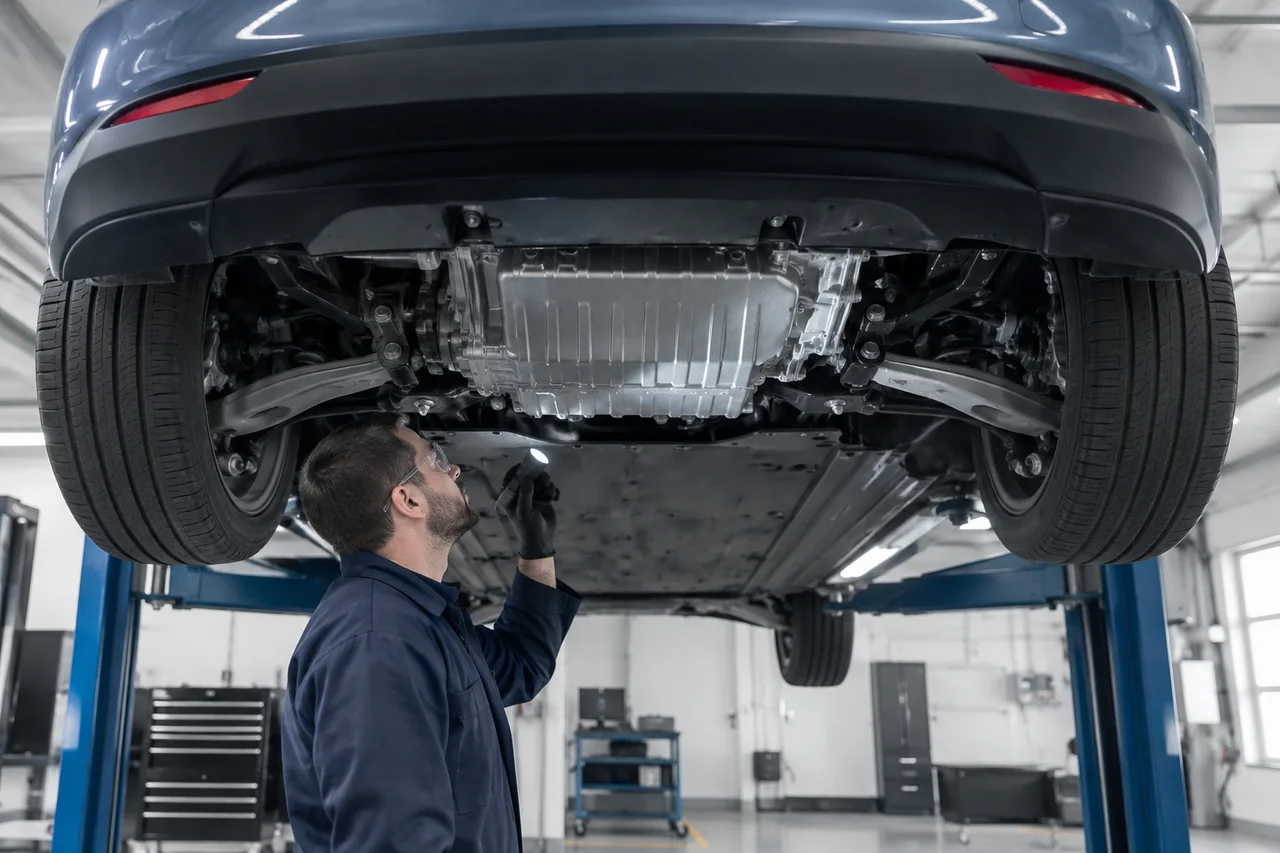
Tesla owners often ask whether their electric car needs a differential fluid change, expecting a service item similar to a conventional axle or transmission. In a Tesla, the differential is not a separate housing with its own fill plug. The reduction gears and differential share lubricant inside the drive unit, so the relevant service is drive unit gear oil. Knowing how this fluid works, what the owner’s manual says, and which warning signs justify attention helps owners avoid unnecessary work while recognizing real problems.
What 'Differential Fluid' Means on a Tesla Drive Unit
A Tesla drive unit combines the electric motor, a single-speed reduction gearset, and the differential in one compact housing. There is no conventional transmission, transfer case, or standalone axle with a separate fluid sump. The gear oil inside the drive unit lubricates the reduction gears and differential bearings, cools the gears, and carries away wear particles. When owners search for a “Tesla differential fluid change,” they are usually asking about servicing that shared drive unit gear oil, not a separate differential lubricant.
This gear oil is distinct from other vehicle fluids. Coolant circulates through the battery, motor, and power electronics to manage temperature. Brake fluid operates the hydraulic braking system. Washer fluid, air conditioning refrigerant, and even steering fluid in older vehicles all have separate jobs. Owners who plan maintenance should not treat drive unit gear oil as interchangeable with transmission fluid from a gasoline car or assume it follows the same service rules.
What Tesla's Maintenance Schedule Says About Gear Oil
Tesla’s published maintenance schedule has changed over the years and can differ by model, drive unit version, and production date. The most reliable source is the owner’s manual for the specific vehicle, supplemented by the maintenance section of the Tesla mobile app. Older forum threads and third-party checklists often quote intervals that no longer apply to newer cars, or they confuse guidelines for early Model S drive units with current Model 3 and Model Y guidance.
Because Tesla does not publish one universal gear oil interval, this article will not invent a mileage or time figure. A guessed interval can mislead owners into paying for unnecessary service or, worse, delaying needed attention. When gear oil service is performed by Tesla or a qualified independent EV shop, keep the invoice and any inspection notes. Documented service supports future warranty discussions and gives the next owner a clearer history.
Why EV Gear Oil Service Differs From Gas-Car Transmission Service
A Tesla’s single-speed reduction gearbox has no clutch packs, valve body, torque converter, or shift solenoids. An automatic transmission uses fluid as a hydraulic medium to apply clutches and shift gears, so the fluid experiences shear and contamination from friction material. A Tesla drive unit uses gear oil mainly for lubrication and cooling of gears and bearings. The fluid’s degradation profile is different, so gas-car transmission service habits do not transfer directly to an EV.
However, “sealed for life” does not mean the gear oil can never need attention. Heat cycles, moisture, and microscopic metal particles from normal gear wear can gradually reduce lubricant performance. A leak, seal replacement, or water intrusion can also introduce problems. The need for a gear oil change should follow the manufacturer’s guidance for the specific drive unit, not an assumption that all open differentials or automatic transmissions require fluid changes every 30,000 miles.
Warning Signs of a Drive Unit Lubrication or Gear Problem
A new whine, grinding, or clunk from the drive unit area can point to a lubrication or gear problem. Owners often notice a whine that rises with speed, a clunk when transitioning from acceleration to regeneration, or a grinding sound during low-speed parking maneuvers. Some tire noise and wheel bearing sounds can mimic these symptoms, so a change in the character or volume of a familiar sound is more meaningful than an isolated noise. Record the conditions and share them with a technician.
Without tools, an owner can look for fresh oily spots under the car or a wet-looking area on the lower drive unit housing visible from outside. A few drops after a hard drive do not always mean a gear oil leak; coolant hoses, suspension components, and even air conditioning condensate can produce similar drips. Dashboard warnings or reduced-power alerts should be documented, not cleared and ignored. Guessing from noise and drips alone cannot confirm a leaking drive unit seal or a failing bearing.
When Gear Oil Service Makes Sense and Who Should Perform It
Reasonable triggers for a drive unit gear oil inspection include a confirmed leak, any drive unit repair that opened the housing, a seal replacement, suspected water intrusion after flooding or deep water crossing, or a technician’s recommendation based on an actual finding. A mileage-based upsell with no supporting symptom or manufacturer guidance is less compelling. If the car is driven hard or regularly charged to full in hot climates, asking about fluid condition during a scheduled service is reasonable.
Drive unit service should go to Tesla Service or a qualified EV technician. The drive unit sits close to high-voltage cables and may require the car to be lifted and supported. Tesla’s own procedures often involve software diagnostics and careful attention to sealing surfaces. This article covers no DIY drain, fill, or high-voltage procedure. Before authorizing any work, ask what fluid specification and procedure the technician will use, and confirm that the shop has EV training and the correct equipment.
Warranty, Records, and Questions to Ask Before Paying for Service
Before booking paid gear oil work, check the vehicle’s warranty status. A drive unit or powertrain warranty may cover a leaking seal, a noisy gearset, or a failed bearing, which would make the fluid service part of a warranty repair rather than a customer-pay line item. The warranty terms in the owner’s documents for the specific car are the final authority, not a service advisor’s summary. Ask if any recommended service is covered before approving an estimate.
When a shop recommends a gear oil change, ask why. Request the specific symptom or inspection finding that triggered the recommendation, and whether any tests confirmed a problem. Keep the invoice and any technician notes, including fluid condition photos or measurements. These records support a future warranty claim or help at resale. Be skeptical of routine-service menus that list a drive unit gear oil change for every Tesla regardless of model year, mileage, or manufacturer guidance.