Dodge Transfer Case Shift Motor Connector Identification
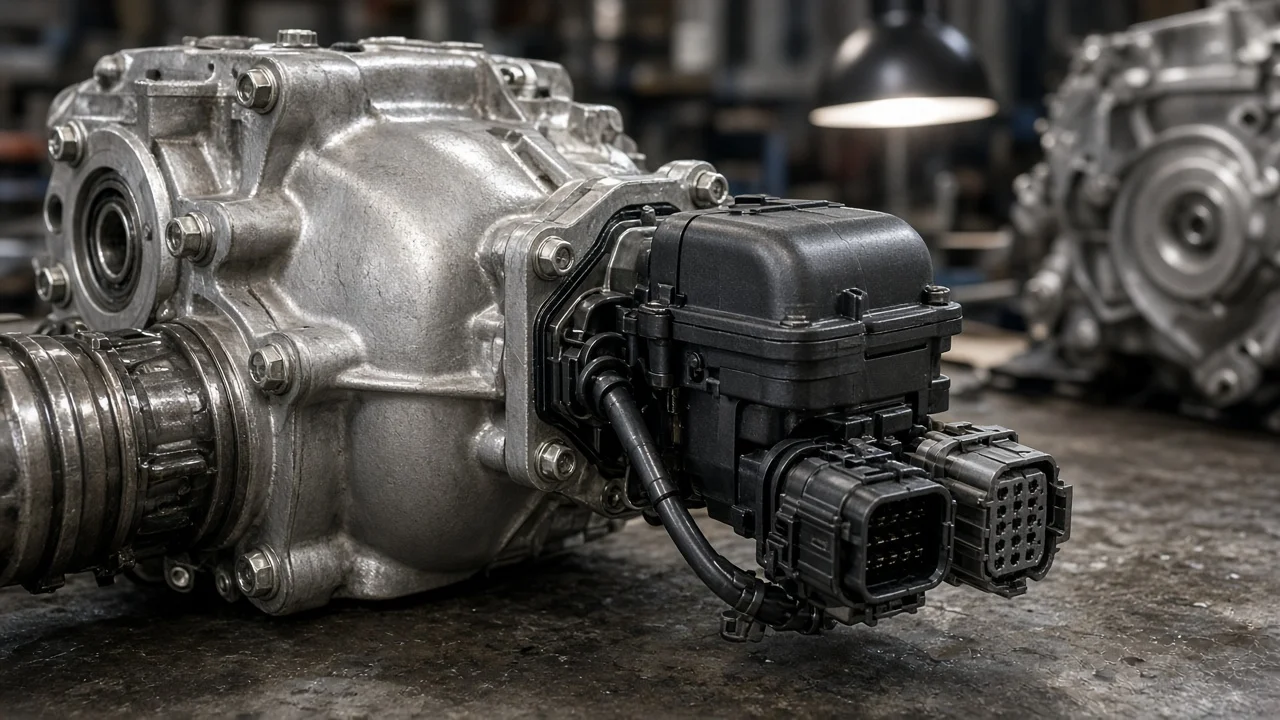
When a Dodge truck or SUV refuses to move between 2WD, 4HI and 4LO, the connector at the transfer case shift motor is one of the first places worth checking. Finding the right plug sounds simple, but the underside of a 4x4 has several similar connectors close together. This guide covers how to recognize the shift motor connector, what it carries, how vehicle configuration changes the picture, and when you need wiring information for your exact vehicle.
Which plug is the shift motor connector
The shift motor connector is the plug that attaches directly to the electric actuator mounted on the transfer case housing. On Dodge models with electronic shifting, the motor is bolted to the case itself, usually toward the rear or side, and has its own harness branch. The connector either plugs into the motor body or into a short pigtail coming out of it. If a plug sits on the transmission, on a speed sensor near an output shaft, or on the front axle, it is not the shift motor connector, even if it looks similar. The exact location, housing shape and number of terminals vary by model year and transfer case, so treat any general description as a starting point and confirm it against service information for your vehicle.
The most reliable rule is to start at the motor and follow the wire. Don't identify the connector by color, shape or a photo of a different truck. Several connectors in this area share similar housings, and harness routing can differ between cab, bed and drivetrain configurations.
How the shift motor and its wiring work
When you turn the 4WD selector, the switch sends a request to a control module rather than powering the motor directly. The module checks the conditions required for that shift, such as vehicle speed and transmission position, and then drives the motor in one direction or the other. The motor turns a shaft inside the transfer case that moves the internal shift mechanism. A position sensor, often called an encoder, reports the motor's position back to the module so it knows when the shift is complete and which mode to display. Because of this, the shift motor connector typically carries both the motor drive circuits and the position sensor circuits. A poor connection can therefore produce several different complaints: no shift at all, a shift that starts and stops, flashing or incorrect 4WD indicators, or stored trouble codes.
The motor circuits carry more current than the sensor circuits, while the sensor circuits are sensitive to small changes in resistance. Water, road salt, mud and heat from the nearby exhaust all affect a connector mounted this low. That is why corrosion or a loose terminal can cause intermittent problems that come and go with weather or temperature.
What changes the answer for your vehicle
Vehicle configuration matters most. A Dodge with a floor-mounted transfer case lever has no shift motor, though it may still have a switch that reports the selected range for the dashboard indicator. Electronic-shift systems appeared across Ram pickups, Durango, Dakota and Nitro models, and different years used different transfer case models from more than one supplier. Part-time and full-time cases differ, and some all-wheel-drive layouts have no driver-selectable shift at all. Connector style, mounting position and whether the position sensor is built into the motor or mounted separately can all change with the transfer case model and model year.
Service history also matters. A transfer case replaced with a used unit, a motor from a different application, or a previous repair with spliced wires can leave a connector that no longer matches the original diagram. Operating conditions such as winter driving on salted roads, frequent water crossings or off-road use don't change which plug is correct, but they strongly affect what condition you are likely to find it in.
What the owner can do
Park on level ground, set the parking brake, chock the wheels and let the exhaust cool before reaching around the transfer case. Find the identification tag on the transfer case if one is present and note the model; it will help you match service information and parts later. Locate the motor, follow its harness to the connector, and release the locking tab the way it is designed to release instead of prying. With the connector apart, inspect for green or white corrosion, moisture inside the housing, bent or pushed-back terminals, a cracked housing or broken lock, and chafed insulation where the harness passes crossmembers, brackets or the exhaust. Also check that harness clips are still holding the wires away from moving and hot parts.
Before and after reseating the connector, read codes with a scan tool that can access the module controlling the transfer case, and write down the symptoms and when they occur. Avoid piercing insulation or forcing oversized test probes into terminals, since both create new problems. Don't apply battery voltage directly to motor terminals without the correct pinout; it can damage the motor or module, or leave the case between ranges. If the housing or terminals are damaged, a replacement pigtail has to match the original exactly, so confirm the part by vehicle and transfer case rather than by appearance.
Manufacturer specifications generally don't list a separate inspection interval for this connector. A practical time to look at it is whenever the transfer case is already being serviced under the vehicle's maintenance schedule, or after driving through deep water or heavy salt.
Limitations and next step
This article does not give pin numbers, wire colors or connector part numbers, because those depend on the exact year, model, transfer case and options. Guessing at them leads to wrong test results and misdiagnosis. For circuit-level testing, use the factory wiring diagram and diagnostic procedure for your VIN, or have a dealer or qualified shop do the work.
Get professional help if codes return after the connector has been cleaned and reseated, if the wiring is damaged beyond the connector, or if the vehicle is stuck in a range. Take particular care if the transfer case may be in neutral: with the driveline disconnected, the transmission's Park position will not hold the vehicle, so block the wheels and use the parking brake. If the motor itself needs replacement, many designs require the new motor to be aligned with the transfer case shaft position or recognized by the module, so follow the service procedure. Your next step is to identify the transfer case model, record the VIN and any codes, and compare the connector you found with the service information for that exact configuration.