Dodge Ram Torque Converter Shudder Diagnosis
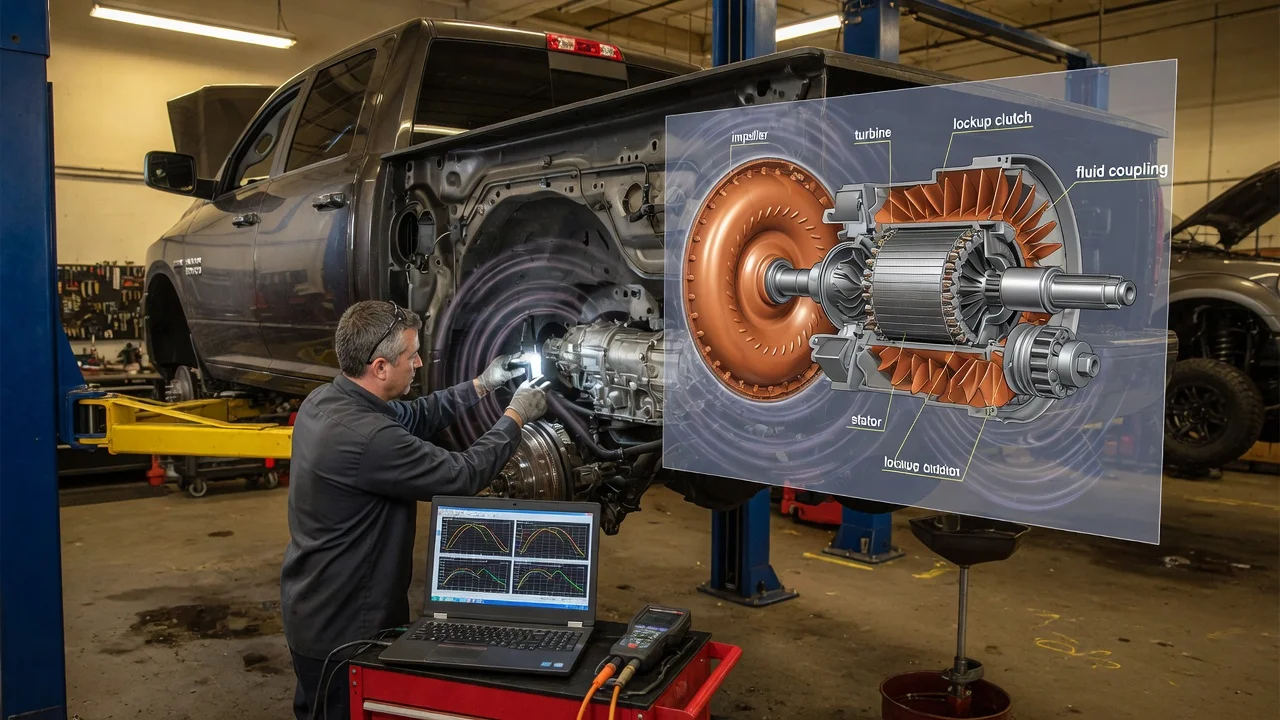
Torque converter shudder on a Dodge Ram usually feels like driving over rumble strips at a steady cruise, often just as the converter clutch locks up. The sensation is real, but it does not prove the converter has failed. Ram trucks have used several automatic transmissions over the years, and each has its own fluid specification, lockup strategy and diagnostic routine. This guide covers how to describe the symptom, separate likely causes, run checks in a sensible order and decide what to do next.
Establish the symptoms
Start by writing down exactly when the shudder happens. Note road speed, approximate engine rpm, throttle position and whether the engine is fully warm. Also note whether it appears on flat roads, on gentle climbs or only while towing. Converter clutch shudder typically shows up at light throttle in the moderate cruising range where lockup engages. It often stops as soon as you press harder on the accelerator or lift off completely. A vibration that grows steadily with road speed, regardless of throttle, points somewhere else.
Record any associated signs as well. These include a check engine or transmission warning light, harsh or delayed shift behavior, flare between gears, rpm rising without matching acceleration, fluid spots under the truck or a burnt smell. Then list recent changes. Any of the following can change how the truck feels: • new tires or a lift kit; • a different axle ratio; • a tuner; • recent heavy towing; • a fluid change with an unknown product; • a battery disconnect that reset adaptive learning; Finally, identify the exact transmission type from the build data or service records. Year, engine and drivetrain determine which unit is installed.
Distinguish plausible causes
The most common explanation is the torque converter clutch slipping and grabbing as it applies. Worn friction material and glazed surfaces can both produce this. So can fluid that has lost its friction properties, and degraded or incorrect fluid can make an otherwise healthy converter shudder. Three observations support a converter-related cause: the shudder appears only when lockup is commanded, it disappears the moment lockup releases, and scan tool slip readings fluctuate during the event.
The problem may also sit upstream of the converter, on the control side. Several faults can make the clutch apply unevenly: a sticking lockup control valve, a weak or faulty solenoid, wiring faults, low line pressure or outdated control software. Two findings support this path: diagnostic codes for converter clutch circuit or performance, and erratic actual slip compared with commanded slip. Clean fluid and a clean pan weaken the case for internal wear, but they do not rule out a control fault.
Several other faults mimic converter shudder. An engine misfire under light load feels very similar, because lockup removes the cushioning effect of the converter. Misfire counters or a flashing warning light point that way. On V8 models with cylinder deactivation, the switch between modes can produce a brief shake. Driveline problems also cause vibration, including: • worn universal joints; • a failing center support bearing on a two-piece driveshaft; • driveshaft angles changed by a lift; • tired engine or transmission mounts; • tire or wheel imbalance; These usually track road speed rather than lockup state. Diesel trucks add fuel delivery and injector possibilities that need their own diagnosis.
Checks in a useful order
Begin with checks any owner can do safely. Confirm the symptom on a repeatable route. Note whether lightly touching the brake pedal, which releases converter lockup on many trucks, makes the shudder stop; only try this where traffic allows. Look for fluid leaks, and check the service history for the last fluid change and the product used. Read stored and pending codes with a basic scanner. Inspect tire wear and pressures. With the truck parked, engine off and wheels chocked, check driveshaft joints for obvious play.
Fluid level and condition come next, and this is where the transmission type matters. Older RE-series and RFE-series units generally specify ATF+4, and many have a dipstick. The eight-speed units fitted to later trucks use a different fluid and are checked at a fill plug with the fluid at a specified temperature. Using the wrong fluid, or checking the level at the wrong temperature, can create the very symptom you are chasing. Confirm the correct fluid specification and procedure for your exact unit before adding or changing anything.
Some tests need a capable scan tool or a qualified technician. On a road test, a technician can watch commanded converter state, converter slip speed, line pressure and transmission temperature, and compare engine speed with turbine speed. They can also check misfire counters and look for software updates or service bulletins that apply to your truck. Pressure tests, solenoid tests and driveline angle measurements require specifications and equipment. A technician may suggest a fluid exchange, then a relearn and test drive, as a diagnostic step. That should follow the manufacturer procedure for your unit.
Interpret the findings
The converter clutch circuit is the strongest suspect when three things line up: the shudder appears only while the scan tool shows lockup applied, it stops when lockup releases, and slip readings oscillate. That still leaves open whether the clutch itself is worn or whether fluid, pressure or control is causing the behavior. If fresh, correct fluid eases or ends the shudder, fluid condition was likely a major factor. The symptom can still return if the clutch surfaces were already damaged.
Converter clutch codes confirm that the computer saw a circuit or performance problem, not which part failed. Wiring, solenoid, valve body and converter all remain candidates until tested. Debris in the pan, especially friction material or metal, points toward internal wear. It usually shifts repair options from a service toward converter replacement or transmission repair. If the vibration continues with lockup off, or follows road speed rather than engine load, look harder at the driveline, tires and mounts. Rising misfire counts during the event shift attention to the engine.
Before buying parts, make sure the evidence has ruled out the cheaper explanations. Also confirm that any replacement converter or component matches your transmission model, engine and drivetrain. Fitment varies between units that look similar, and a converter built for a different application can introduce new problems.
Urgency and next action
Stop driving and arrange an inspection if you notice any of these: • slipping, where engine speed climbs without acceleration; • a flashing check engine light; • a transmission overheating warning; • limp mode; • a burnt smell; • a significant fluid leak; • grinding or clunking noises; Avoid towing and heavy loads until the cause is known, because added heat and load accelerate wear. A mild shudder with no other warnings is less urgent, but it is not a reason to delay diagnosis. There is no reliable way to predict how long a converter will last once it starts to shudder.
When you book the repair, bring the year, engine, drivetrain, transmission model, VIN, current mileage and service history, including the fluid type used at the last change. Add any diagnostic codes with freeze-frame data, your notes on when the shudder occurs, recent modifications and whether the truck tows. That information lets a technician focus on the right tests and give realistic repair options. Those range from a fluid service or software update to a solenoid, valve body, converter or transmission repair.