Dodge Ram 4WD Front Axle Actuator Fitment
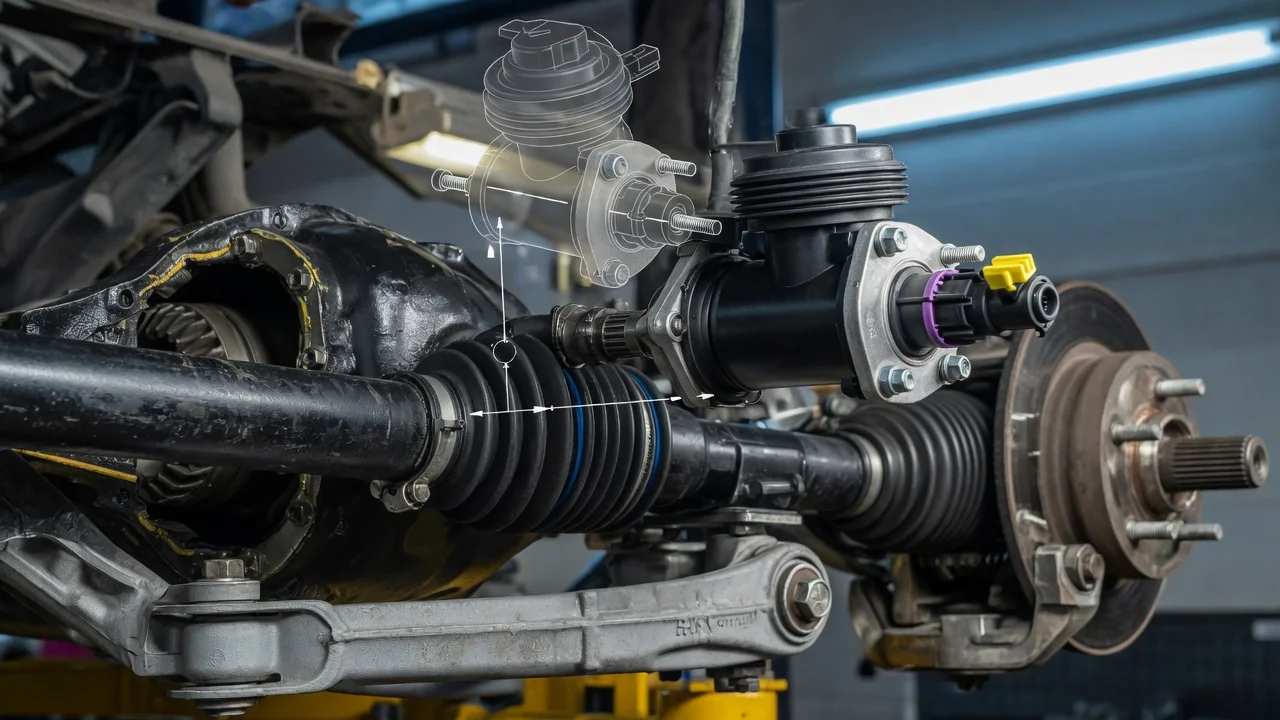
Shopping for a front axle actuator for a Dodge Ram can be confusing because many listings claim to fit the same truck while looking quite different. The part that engages the front axle when you shift into four-wheel drive is not one universal design shared by every Ram. Model year, weight class, axle type and whether the unit runs on vacuum or electricity all decide whether a replacement will fit and work. This guide explains how to narrow the choice before you order.
Does one actuator fit every Dodge Ram?
No. A Dodge Ram 4WD actuator fits only the trucks and axle setups it was built for, and no single part covers every year, cab and weight class. The dependable way to match one is to start from your exact vehicle configuration, ideally with a parts lookup by VIN, or from the part number on the actuator you are replacing. Then confirm three things: how the unit is operated, how it connects to the truck (vacuum hoses or an electrical plug) and how it mounts to the axle housing. A listing that says only that it fits a Ram, without a year range, drive type and axle details, is not enough to order on.
It is also worth confirming that your truck uses a separate front axle actuator at all. Not every four-wheel-drive Ram engages the front axle the same way, and on some configurations engagement is handled elsewhere in the driveline, such as in the transfer case. If you cannot find an actuator on the front axle, check the factory service information for your truck before buying one.
How the front axle actuator engages 4WD
On Rams that use one, the front axle is designed so that part of it can be uncoupled in two-wheel drive. This lets part of the front axle stop being driven when four-wheel drive is not needed. The actuator does the coupling. When you select 4WD, it moves a shift fork and sliding collar that join the separated axle sections so torque from the front driveshaft can reach both front wheels. When you return to 2WD, it moves the collar back and the front axle is released.
Dodge front axle actuators fall broadly into two families. Vacuum-operated units use engine vacuum, switched on and off by a valve or solenoid linked to the 4WD controls. Electric units contain a small motor or solenoid commanded through the truck's wiring and control electronics. The two types are not interchangeable without changing the supporting system, and even within one family the housing, internal travel and connections can differ between axles. When an actuator fails, the usual result is that the transfer case is in 4WD but the front wheels do not pull. Engagement can also become slow or happen only some of the time.
What changes which actuator fits
Model year and generation come first. Ram trucks have gone through several redesigns, and front axle hardware changed along with them, so a part made for one generation may not carry over to the next. Changes can also happen within a production run, which is why parts catalogs sometimes split a single model year by build date. Weight class matters just as much. A light-duty 1500 and a heavy-duty 2500 or 3500 from the same year can use different front axles and therefore different actuators.
The truck's history can override the catalog. An axle swap from another truck, a lift kit, a conversion kit that eliminates the factory disconnect or a previous repair with a non-original part can all mean the hardware on your truck no longer matches what the build data predicts. If you bought the truck used, the service history and a close look at the axle are more reliable than the model name on the registration.
Operating conditions do not change which part fits, but they affect how the replacement holds up. Water crossings, road salt, mud and frequent off-road use expose the actuator, its seals, hoses and connectors to contamination. Knowing how the truck is used helps you decide whether to replace surrounding hoses, seals or wiring at the same time.
How to identify the right part for your truck
Start with an inspection of the unit on the truck. Clean it, look for a part number on a label, stamping or casting, and photograph it along with the connector or hose fittings and the mounting bolts. Note whether it has vacuum lines, an electrical plug or both. Bring those details and your VIN to a dealer parts counter or a parts catalog that searches by vehicle. When comparing aftermarket listings, check that the year range, drive type, weight class and connector match what you photographed. Compare the product images as well, rather than relying on the listing title alone.
Before you buy, make sure the actuator is actually the failed part. On vacuum systems, cracked or disconnected hoses, a leaking check valve or a faulty switching valve can cause the same symptoms as a dead actuator. A hand vacuum pump lets you check whether the actuator holds vacuum and moves. On electric systems, check fuses, connector condition and corrosion, and read any stored fault codes with a scan tool that supports your truck. An actuator that clicks or hums with no engagement can also point to a worn shift fork or collar inside the axle, and a new actuator will not fix that.
When installing, follow the torque values, seal or gasket requirements and fluid instructions in the manufacturer specifications for your axle. Some actuators seal against the axle housing, so removing one can let gear oil escape. Check the front axle fluid level afterward and top it up with the specified lubricant. Then test engagement in a safe place and confirm that the front wheels drive in 4WD and release in 2WD.
Limits of a general answer and next steps
This guide covers how to approach fitment, not the exact part for a particular truck. Part numbers, supersessions and catalog applications change over time, and only data tied to your VIN and the hardware actually on the axle can confirm a match. There is also no universal replacement interval for a front axle actuator. Most owners deal with it when symptoms appear or when a problem turns up during routine inspection under the truck's maintenance schedule.
Get professional help in three cases: fault codes point to the 4WD control system, the actuator works but the front axle still does not engage, or the repair requires opening the axle or adjusting internal shift components. A shop with factory service information and a capable scan tool can confirm the cause before you spend money on parts. A dealer parts department can resolve conflicting fitment data for your exact truck.