Identifying a Dodge Ram 1500 Transmission Shift Solenoid
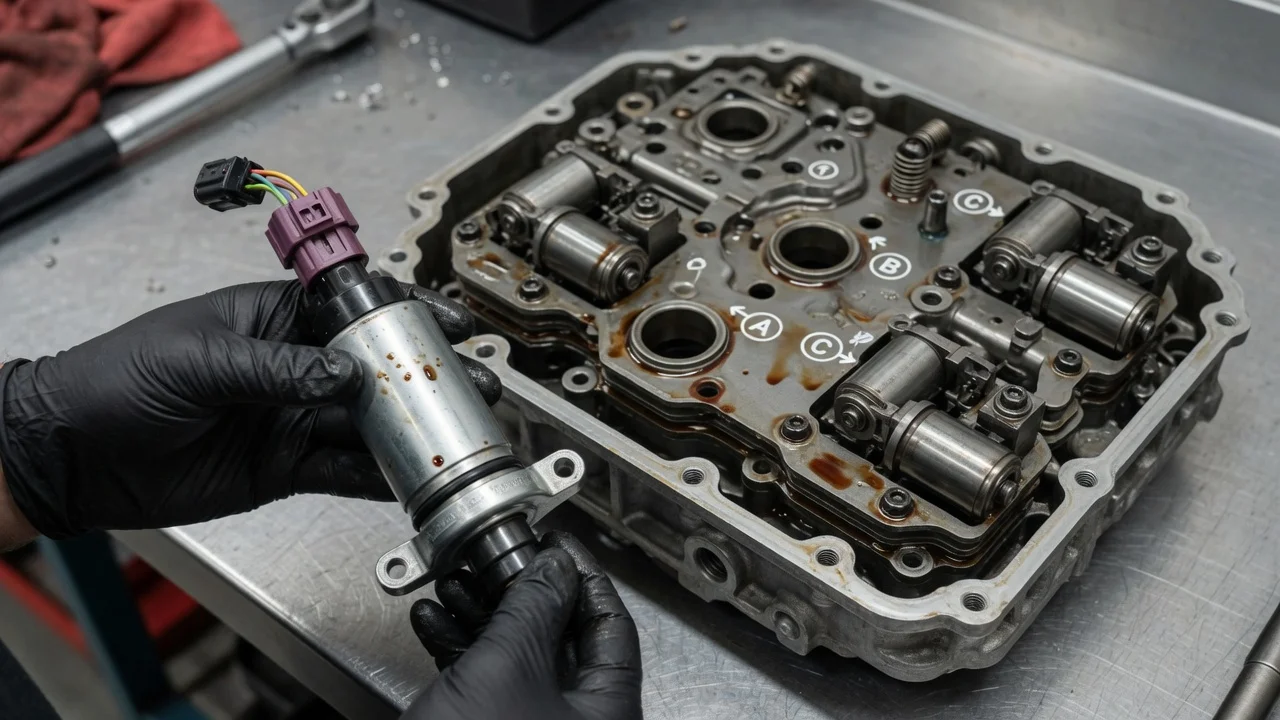
When a Dodge Ram 1500 shifts harshly, stays in one gear or sets a transmission code, owners often suspect the shift solenoid first. To find the right solenoid, you first need to know which automatic your truck has. Ram 1500 models have used several transmission families, and their control layouts differ a lot. This guide covers how to identify the transmission, where its solenoids are, what symptoms and codes can and cannot tell you, and how to choose a repair without guessing at parts.
The Short Answer: Identify the Transmission First
No single shift solenoid fits every Ram 1500. Depending on model year and engine, these trucks have used older four-speed RE-family automatics, the RFE family (including the 45RFE, 545RFE and 65RFE), and, from roughly the 2013 model year onward, an eight-speed automatic from the 8HP family. Each one has its own solenoid layout, connector, fluid specification and diagnostic approach. The most reliable way to identify yours is the VIN. A dealer parts department or a VIN-based parts catalog can decode the factory transmission and list the correct solenoid assembly. The original window sticker or build sheet shows the same information if you still have it.
Once you know the transmission type, expect the shift solenoid to be part of a larger assembly rather than a standalone part. RFE units use a combined solenoid and pressure switch assembly. On the eight-speed, the solenoids are part of the valve body control unit. The older four-speeds use a smaller set of solenoids that handle governor pressure, overdrive and converter clutch control. Matching parts by VIN avoids a common mistake: buying a part that fits the same model name but not the same gearbox.
How Shift Solenoids Control the Transmission
An automatic transmission changes gears by sending pressurized fluid to clutches and bands. The transmission control module decides when to shift based on vehicle speed, throttle position, engine load and temperature. It then energizes solenoids that open, close or regulate fluid passages in the valve body. Put simply, the module makes the decision and the solenoids carry it out hydraulically.
Electronically controlled units such as the RFE and eight-speed families use several solenoids working together. Many of these solenoids are not simply switched on and off; the module modulates them to control shift feel and clutch apply pressure. Pressure switches or sensors report back so the module can confirm that a commanded clutch actually applied. If the module detects an electrical fault, or a mismatch between what it commanded and what happened, it stores a diagnostic code. It may also switch to a protective limp mode that holds a fixed gear. Limp mode can look like a solenoid failure, but many other faults can trigger it.
What Changes the Answer
Transmission type is the biggest variable. In the older four-speed RE units, shifting is largely hydraulic, so a faulty governor pressure solenoid or sensor, or a bad overdrive or converter clutch solenoid, causes different symptoms than a fault in a multi-solenoid electronic unit. On RFE transmissions, the solenoid and pressure switch assembly is serviced as one piece. A code for one circuit therefore usually means replacing the whole assembly rather than a single solenoid. On the eight-speed, the control electronics and valve body are closely integrated. Whether individual components can be serviced, and what programming is needed afterward, depends on the specific application.
Fluid matters as much as hardware. RE and RFE units generally specify ATF+4, while the eight-speed uses its own dedicated fluid. The owner's manual lists the correct fluid for your truck. Low, overheated or contaminated fluid can make valves stick and cause erratic shifting that looks like a bad solenoid. Service history also changes the likely cause. A recent fluid service with the wrong fluid, a past overheating event or an earlier valve body repair all point in different directions. Damaged wiring, corroded connectors and low system voltage can also set solenoid circuit codes when the solenoid itself is fine.
What the Owner Can Do
Start with information you can gather safely. Scan for diagnostic codes with a tool that reads the transmission module, not just generic engine codes. Record the codes and any freeze-frame data before clearing anything. Describe the shift behavior precisely: which gear the truck holds, whether the problem shows up cold or hot, and whether it is constant or comes and goes. Check the fluid level and condition using the method your transmission requires. RFE units typically have a dipstick. The eight-speed generally does not; its level is checked at a fill plug at a specified fluid temperature, which is usually a shop job.
Next, inspect what you can see. Look at the transmission harness connector and the wiring routed near the exhaust and crossmember. Fluid seeping at the connector can point to a seal problem at the connector or the solenoid assembly. Check battery and charging voltage, because low voltage can disrupt solenoid control. If a solenoid circuit code is present, measure resistance across that circuit at the connector and compare it with the factory specification for your transmission. That helps separate a wiring fault from an internal one.
When ordering parts, give the VIN and confirm fitment for the exact transmission. Repairs range from fixing a connector or wiring, to replacing the RFE solenoid assembly, to servicing the valve body or control unit on the eight-speed. Some replacements require a scan-tool relearn or module programming afterward, so plan for that step.
Limitations and Next Step
A symptom or code points to a circuit or a behavior. It does not confirm which part has failed. Harsh shifts, slipping or limp mode can come from worn clutches, a failing torque converter, valve body wear, pump problems or module faults, and a new solenoid will not fix any of those. Procedures, torque values, resistance specifications and fluid fill methods vary by model year and transmission. Use factory service information for your specific truck rather than general guidance.
Have a transmission specialist or dealer confirm the diagnosis before you buy parts if any of these apply: codes point to an internal fault, the fluid is dark or contains debris, the truck keeps entering limp mode, or the repair needs programming you cannot perform. Bring your codes, notes on shift behavior and service records to that visit. They speed up the diagnosis and help you compare repair options.