Dodge Dart 1.4T Turbocharger Problems and Replacement Planning
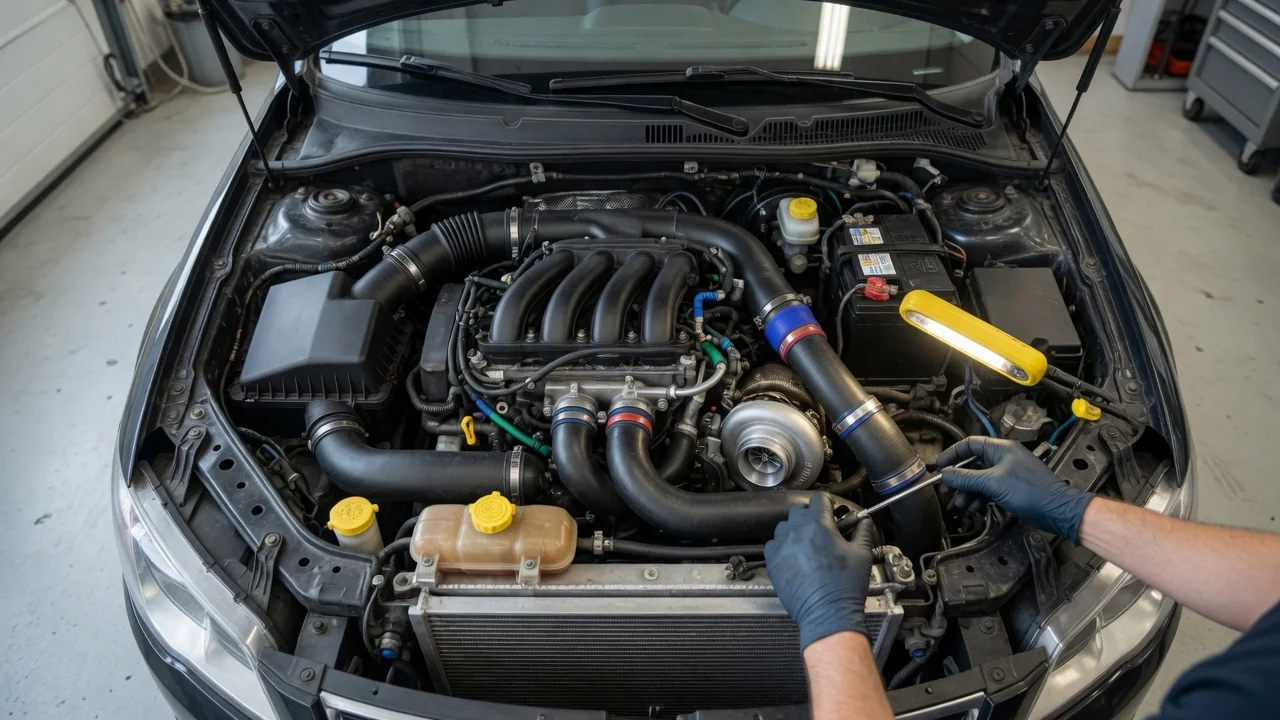
When a Dodge Dart turbocharger complaint appears, the first job is to confirm the car has the 1.4L MultiAir turbo engine and to treat the turbo as one part of a boost system, not an automatic replacement. A 2013 Dodge Dart turbocharger concern can look like loss of boost, odd noise, or exhaust smoke, yet those signs still need inspection before anyone orders a turbocharger for Dodge Dart service.
Confirm the Dart’s Engine and Describe the Problem
A Dodge Dart turbocharger diagnosis starts with engine identification, because not every Dart used the 1.4L MultiAir turbo engine. Vehicle records, under-hood identification, and VIN-linked build data confirm this is the turbocharged MultiAir layout rather than a naturally aspirated variant. Once that is established, record the model year, mileage, oil-change pattern, and any recent repairs or modifications that could affect boost, lubrication, or charge-air plumbing. Those notes later help a technician judge whether the complaint tracks with neglected turbo oil supply, a recent repair, or an unrelated engine issue.
A driver should note whether the hesitation appears during acceleration, at idle, on a cold start, or only after the engine is fully warmed. That timing matters because a charge-air leak, a boost-control fault, and a lubrication problem can present at different operating points. Even a convincing pattern of lag, noise, or smoke does not by itself prove the turbocharger needs replacement. The compressor and turbine sit in a system of hoses, valves, sensors, and oil passages, so the same symptoms can come from leaks, control issues, or engine condition rather than a failed cartridge.
Symptoms That Warrant a Turbo System Inspection
Reduced acceleration or inconsistent power is a common reason to inspect the boost system on a Dart with the 1.4L MultiAir turbo engine. A driver may feel a delayed surge, a flat spot under throttle, or power that does not match pedal demand. Those sensations can follow a loss of boost from a disconnected hose, a leaking intercooler joint, a sticking wastegate path, or a sensor reading that limits requested pressure. Inspection should separate a true turbocharger problem from charge-air plumbing and control issues that produce the same lack of punch.
New whistling, a siren-like sound, or rattling can justify inspecting the turbocharger and nearby ducting, but no sound by itself proves internal turbo damage. Air rushing through a small charge-air leak can whistle, and a heat shield or loose clamp can rattle without touching the rotating assembly. Exhaust smoke and rising oil consumption still require diagnosis of the engine and related systems, because oil can reach the intake or exhaust from turbo seals, from the engine, or from both. Severe smoke, sudden power loss, an oil-pressure warning, or mechanical grinding are reasons to stop safely and arrange professional assistance.
Safe Observations to Gather Before a Shop Visit
Before a shop visit, write down which warning lights appeared, when the behavior started, and whether it is intermittent or persistent. Note engine temperature and whether the complaint follows a long idle, a highway pull, or a cold start. That timeline is more useful than a general claim that the car feels weak. If a scan tool or the cluster stored a message, preserve it rather than clearing codes, because freeze-frame context is often lost. Avoid hard acceleration intended only to reproduce the fault; if the car already feels unsafe, have it towed.
Oil level should be checked according to the owner's manual, with the vehicle safely parked and the engine off and cool. A low reading or a sudden rise can both matter when a turbocharger is under suspicion, but the dipstick result is only an observation. Under the same cool, parked conditions, look for visible leaks around the turbo oil supply, drain area, and charge-air joints without approaching hot parts. Accessible hoses can be observed for obvious displacement or damage, yet owners should not remove components or reach near exhaust hardware to chase a leak.
How Professional Testing Establishes the Cause
Professional testing begins with the stored codes, but each code is evidence to interpret rather than proof that a part has failed. Manufacturer-dependent definitions require vehicle-specific confirmation, so a technician should verify what a given code means on that Dart before treating it as a turbocharger replacement order. Freeze-frame snapshots and live boost data then show whether requested pressure, actual pressure, and engine load line up with the driver's complaint. A mismatch can point toward a sensor, a control solenoid, a mechanical restriction, or a leak rather than a destroyed turbine.
Before anyone condemns the turbocharger, a shop should perform professional charge-air leak testing and boost-control checks. Pressure or smoke methods can reveal a split hose or a clamp that only opens under load, both of which mimic a weak turbo. If internal damage is still suspected, turbo oil supply and drainage deserve attention, because restricted feed, a blocked return, or dirty oil can ruin a cartridge that was otherwise intact. Engine condition and contamination also matter, since metal, sludge, or coolant in the oil can explain why a replacement would fail quickly if the root cause remains.
Replacement Fitment for a 2013 Dodge Dart 1.4T
Selecting a turbocharger for Dodge Dart service on a 2013 model requires more than a catalog year filter. VIN, engine identification, and a verified part number are the reliable way to match a 2013 Dodge Dart turbocharger to that car, because production changes can alter the assembly within one model year. A listing that simply says it fits a 2013 Dart does not establish the compressor housing, actuator, or turbine details that belong on this vehicle. A year-and-model match alone can yield a unit that bolts on yet does not operate with the original boost-control strategy.
The supplier and installer still need to resolve what the replacement assembly includes. Gaskets, oil-feed and drain hardware, heat shields, and the actuator may or may not arrive with the turbocharger, and those omissions change both labor and the chance of reusing a worn seal. Installation requirements, such as whether an actuator needs setup or whether lines must be replaced rather than reused, belong in that same conversation. Applicable part revisions should be confirmed through a reliable parts source tied to the VIN. Unverified interchangeability claims should not be treated as proof that two turbochargers are equivalent.
What a Turbocharger Replacement Estimate Should Cover
A written turbocharger replacement estimate should name the confirmed failure, the replacement assembly being proposed, the labor to complete the job, and the associated parts required to put the system back together. Those associated items often include seals, oil lines, fasteners, and any charge-air components already found leaking. The document should also make clear that the repair plan will address the underlying cause, not only the turbocharger itself. If contamination, a restricted oil passage, or a damaged hose contributed to the failure, leaving that condition in place turns a new unit into a repeat complaint.
Before authorizing work, ask about warranty terms, whether the part is new or remanufactured, any core charge, and what the installer covers if the original symptoms return. Those commercial details prevent surprises after the car leaves the bay. After the repair, professional verification should confirm that oil and charge-air joints are dry, that boost control produces expected response, and that the original loss of boost, noise, or exhaust smoke no longer appears under the same conditions that first raised concern. That check closes the job without treating a smoother drive as proof by itself.