Dodge and Chrysler Steering Angle Sensor Reset Guide
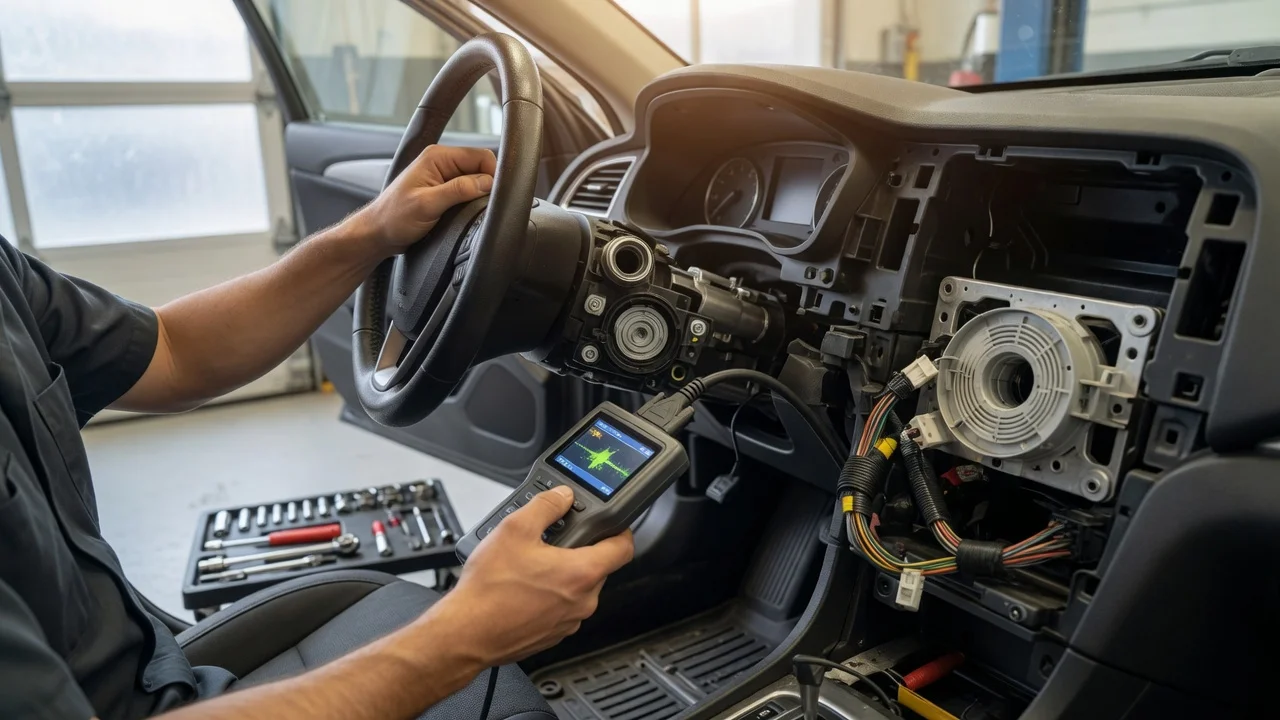
What the Steering Angle Sensor Reset Does
The steering angle sensor measures the rotational position of the steering wheel and its rate of turn. This signal is used by electronic stability control, traction control, and electric power steering systems. After an alignment, steering component replacement, battery disconnect, or certain module repairs, the stored center position may no longer match the actual straight-ahead position. A reset or calibration clears the old zero point and teaches the module the correct center reference for the current mechanical setup.
Direct Answer for Dodge Ram and Other Models
A steering angle sensor reset is not a universal button press. On most modern Dodge and Chrysler vehicles, the procedure is performed through the electronic stability control or power steering module using a compatible scan tool. Some later Ram trucks, Chargers, Challengers, Journeys, and Chrysler 300s may also accept a short test drive or a specific ignition and steering sequence to clear a learned offset, but a stored calibration or a hard fault generally requires diagnostic software rather than a manual lock-to-lock turn alone.
When a Reset Is Actually Needed
A reset is relevant when stability control or traction control warnings appear after an alignment, when the steering wheel is off-center while driving straight, or when a scan tool shows a steering angle sensor correlation or calibration fault. If the sensor itself has failed, a reset will not repair it. The sensor must be able to read a clean, plausible signal before calibration can be completed.
Common Scan Tool Procedure
The typical professional procedure follows these steps, though menu names vary by scan tool and vehicle platform.
Set the front wheels straight ahead and confirm the steering wheel is centered. Connect a compatible diagnostic tool to the OBD-II port. Enter the chassis or stability control module. Select the steering angle sensor calibration or reset function. Follow the on-screen prompts to clear the offset and perform the calibration. Clear any related diagnostic trouble codes, then verify that the displayed steering angle reads near zero degrees straight ahead. Road test the vehicle until the stability control light turns off, if required.
Dodge Ram and Truck Variants
Dodge Ram 1500, 2500, and 3500 trucks from the mid-2000s onward integrate the steering angle sensor into the steering column or clock spring assembly. In many cases the sensor is not separately serviceable and may come as part of the clock spring. After replacing that assembly, a scan tool calibration is generally required to match the new sensor to the stability control module. A manual wheel-turning sequence may clear a temporary offset on some model years, but it is not a guaranteed substitute for a module-level calibration.
Dodge Charger, Challenger, and Chrysler 300
These rear-wheel-drive and all-wheel-drive platforms share related electronic stability control architecture. A reset is commonly needed after a steering rack or steering column service, a wheel alignment with significant toe adjustment, or a clock spring replacement. The calibration function is usually located in the ABS or electronic stability control module rather than in a separate steering angle sensor menu. The scan tool may require the vehicle to be stationary with the engine running or the ignition on during the procedure.
Dodge Journey and Front-Wheel-Drive Platforms
The Journey and related front-wheel-drive models may store the steering angle sensor inside the steering column. On vehicles with electric power steering, the power steering module may report the angle directly to the stability system. If the sensor is integral to the electric power steering motor or column assembly, replacement or calibration procedures vary by equipment level. Some models require a specific scan tool initialization sequence after a battery disconnect, while others complete the zero-point relearn during a straight-line drive above a minimum speed.
Manual Sequences and Their Limits
A widely circulated manual method involves starting the engine, turning the steering wheel fully left, fully right, and returning to center, then driving briefly in a straight line. This may clear a simple learned offset on some vehicles, but it is not a reliable reset for all Dodge and Chrysler models. If a diagnostic trouble code remains active after a manual sequence, or if the stability warning returns, the module likely requires a scan tool calibration or there is an underlying sensor or wiring fault.
What to Check If the Reset Fails
Steering angle sensor signal: Confirm the scan tool displays a changing angle value when the wheel is turned. Clock spring integrity: A damaged clock spring can produce an implausible signal and prevent calibration. Alignment and steering center: The front wheels must be straight ahead, not simply the steering wheel centered by eye. Module communication: A failed stability control or power steering module can block the calibration function. Battery voltage: Low voltage during programming can interrupt the reset and leave the module in a fault state.
Ownership Guidance
For most owners, the practical next step is to have the vehicle scanned with a diagnostic tool that can access the stability control or power steering module. A generic code reader may show a steering angle fault but cannot perform the calibration. If the only issue is an off-center wheel after an alignment, the alignment itself may need correction rather than a sensor reset. If a warning light remains after a professional calibration, treat the sensor or its circuit as a suspect component and inspect the clock spring and column wiring before replacing parts.