Dodge Charger Spark Plug Replacement Guide
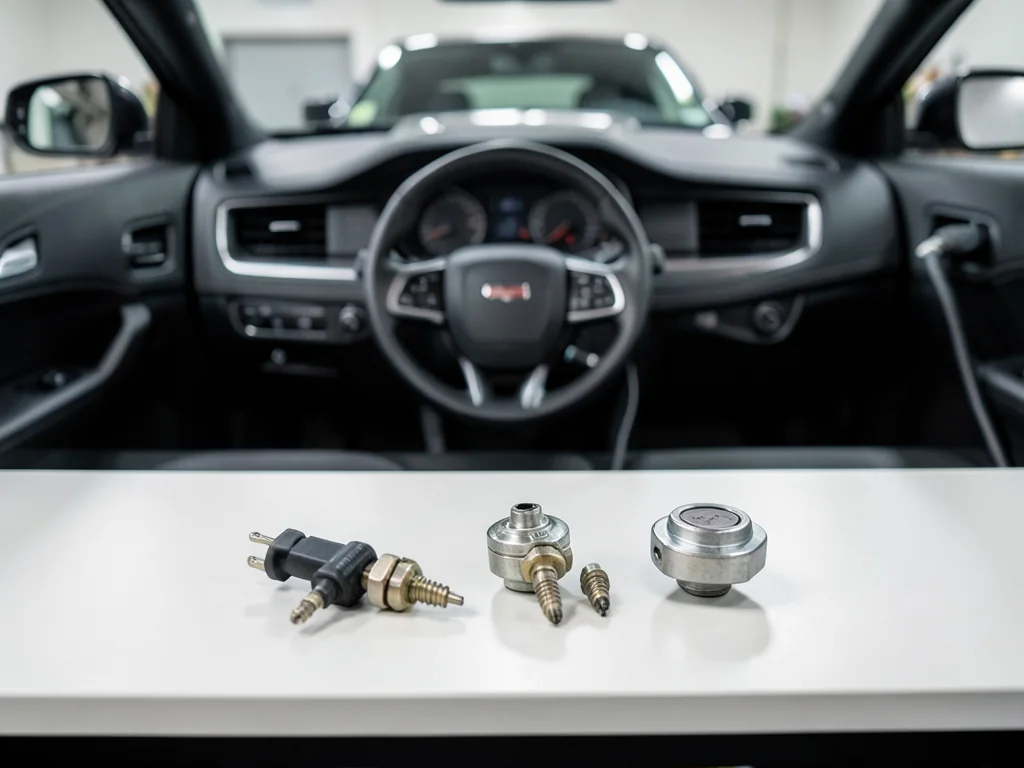
Dodge Charger spark plugs are selected from the vehicle’s year and engine, not from a generic parts-counter guess. Spark plugs for Dodge Charger V6 and V8 applications differ in count, specification, and access, so the owner’s manual, underhood labels, and engine identification come first. Plug types, spark plug service interval logic, ignition coil and intake access, and misfire symptoms all have to be interpreted against that confirmed engine before parts are ordered.
Identify Your Charger’s Year and Engine Before Selecting Plugs
When you look up spark plugs Dodge Charger listings, model year and the exact engine designation are the starting point. Chargers have used more than one V6 and V8 over the years, and those engines do not share one spark plug specification. A catalog search that lists only the body name can return several plug families. Confirm the engine from the owner’s manual, the underhood emissions or engine label, or VIN-based parts information before treating a listing as the correct plug.
Engine identification also determines plug count. Do not assume every Charger uses one plug per cylinder. Some applications follow that pattern, but the verified part number and quantity still have to match the specific engine, not a neighboring displacement or a later model year. Once the engine is confirmed, record the application-specific plug count and the published part number from factory or equivalent catalog data. That pair, not a visual match to a used plug, is what should go on the order.
Find the Spark Plug Replacement Interval for Your Engine
The spark plug service interval lives in the model-year maintenance documentation for that Charger, typically the owner’s manual schedule or the equivalent dealer maintenance booklet. Any mileage or time figure you find has to match the engine you identified and the maintenance conditions the schedule describes, such as normal versus severe service. A V6 interval is not interchangeable with a V8 interval from the same year, and a later-year schedule does not automatically apply to an earlier engine.
Maintenance records show whether that interval has already been met. If the last spark plug replacement is documented with date, mileage, and part number, compare those entries to the current odometer and the applicable schedule. If the history is unknown, treat the plugs as due for inspection rather than assuming they still have remaining life. Scheduled replacement is separate from diagnosis. Rough running can coincide with an overdue interval, but new plugs should not be treated as a repair for an unexplained misfire.
Confirm Plug Specifications Before Buying
Spark plug specification is more than a brand name. Thread diameter, thread reach, seat design, heat range, and electrode configuration have to match the verified Charger engine. A plug that threads in but seats incorrectly, reaches too far, or runs at the wrong heat range can damage the cylinder head or the piston. Confirm those dimensions against the application, then confirm the specified spark plug gap and whether the plug maker says the selected part is pre-gapped or requires checking before installation.
Electrode material is one part of that specification, not a substitute for it. Iridium, platinum, or copper construction does not by itself prove a plug is correct for Dodge Charger engines, and it does not authorize a longer service interval than the schedule for that engine. Before ordering a complete set, verify quantity against the confirmed cylinder and plug count, and match the catalog application to year, engine, and any listed ignition type. A mixed or incomplete set leaves at least one cylinder on the original plug.
Understand Access Requirements on Charger V6 and V8 Engines
On identified Charger V6 applications, intake access is the first question after the plugs themselves. Some V6 layouts place coils and plugs where intake plumbing, covers, or other components sit over one bank, so those parts may have to come off before a socket can reach every plug. That obstruction is not universal across every V6 Charger, which is why engine-specific service information has to confirm which plugs, if any, are blocked. Guessing from a similar engine can lead to unnecessary disassembly or a missed plug.
Charger V8 plug locations typically follow the cylinder banks, with an ignition coil at each plug or in a related coil arrangement that still has to be identified from that engine’s service information. Clearance around the coils, wiring, and nearby brackets varies by engine, as do the components that must be removed, the seals that must be replaced, and the reassembly specifications. There is no single Charger removal procedure. Limited access, an uncertain sequence, or a damaged coil connector is a reason to stop and use a qualified technician.
Recognize Symptoms Without Assuming the Plugs Are at Fault
Misfire symptoms such as rough idle, hard starting, and hesitation can justify looking at Dodge Charger spark plugs, but they do not prove a plug has failed. The same behavior can come from an ignition coil, a fuel-delivery problem, a vacuum leak, or a mechanical issue. Record what you can observe safely: whether the malfunction indicator is steady or flashing, whether the complaint appears at startup, idle, or under acceleration, and whether it is constant or intermittent. Those notes help a technician start in the right system.
A misfire code is a diagnostic starting point, not a parts sentence. Manufacturer-dependent codes still need vehicle-specific confirmation, and the stored information may point to a cylinder without identifying whether the plug, coil, injector, or compression is at fault. Professional ignition, fuel-system, or mechanical testing may be required before any replacement is justified. If the malfunction indicator flashes or the engine runs severely rough, stop driving as soon as it is safe and seek assistance. Continuing under those conditions can damage the catalytic converter or other components.
Plan the Service and Document the Result
A useful estimate for spark plugs for Dodge Charger work names the confirmed plug application and quantity, the labor needed for access on that engine, and any seals the procedure requires if intake or other components come off. Installation torque and any thread or seating products come from the engine service information and the plug maker’s instructions for that part, not from a universal torque chart or a general anti-seize habit. Using the wrong product or tightness can damage the head or leave a plug under-clamped.
Stop and have the engine assessed professionally if a plug is stuck, threads look damaged, oil is present in a plug well, or a misfire remains after the new set is installed. Those conditions are outside a routine plug swap. After the job, add the service date, mileage, and installed part number to the maintenance records, then confirm that the original complaint, if any, is gone under the same driving conditions. Documentation is what the next interval and the next technician will rely on.