Dodge Charger Adjustable Control Arms: Fitment and Selection
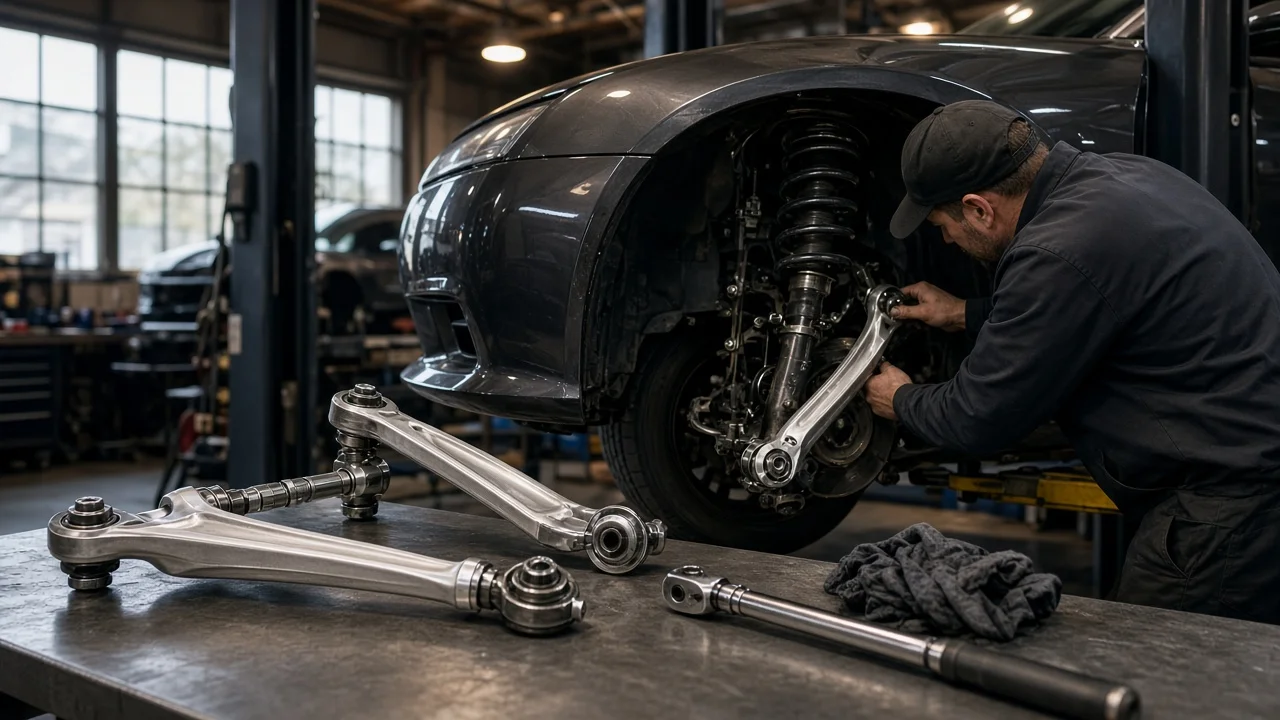
Adjustable control arms let a Dodge Charger owner bring camber, caster or toe back into a usable range after the car has been lowered, or fine-tune alignment for tire wear and handling. They are not a universal upgrade, though. The right part depends on which corner and which link you need to change, the exact model year and drivetrain, and how much noise and maintenance you are willing to accept. This guide walks through fitment and selection so the arms you buy actually solve your alignment problem.
Define the job the product must do
Start with the problem you are trying to solve. On a Charger, adjustable arms are usually bought because lowering springs or coilovers have pushed camber, caster or toe outside the range the factory adjusters can reach, leaving the car wearing the inside edges of its tires. Others want extra negative camber or caster for autocross and track days, or are replacing worn arms and want adjustability while the suspension is already apart. If your car sits at stock ride height and an alignment shop can set it within factory specifications, worn bushings or ball joints are better addressed with quality OE-style replacements than with adjustable parts you do not need.
Before shopping, get a current wheel alignment printout showing the before readings and whether the factory adjustment is already at its limit. That printout tells you which corner and which angle needs help, and therefore which part to buy: upper control arms for front camber, adjustable tension or compression rods for front caster, and dedicated camber or toe links at the rear. Also be honest about practical constraints. A daily-driven car in a wet or salted climate, a weekend track car and a show car sitting low all point toward different designs, and the total cost should include installation, an alignment and the equipment for proper vehicle support.
Check compatibility
Fitment starts with the exact vehicle. The Charger sold from the 2006 through 2023 model years is built on a rear-drive-based platform, while the newer generation that arrived for 2024 uses a different architecture, so suspension parts for the earlier car should not be assumed to fit it. Within the older generation, listings for adjustable control arms commonly split by year range, by rear-wheel drive versus all-wheel drive, and sometimes by trim or performance package, because front hardware and ride heights can differ. Match the listing to your car's year, drivetrain and trim rather than to a general Charger label, and confirm with the seller when the description is vague.
Next, check the interfaces. Compare the arm's mounting points with your chassis: bushing sleeve width, bolt diameter, whether factory bolts or cam bolts are reused, and the ball joint stud and taper where the arm meets the knuckle. Look for stated clearance to wheels, brake lines, ABS sensor wiring and sway bar links, especially with aftermarket wheels or larger brakes. Finally, read the published adjustment range. It should cover the correction your alignment printout calls for at your actual ride height, with some margin, rather than ending right at the number you need.
Features that affect the choice
The pivot design has the biggest effect on how the car feels. Rubber bushings stay quiet and absorb vibration but allow some deflection under load. Polyurethane is firmer and holds alignment more consistently, at the cost of more noise and harshness and, in some designs, periodic greasing to prevent squeaks. Spherical bearings and rod ends give the most precise control but transmit the most road noise and can develop joint play faster on a street car exposed to grit and water. On arms with a ball joint, check whether the joint is replaceable or integral and whether it has a grease fitting, since that decides whether a worn joint means a small part or a whole arm.
The adjustment mechanism matters for ownership cost. A threaded sleeve with left- and right-hand threads can usually be adjusted on the car, which makes the alignment faster and easier to repeat. Designs that require disconnecting one end to change length take longer and may cost more at the alignment rack. Look for solid jam nuts or clamps and a finish suited to your climate, whether that is forged or billet aluminum, tubular steel or coated stamped steel. Treat labels such as race-proven, heavy-duty or lifetime as marketing. Useful evidence is concrete: a published adjustment range, specified materials, included hardware, available rebuild parts, written warranty terms and clear installation instructions.
Limitations and ownership costs
Adjustable arms do not install themselves into alignment. Plan for a professional wheel alignment after installation, and possibly a second visit if the arms were set roughly. During the work, support the car on rated jack stands at the correct lift points on level ground, never under a jack alone, and follow the factory service procedure for your model. Tighten rubber-bushed pivots with the suspension loaded at normal ride height so the bushings are not twisted, and use the fastener specification from the service information or the arm manufacturer rather than guessing or reusing numbers from another car.
Ownership adds inspection. Check for joint play, torn boots, cracked bushings and loose jam nuts at regular service intervals or as the manufacturer recommends, and expect rod ends and some polyurethane designs to need service or replacement sooner than rubber. The arms also have firm limits. They cannot fix bent components, worn shocks, failing wheel bearings or damaged mounting points, and they do not undo every geometry change that lowering creates. Running aggressive camber on the street will still wear the inner tire edges faster. If the car is under warranty, ask the dealer how aftermarket suspension parts could affect coverage of related components before you buy.
Build a practical shortlist
A short checklist keeps the comparison grounded. For each candidate, confirm that the listed model years, drivetrain and trim match your car, that it targets the angle your alignment printout identified, and that the adjustment range covers your correction at your ride height with margin. Then compare pivot type against how you drive, whether it adjusts on the car, which hardware is included, whether bushings, rod ends or ball joints can be replaced separately, and whether instructions with fastener specifications are supplied. Add the alignment and any extra parts to the price so you compare total cost, not just the sticker.
Narrow the list to two or three options that pass every check, then choose on the trade-off that matters most to you, usually noise versus precision. Buy left and right sides as a matched pair, and keep front and rear changes consistent with the goal you set at the start. It also helps to ask your alignment shop whether they have worked with a particular design, since ease of adjustment affects every future visit. Without independent test data, no single set of Charger adjustable control arms is objectively best; the right one is the set that fits your exact car and solves the measured problem.