Dodge 4.7 Timing Chain Marks
Direct answer
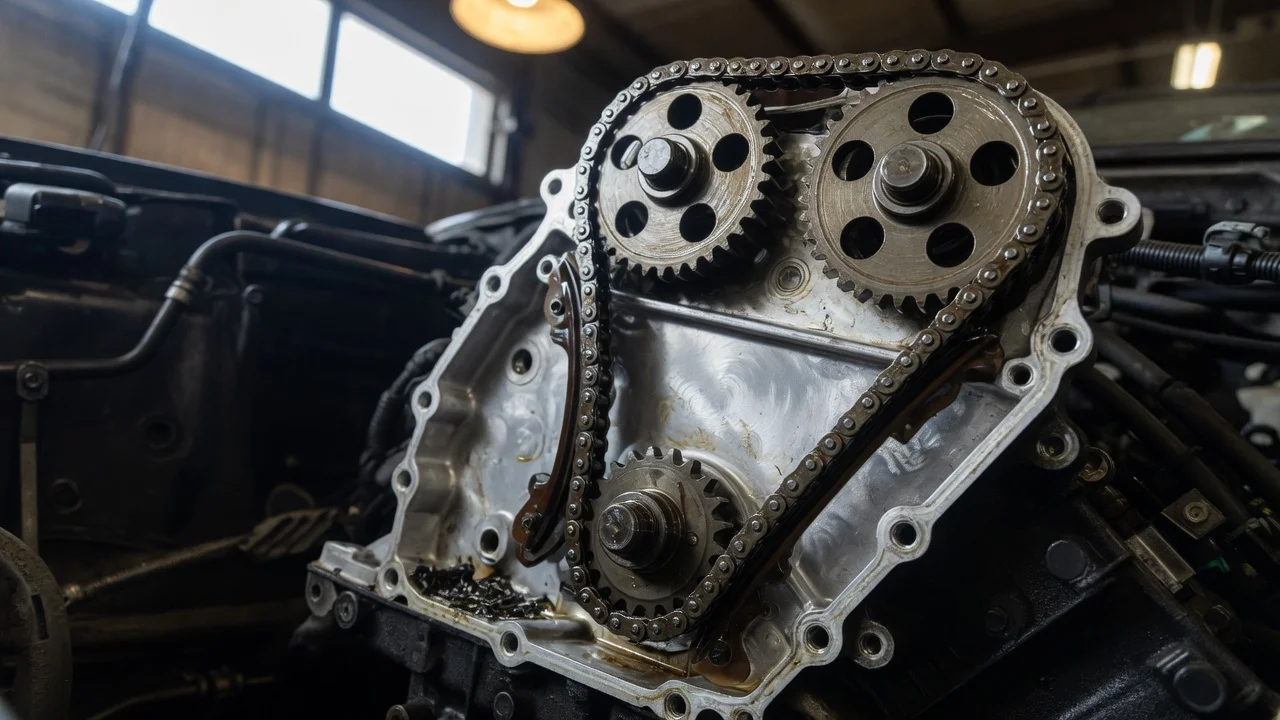
The Dodge 4.7L V8 uses a timing chain system in which alignment depends mainly on the relationship between the crankshaft sprocket, the camshaft sprockets, and the marked or colored links on the chain. The exact marks can vary by model year and whether the engine is the single-overhead-cam version used in most Dodge trucks and SUVs. Because replacement chains and sprockets are not all marked the same way, the safest approach is to follow the service information for the specific year and engine code rather than assuming that all 4.7L engines share identical link positions.
What the timing chain marks identify
Timing chain marks show where the chain must sit on the crankshaft and camshaft sprockets so that the valves open and close in the correct relationship to piston movement. On many 4.7L engines, the chain has darkened or plated links that are used only during installation. These links line up with a dot, notch, or other feature on each sprocket. Once the chain has rotated during normal engine operation, those links do not return to the same visible position on every revolution, so they are not a reliable running-position reference.
The crankshaft is often the primary reference point. The crankshaft sprocket must be at its specified timing position before the camshaft sprockets are timed. If the lower sprocket is positioned incorrectly, the upper marks cannot compensate for it.
Model-year and engine-code scope
The 4.7L designation covers a family of V8 engines used in several Dodge, Jeep, and Ram vehicles. Not every 4.7L uses the identical timing mark layout. Changes in sprocket design, chain tensioner parts, and cam drive arrangement can alter the relevant alignment procedure. Before timing the engine, confirm the model year and engine identification rather than transferring marks from a different 4.7L application.
Some service procedures identify the camshafts as the left and right bank cams. The left and right terms refer to the engine as viewed from the driver seat, not from the front of the vehicle. Mixing these positions can place the chain marks in the wrong relationship.
Basic alignment sequence
A typical installation follows a fixed order. The crankshaft sprocket is placed first, with its timing feature aligned to the specified reference. The chain is then draped onto the crankshaft sprocket and routed to the camshaft sprockets so that the installation links or marks meet the corresponding sprocket marks. The tensioner is installed or released last, after the slack is taken up on the correct side of the chain.
Check the crankshaft sprocket timing position before installing the chain. Align the marked chain link or links with the crankshaft sprocket feature. Route the chain to the camshaft sprockets without rotating the crankshaft out of position. Align each camshaft sprocket mark with its marked link. Take up slack on the driven side and seat the tensioner according to the service procedure. Rotate the engine by hand only after confirming the marks and checking for interference.
Common points of confusion
One common mistake is treating the timing mark on the harmonic balancer as a replacement for the crankshaft sprocket timing position. The balancer mark can be useful for ignition or top-dead-center checks on some engines, but it is not necessarily the same as the sprocket timing reference used during chain installation.
Another issue is reusing a chain without its original colored links or transferring marks from an old chain to a new one. Chain stretch and sprocket wear can make the old chain an unreliable guide. A new chain should be installed using its own supplied marks where present.
What to do before turning the engine
After the chain is installed, rotate the engine by hand through at least one full camshaft cycle if the spark plugs are removed or the required access is available. Watch for rising resistance that is not explained by normal compression. If the marks do not return to a sensible relationship after the specified number of crankshaft revolutions, stop and recheck the installation rather than using the starter.
Because the procedure differences between years are material to valve-to-piston clearance, the supplied general sequence does not replace the exact torque, tensioner release, and mark-position details for a specific engine. If the exact factory marks for your 4.7L are not known, that is a gap that should be resolved before startup or disassembly proceeds further.