Do You Need an Alignment After Replacing Struts, Tie Rods or Control Arms?
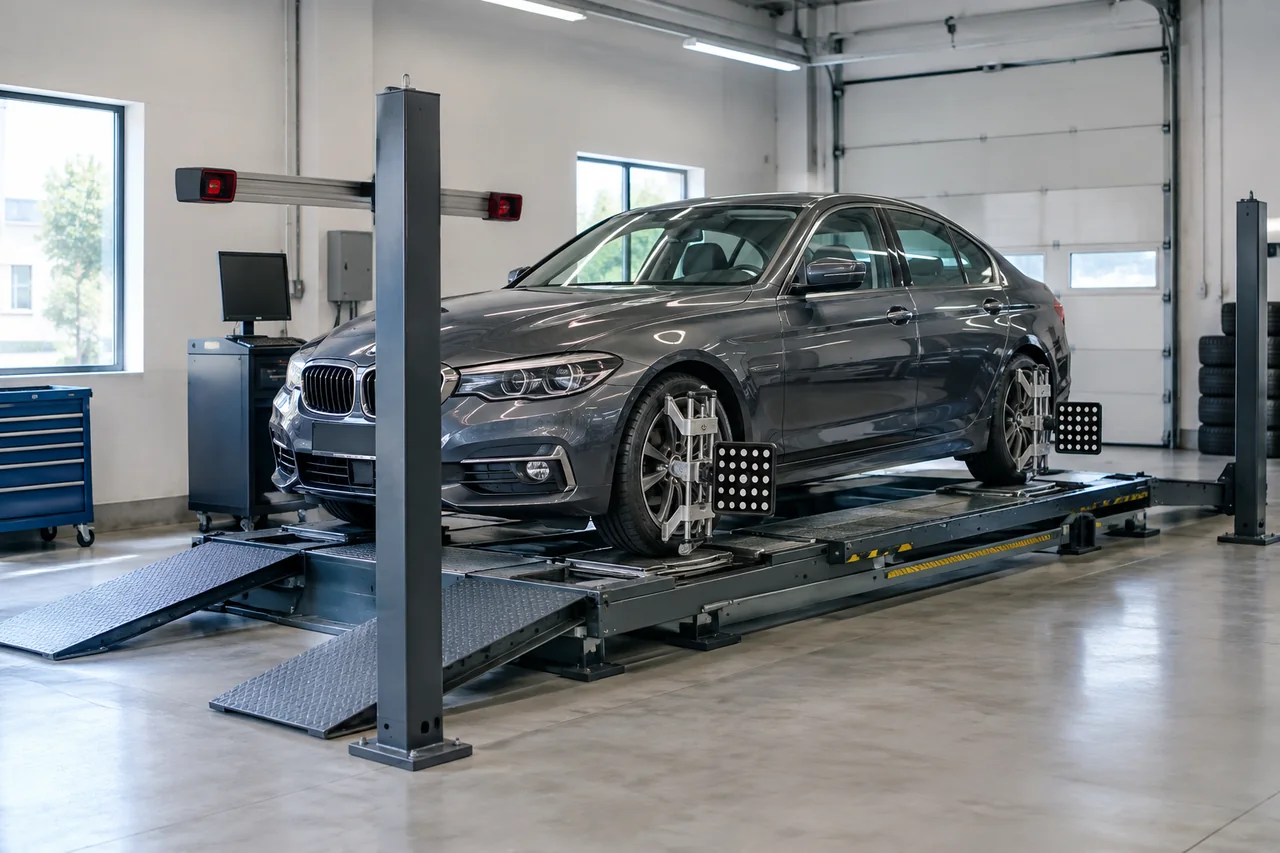
Plan a wheel alignment after replacing struts, and after strut, tie rod, or control arm work that disturbs how the wheel sits. The vehicle can feel normal while camber, caster, toe angle, or thrust angle sit outside specification. Alignment measurements confirm whether suspension geometry still matches the manufacturer's procedure. A centered steering wheel does not prove the job is finished.
When Suspension Work Calls for an Alignment Check
Yes, you need an alignment after replacing struts, and the same check belongs on the list after a tie rod or control arm is changed, when those parts locate the wheel. Follow the vehicle manufacturer's service procedure rather than treating road feel as the test. The point of wheel alignment after strut replacement is to see where the wheel ended up, not to imply the new part is defective. Bolting a component into place can still shift camber, caster, or toe enough to matter even when the ride feels familiar.
Measuring alignment is not the same as making adjustments. If readings fall within the vehicle specifications, no correction may be required, but that conclusion comes from alignment measurements, not from a short test drive. Steering wheel centering and the absence of pulling only describe how the car feels in one set of conditions. They do not confirm that toe angle, camber, caster, or thrust angle remain inside specification, so they cannot substitute for the check the service procedure calls for after the parts were changed.
How Strut Replacement Can Change Wheel Angles
A locating strut ties the steering knuckle to the body and helps set where the wheel sits. Loosening those connections for wheel alignment after replacing struts can change suspension geometry even when the replacement part is the correct type. Camber is the inward or outward tilt of the wheel when viewed from the front. Caster is the fore-and-aft tilt of the steering axis. Toe is the direction the wheels point when viewed from above. Any of those relationships can move when the strut is unbolted and reinstalled.
Which angles actually change depends on the suspension design and on mounting tolerances, so strut replacement does not universally alter every reading. Some layouts mainly influence camber at the knuckle; others can also move caster or toe. Matching old paint marks or clocking the upper mount the same way only repeats a previous position. It does not prove the finished alignment meets current vehicle specifications, because bushings, fasteners, and the new strut itself can sit differently than the assembly that came off.
Rear Struts and Complete Assemblies Still Need a Design Check
A rear strut can still locate the wheel, so its position at the back of the vehicle is not an automatic exemption from an alignment after replacing struts. If the strut is a structural member, disturbing its body or knuckle connections can change rear camber, toe, or thrust angle. A complete, preassembled strut does not remove that concern. It still bolts to the vehicle's own mounting points, and those interfaces, along with fastener torque and bushing compression, can influence the finished suspension geometry.
The possible exception is a component that only damps suspension motion, with no alignment-locating connections disturbed, and even then the vehicle's service procedure remains the authority. If the damper simply slides in a mount that already sets wheel position, geometry may be unchanged, but that is a design-specific finding, not a general rule. Rear alignment measurements can still matter when rear adjustment options are limited. Readings document whether the axle is square and whether remaining front adjustments can restore steering wheel centering without hiding a rear thrust problem.
Tie Rod Replacement Requires Toe Verification
Inner and outer tie rods set the length of the steering linkage, and that length is what controls toe angle. Wheel alignment after tie rod replacement is therefore a verification of the new length, not an optional extra. Counting threads on the old part, matching a measured overall length, or turning the sleeve the same number of turns cannot confirm correct final toe. The new rod, the steering rack position, and how the lock nuts seat can all differ from the removed assembly once the vehicle is at ride height.
Incorrect toe can scrub the tread and produce uneven tire wear while the vehicle still tracks reasonably straight. Steering wheel centering can also be off if one side's toe was restored and the other was not, or if the wheel was not locked in the straight-ahead position during the repair. Those problems do not always create an obvious pull. A satisfactory road feel is not proof of correct adjustment, so a professional alignment check after replacement is the way to confirm the wheels point where the specification requires.
Control Arm Replacement Can Reposition the Wheel
Control arms locate the wheel through their inner pivots and their ball joint connection to the knuckle. Wheel alignment after control arm replacement is needed because those joints define camber, caster, and, in some layouts, toe as the arm swings. Which angles move depends on suspension design and on which connections were disturbed. A lower arm that sets the inboard pivot can change camber and caster together. An upper arm or a multi-link piece can shift a different combination. The new arm does not have to be adjustable for that shift to occur.
A replacement arm with no built-in cam or slotted hole can still change alignment through its own dimensions and through mounting tolerances at the subframe or body. Bushing stiffness, ball joint height, and how the fasteners draw the arm home all influence the finished wheel position. Worn, loose, or damaged remaining parts can also keep readings from staying put. If a ball joint, bushing, or subframe mount still has play, alignment measurements taken after the arm is installed may not remain stable once the vehicle is driven.
What to Check Before Driving and What to Ask the Shop
Skipping a needed alignment after replacing struts, or after related steering and suspension work, can leave uneven tire wear, an off-center steering wheel, pulling, and reduced directional stability. Those effects may not appear on the first short trip. Arrange the alignment as part of the repair rather than treating it as a later convenience. There is no universally safe driving distance to wait before the check, because how far a vehicle can go with disturbed geometry depends on how far the angles moved and on tire condition.
Safe observations include looking for new feathering or inner-edge wear on the tires, noticing whether the steering wheel sits off center on a straight road, and paying attention to fresh pulling or wander. Severe pulling, loose steering, or instability is a reason to stop safely and seek professional help rather than continue. Ask the shop for before-and-after alignment measurements compared with vehicle specifications, and for confirmation that unresolved symptoms were evaluated. Alignment alone cannot diagnose every steering or suspension problem, including worn parts that still have play.