Do Performance Ignition Coils Actually Improve Power?
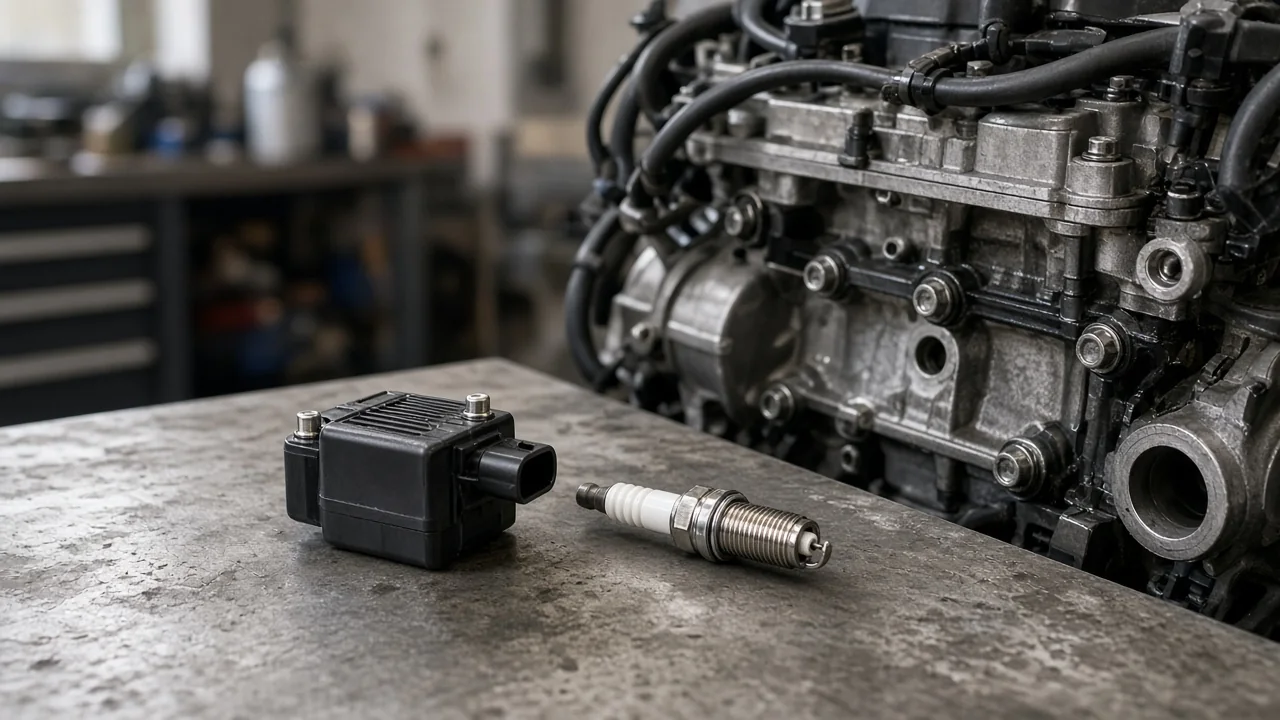
Aftermarket coils are often sold as a shortcut to more power, but ignition coil performance depends on energy storage, ignition dwell, and whether the stock system already fires the mixture under load. A performance ignition coil can help when spark energy is the limiting factor. It does not automatically add horsepower to a healthy, correctly calibrated engine with adequate factory ignition capacity.
What Performance Ignition Coils Claim to Deliver
An ignition coil stores energy in its magnetic field as current builds during coil saturation, then collapses that field to produce the high voltage that ionizes the mixture and starts a spark. The voltage actually needed at a given firing event depends on cylinder pressure, mixture, spark plug gap, and plug condition, not on a marketing maximum. Advertised peak voltage describes a capability under defined test conditions. It does not describe what every combustion cycle requires, and it does not by itself establish a horsepower gain.
Spark energy and spark duration matter because the kernel must survive turbulence and mixture variation long enough to start stable combustion, especially under load. Reliable firing is the practical goal: enough energy delivered at the right time so the cylinder does not misfire. No single specification, whether energy, duration, or voltage, proves that a coil will add power. A performance label also does not establish suitability for a particular engine. Primary resistance, inductance, connector style, and how the coil interacts with the vehicle's ignition control all determine whether the part belongs on that application.
When Ignition Capacity Can Affect Engine Output
When ignition capacity is inadequate, the mixture may not fire consistently. Misfire wastes fuel, drops cylinder pressure contribution from that event, and can keep the engine from delivering the output it was otherwise capable of producing. Replacing a weak or failing coil can restore that lost work by returning combustion to a complete, timed event. That recovery is not the same as creating additional power in an engine whose ignition already lights the mixture under the loads it actually sees. A healthy stock coil that already saturates and fires reliably leaves little unused ignition headroom to convert into extra horsepower.
Elevated cylinder pressure from boost, higher compression, or denser mixtures can raise the voltage needed to jump the gap, so ignition demand can grow with certain modifications. That does not mean every modified engine needs an aftermarket coil. Many factory systems already have margin for the loads they were designed to support, and some calibrations still fire reliably after modest changes. If factory ignition capacity is already sufficient, a coil change alone has no assured power gain. The limiting factor is then more likely fueling, airflow, mechanical strength, or ignition calibration rather than the coil's energy storage.
The Vehicle Requirements Behind Coil Selection
Coil selection starts with the vehicle's electrical requirements: primary drive type, connector and boot geometry, mounting, and compatibility with the ignition control system that commands charging and firing. A coil that does not mate electrically or physically can create high-resistance connections, incomplete charging, or interference with neighboring components. Ignition dwell is the charging window that allows current to build toward coil saturation. Dwell must suit both the coil's inductance and resistance and the control strategy, whether a simple dwell map or a current-limited driver. A part designed for a different charging schedule may never reach intended energy or may overheat.
Unsuitable dwell or mismatched electrical characteristics can keep the coil in a high-current state too long, producing excessive heat, insulation breakdown, and unreliable operation, or they can starve the coil of charge so spark energy falls when cylinder pressure is highest. Spark plug condition and the specified spark plug gap also shape the voltage demand the coil must meet. Worn electrodes or deposits change that threshold independently of the coil. Engine calibration, including timing and mixture, further affects ignition demand. Universal gap or tuning recipes are not a substitute for the application's specified values.
What Credible Evidence of a Power Gain Requires
A credible power claim starts with a documented vehicle configuration: engine condition, fuel, ignition calibration, intake and exhaust state, and the test conditions used for comparison. Without that baseline, a number cannot be tied to the coil. Dyno testing can be useful, but only when the same correction method, weather accounting, and operating procedure are held constant. Repeated, controlled measurements are needed because run-to-run variation in temperature, tire slip, cooling, and operator technique can exceed a small coil-related change. A single pull is not enough to separate a real effect from normal scatter.
Results also have to account for other changes made at the same time. New spark plugs, a revised ignition calibration, different fuel, or correction of an existing misfire can all raise measured output even if the coil added no extra energy under healthy conditions. Isolating the coil means holding those variables still or documenting them. Subjective throttle feel is less conclusive, because smoother response can come from fixing a miss rather than from added power. An isolated peak horsepower figure, without repeats and without the rest of the curve, cannot establish a reliable coil-related gain.
Symptoms to Investigate Before Buying Coils
Rough running, hesitation under load, and a check engine light can point toward an ignition problem, but they have several other causes as well, including fuel delivery, air leaks, and sensor faults. An owner can usefully note when the symptom appears, whether it happens cold or hot, at idle or under load, which warning lights are present, and any diagnostic information already stored. A misfire code is evidence that a cylinder did not contribute as expected. It does not identify a failed coil by itself. Manufacturer-dependent codes still require vehicle-specific confirmation before a part is condemned.
Unresolved misfires, damaged wiring, connector heat, or uncertainty about application and ignition calibration belong with professional testing rather than parts swapping. Live spark checks and handling of energized ignition components are not appropriate owner procedures. If the engine shakes severely or the check engine light flashes, that pattern can indicate a misfire heavy enough to overheat a catalytic converter. Stop safely, avoid continued loaded operation, and arrange prompt assistance. Buying a performance ignition coil to chase a feel of extra power is a different decision from diagnosing a genuine ignition fault, and the two should not be mixed.