Do Brake Lights Come On During Regenerative Braking in EVs and Teslas?
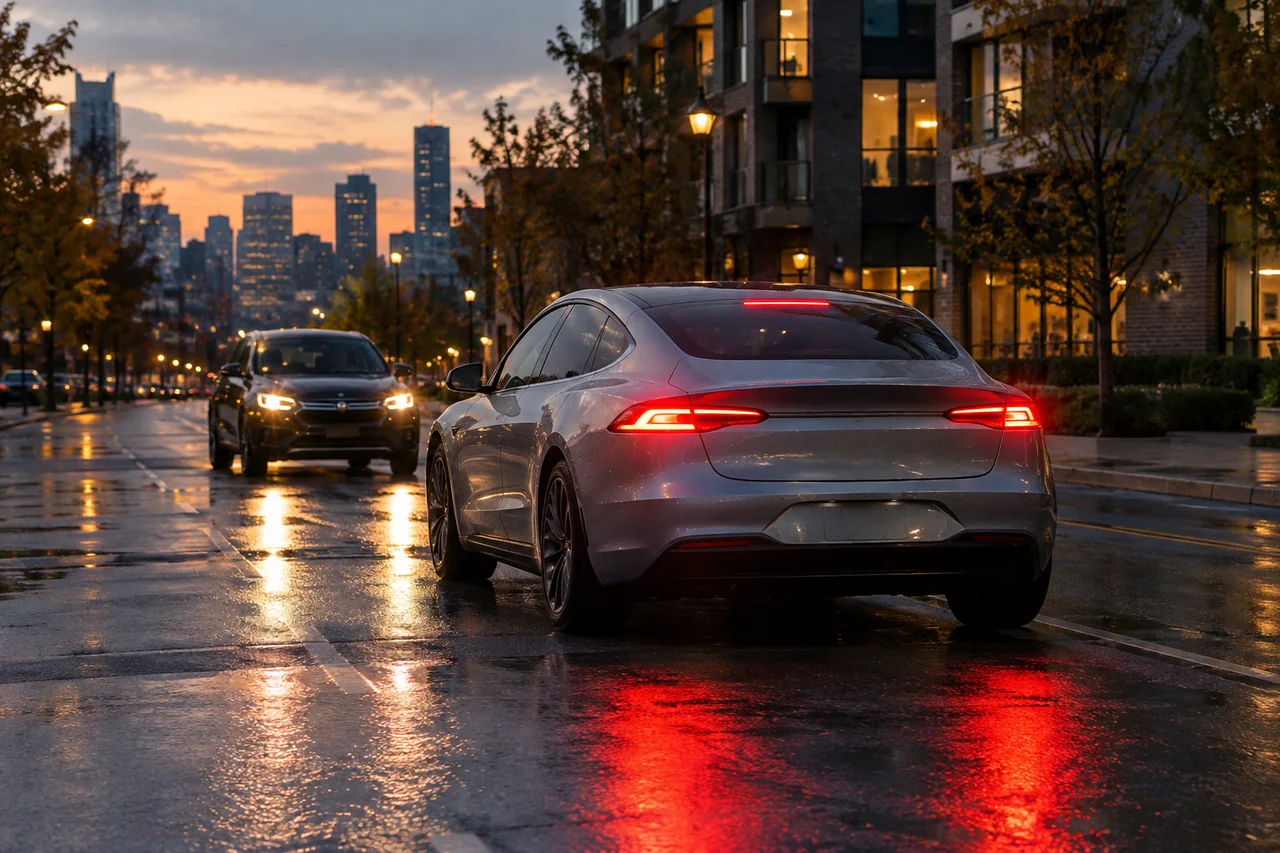
If you drive an electric vehicle or a Tesla in one-pedal mode, you may have wondered whether the brake lights come on when you lift off the accelerator and the car starts slowing down through regenerative braking. The answer is usually yes when deceleration is strong enough, but not every lift-off illuminates the stop lamps. Understanding when the lights activate matters for communicating with traffic behind you and avoiding rear-end surprises.
The Short Answer: Regen Can Turn On Brake Lights, but Not Always
On many EVs and hybrids, brake lights can illuminate during regenerative braking even if your foot never touches the brake pedal. The car uses sensors to measure how quickly it is decelerating, and if that rate crosses a set threshold, the lamps switch on. This means that in normal one-pedal driving, you may see the lights come on as the vehicle slows more firmly, while a gentle coast from lifting off may not trigger them.
However, behavior is not universal. Different manufacturers, models, software versions, and regen settings can change when the lamps activate. Some vehicles light the stop lamps almost any time regenerative braking is actively slowing the car, while others wait for stronger deceleration. Because there is no single rule for every EV or hybrid, the most reliable source is your owner’s manual. It will explain how your specific model handles brake light activation during regen.
How the Car Decides When Regen Braking Needs Brake Lights
In a conventional car, pressing the brake pedal closes a switch that immediately turns on the brake lights. Regenerative braking works differently: the vehicle’s electronic control unit monitors deceleration from the electric motor and decides when the lights should come on. This software-based approach can be more nuanced, allowing the lamps to signal only when the car is slowing enough that following drivers need a warning.
Many regions have lighting regulations that permit brake lamps to be activated by regenerative braking when deceleration is meaningful, without requiring exact numeric thresholds to be published. Engineers often add a short delay or hysteresis to prevent the lights from flickering during small speed changes, such as when cresting a hill. When friction brakes blend in during harder stops, the lamps stay on continuously, just as they would in an ordinary car.
Do Tesla Brake Lights Come On During Regenerative Braking?
Tesla vehicles are designed to illuminate the brake lights when regenerative braking slows the car significantly, not during every lift-off. The car’s software monitors deceleration and activates the stop lamps once the rate passes a threshold. This threshold can vary depending on the regen setting, with stronger regen causing the lights to come on more often during one-pedal driving.
To confirm exactly how your Tesla behaves, check the owner’s manual and the on-screen vehicle visualization. Some software versions show a small brake light indicator on the display when the real lamps are on, but this is not universal, so do not rely on it without checking your manual. Regen strength settings, including stopping modes, may change how frequently the lights activate, and owners should confirm what their specific model and software version offer.
One-Pedal Driving and What Drivers Behind You See
Drivers behind you depend on brake lights to judge closing speed and react in time. With one-pedal driving, a gentle regen slowdown may not trigger the lamps, so the closing distance can shrink faster than a following driver expects. This is especially important in heavy traffic, on highways, or when cresting a hill where visibility is limited.
To improve predictability, ease off the accelerator smoothly rather than snapping your foot away, especially when another car is close behind. If you want to clearly signal a slowdown even when regen is doing most of the work, lightly press the brake pedal to turn on the lamps. Drivers switching between gas cars and EVs should also allow extra following distance while adjusting to the different lift-off feel.
When Regen Is Limited and Braking Feels Different
Regenerative braking may be reduced when the battery is cold or nearly full, causing the car to slow less on lift-off than you are used to. In these conditions, the motor’s ability to generate drag is limited, so the deceleration rate may fall below the threshold that activates the brake lights. This changes both how quickly the car slows and whether following drivers see a lamp warning.
When the dashboard indicates limited regen, be prepared to use the brake pedal more than normal. The car will coast more like a conventional vehicle when you lift off, so you need to apply the friction brakes earlier and harder to slow down. Because specific temperature and charge-level limits vary by vehicle, pay attention to the car’s own warnings rather than relying on general numbers.
Checking That Your Brake Lights Work and When to Get Help
To verify that your brake lights work at all, park in a safe spot and have a helper watch the rear of the car while you press the brake pedal. This tests the conventional activation circuit, but it does not confirm the regen-triggered lighting. Testing regen lighting on the road is difficult to do safely alone, so consider asking a passenger in a following car or having a service center confirm behavior with diagnostic equipment.
Warning signs that need professional attention include a lamp-out message on the dashboard, brake lights that stay on continuously, or lights that never come on even when you press the pedal. In an EV or Tesla, brake lamp faults can be related to software, the body control module, or wiring, so avoid modifying lighting circuits or software yourself. Instead, take the vehicle to a qualified EV technician or dealer for diagnosis and repair.