DIY caravan and RV body repair
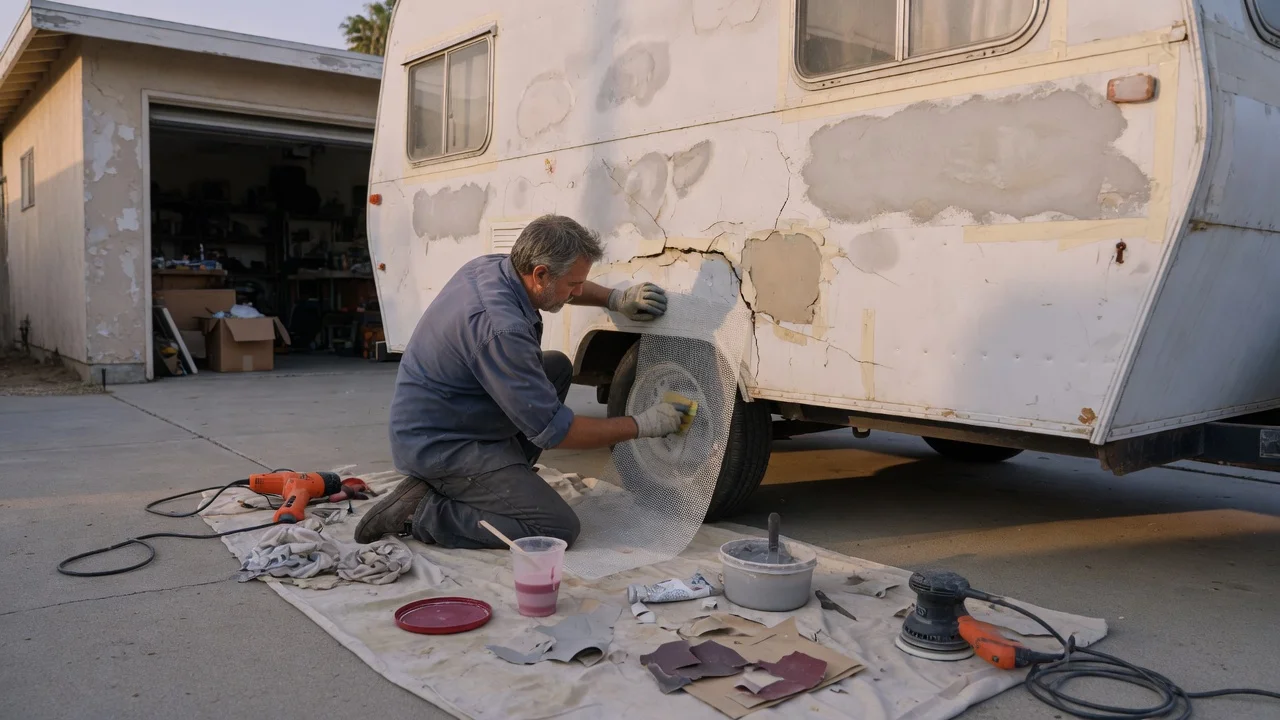
Start with the construction and extent of the damage
For DIY caravan and RV body repairs, the first decision is whether you have enough information to choose a suitable repair method. Identify the damaged panel, establish what it is made from and find repair guidance applicable to that vehicle. A surface repair should not be treated as a complete solution until the extent of the damage is understood.
No vehicle details, panel specification or description of the damage have been supplied here. That leaves a material gap: this guide cannot establish whether a DIY repair is appropriate or specify a filler, adhesive, sealant, reinforcement or refinishing process.
Gather the information needed for a repair plan
Record the caravan or RV’s make, model and year, the panel’s location and the visible damage. Photograph the affected area and any accessible corresponding interior surface. Use the vehicle documentation or manufacturer’s guidance to confirm the panel construction; do not select a repair product solely because its packaging mentions caravans or RVs.
Before buying materials, look for a documented method covering the relevant panel and damage. It should establish the required preparation, compatible products, application conditions, curing requirements and finishing steps. If those details are unavailable, obtain advice specific to the vehicle before sanding, cutting, drilling or applying a product.
Set a clear limit for DIY work
A practical boundary is to proceed only when you can identify the construction, understand the repair’s scope and follow an applicable method with the equipment and working conditions available. Where the repair’s effect on panel attachment, body support or weather sealing remains uncertain, seek an assessment from a caravan or RV body repair specialist before committing to the work.
Define how the finished repair will be checked
Include the repair method’s completion checks in your plan before starting. Do not use appearance alone as the acceptance criterion. The applicable guidance should determine when the repair is ready for finishing or use and how its intended function is verified. No drying time, curing time or return-to-use interval can be specified without the chosen product and repair procedure.