Distributor and HEI Ignition Coils for Chevy 350 and Classic V8s
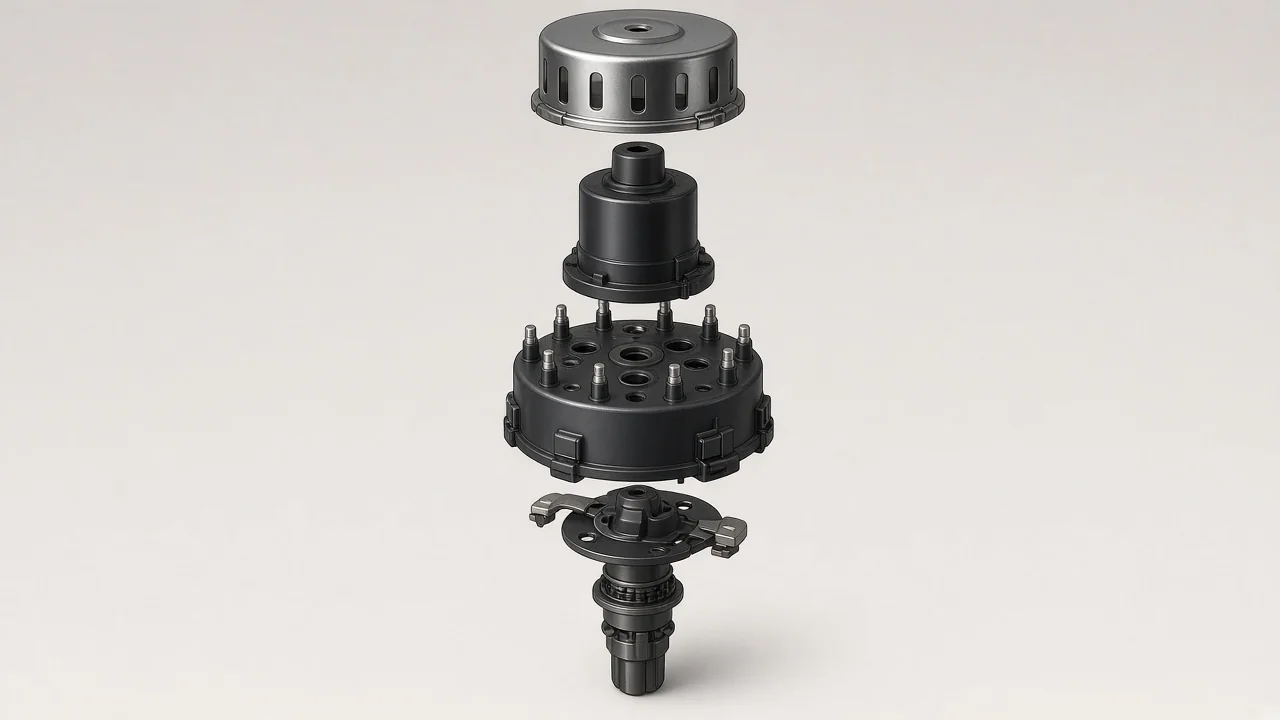
The HEI distributor ignition coil is the high-voltage source that a classic Chevrolet V8 uses to fire the spark plugs. On many GM engines, including the Chevy 350, that coil may sit inside a large-cap HEI distributor or remain a separate unit feeding the cap through a high-tension lead. Understanding how the ignition coil and distributor share the secondary ignition circuit helps separate a coil problem from cap, rotor, module, or pickup issues before any parts are replaced.
How the Ignition Coil Works With the Distributor
An ignition coil stores energy in a magnetic field while primary current flows through its low-voltage winding. When the ignition module or breaker points interrupt that current, the collapsing field induces a much higher voltage in the secondary winding. That pulse is what the secondary ignition circuit needs to jump a spark-plug gap under compression. In an HEI ignition coil or a conventional distributor ignition coil, the same electromagnetic step-up occurs; only the packaging and trigger hardware change.
The distributor then aims that high voltage. On an external-coil layout, a high-tension lead carries coil output to the center tower of the distributor cap, where a carbon contact or similar spring-loaded button feeds the rotor. The spinning rotor indexes with each cylinder terminal so the ignition coil to distributor path reaches the correct plug wire. A cracked cap, worn rotor, poor coil ground, or open plug wire can interrupt that path even when the coil itself is healthy, so a spark delivery problem can originate outside the ignition coil.
Understanding the HEI In-Cap Coil Assembly
A typical large-cap GM HEI distributor places an in-cap ignition coil under the removable top cover, so the ignition coil in distributor sits above the rotor rather than on a remote bracket. High voltage leaves the coil through an internal contact into the cap and then to the rotor, instead of traveling through an external coil-to-distributor wire. That compact layout is common on later small-block Chevrolet engines, yet HEI configurations still vary by year, body, and aftermarket conversion, so the actual distributor must be identified before anyone assumes coil location or electrical specifications.
Inside that assembly the coil contact, insulating cover, and specified grounding hardware keep secondary voltage on its intended path and return primary current through a dedicated coil ground. Those pieces are not decorative; a burned carbon contact or missing ground strap can mimic coil failure. The HEI ignition coil still only transforms voltage. A magnetic pickup coil in the distributor generates the trigger signal, and the ignition module switches primary current. Those three parts work together, but they are not interchangeable, and replacing one does not correct a fault in another.
Identify the Ignition Setup on a Chevy 350
A 350 Chevy ignition coil search often starts from engine size, yet displacement does not identify the installed coil or distributor. Factory Chevy 350 engines left the plant with points distributors, external coils, or large-cap HEI units depending on year and vehicle line. Street engines also pick up aftermarket HEI distributors, dual-point conversions, or remote-coil electronic kits. An advertised ignition coil for Chevy 350 may fit one of those layouts and be wrong for another, so the part on the engine, not the cubic-inch stamp, sets the requirement.
Useful identification starts with vehicle year, original application, distributor casting or model markings, and any known ignition conversions. Compare those notes with the coil housing, terminal layout, and whether the unit is an in-cap design or a remote canister. Application catalogs and installed component identifiers then narrow the Chevy 350 ignition coil to a family that matches the actual distributor and ignition system. Skipping that confirmation is how an ignition coil 350 Chevy listing ends up on a small-cap distributor that never used an HEI in-cap coil.
Symptoms That Warrant an HEI Ignition Check
Hard starting, a no-start crank, intermittent stalling, and misfire under load can all point toward the HEI distributor, yet none of those complaints prove the HEI ignition coil has failed. Fuel delivery, compression, timing, and a weak battery produce overlapping behavior. Heat-related ignition faults are especially misleading because an ignition module, pickup coil, or coil winding may work when cold and drop out after underhood temperatures rise. Symptoms that appear only after warm-up therefore guide where to look without naming a single guilty part.
Note whether the fault occurs during starting, at idle, under acceleration, or after a hot restart. A crank-only miss can implicate supply voltage or a weak coil, while a load-only misfire may involve plug wires, the distributor cap, or the rotor. Recurring stalls after heat soak often involve the ignition module, pickup coil, coil ground, or a poor power feed rather than the secondary winding alone. Treat each of those paths as a diagnostic possibility until testing isolates the circuit that actually dropped spark.
Testing an HEI Coil Safely and Interpreting Results
How to test an HEI ignition coil depends on the exact coil and the service procedure written for that distributor. Interpret resistance or voltage results only against coil-specific specifications from the vehicle or component maker. With the engine off and cool, owners can look for a cracked coil housing, oil leakage, burned terminals, visible corrosion, or a loose external connector. Those observations do not confirm an internal winding fault, but they do show whether the in-cap ignition coil or its cover hardware is already compromised.
Primary and secondary resistance measurements can show an open winding, a shorted turn, or a value outside the published range, yet a passing cold reading cannot rule out a heat-related or load-dependent failure. Professional diagnosis checks supply voltage, coil ground integrity, pickup triggering, module switching, and ignition output under the conditions that produced the complaint. Skip exposed-spark tests, holding ignition leads, improvised jumpers, and any probing of energized high-voltage components. Those shortcuts do not establish whether the coil is responsible and they create a shock and fire hazard.
Resolve the Fault and Confirm Reliable Operation
Replace an HEI distributor ignition coil only when diagnostic evidence points to that winding and the replacement matches the verified distributor. A coil that fits a Chevy 350 in a catalog still has to match terminal layout, mounting, and secondary output path. If the carbon contact, insulation, grounding hardware, or distributor cap is burned or broken, those pieces must be restored according to the distributor's service information. Leaving a damaged contact or missing coil ground in place can destroy a new coil and return the same misfire.
Recurring stalls, persistent misfires, or an unresolved no-start deserve professional diagnosis rather than repeated coil swaps. A technician can confirm that the ignition coil, distributor, module, pickup, and power supply are all doing their jobs under heat and load. After any repair, verify cold starting, idle quality, and warm operation through the original complaint, including a hot restart if that was the failure mode. Reliable spark on a classic V8 is confirmed only when the symptom that brought the HEI ignition coil into question no longer returns.