How to Dispose of Used Brake Fluid
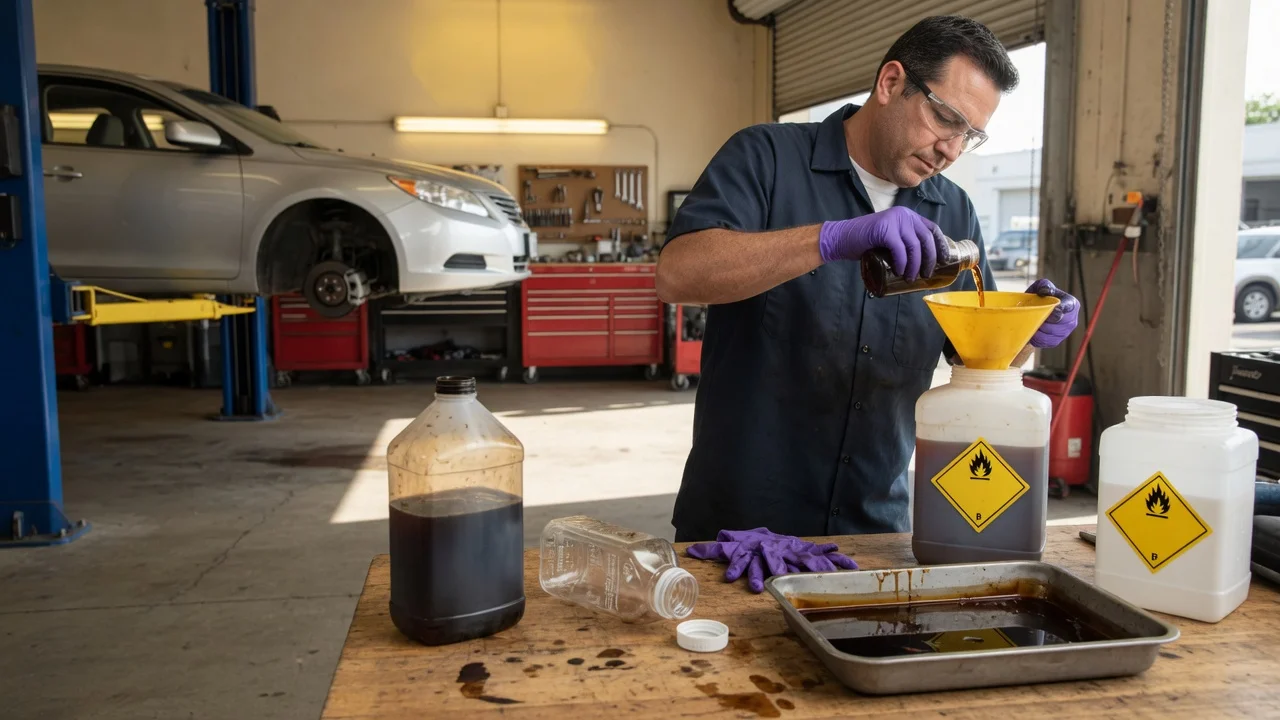
The short answer
Used brake fluid should be collected in a sealed, clearly labeled container and taken to a facility that accepts automotive hazardous waste. Typical options are a household hazardous waste collection site or a repair shop or parts retailer that takes used fluids. It should never be poured down a sink, toilet or storm drain, onto soil or gravel, or into regular trash.
One qualification matters most: disposal rules are set locally. Which facilities accept brake fluid, whether there is a fee or quantity limit, and how the fluid is classified all depend on your country, region and municipality. The steps below are general guidance. Your local waste authority has the final word on what applies where you live.
Why brake fluid needs special handling
Most brake fluid sold for passenger vehicles is glycol-ether based. The common DOT 3, DOT 4 and DOT 5.1 grades fall into this group. Glycol-based fluid is toxic if swallowed and can contaminate water. It also strips automotive paint. Used fluid may carry additional contaminants picked up inside the brake system, such as absorbed moisture and metal or rubber particles.
DOT 5 is a silicone-based fluid with different chemistry. It still should not enter drains or the environment, and it goes through the same hazardous waste channels. Keep the two types separate if you have both.
Collecting and storing the old fluid
Catch fluid during bleeding or flushing in a clean container that will not be reused for anything else. Transfer it to a container with a tight-sealing cap. A clean, empty brake fluid bottle works well. Label the container "Used brake fluid" and note whether it is glycol-based or silicone-based (DOT 5). Do not mix brake fluid with motor oil, coolant, fuel or other fluids unless the receiving facility specifically allows it. Mixed waste may be refused or harder to process. Store the sealed container upright, away from children, pets, heat sources and painted surfaces, until you can drop it off. Wipe up drips promptly with rags or absorbent material, and dispose of those materials as the facility directs.
Where to take it
Household hazardous waste sites or collection events run by your municipality or county. This is usually the most reliable option for private owners. Automotive repair shops, which generate used brake fluid themselves and may accept small amounts from the public. Auto parts retailers. Many accept used motor oil, but acceptance of brake fluid varies by store and region, so call ahead before bringing it in.
What remains uncertain
This guide does not state specific legal classifications, fines, fees or quantity limits, because those differ by jurisdiction and were not available for verification here. Businesses that generate larger volumes usually face separate requirements from households. If you run a shop or fleet, check commercial hazardous waste rules rather than relying on household guidance.