Differential Fluid Color Chart: Dark, Milky, Burnt Oil and Metal Debris
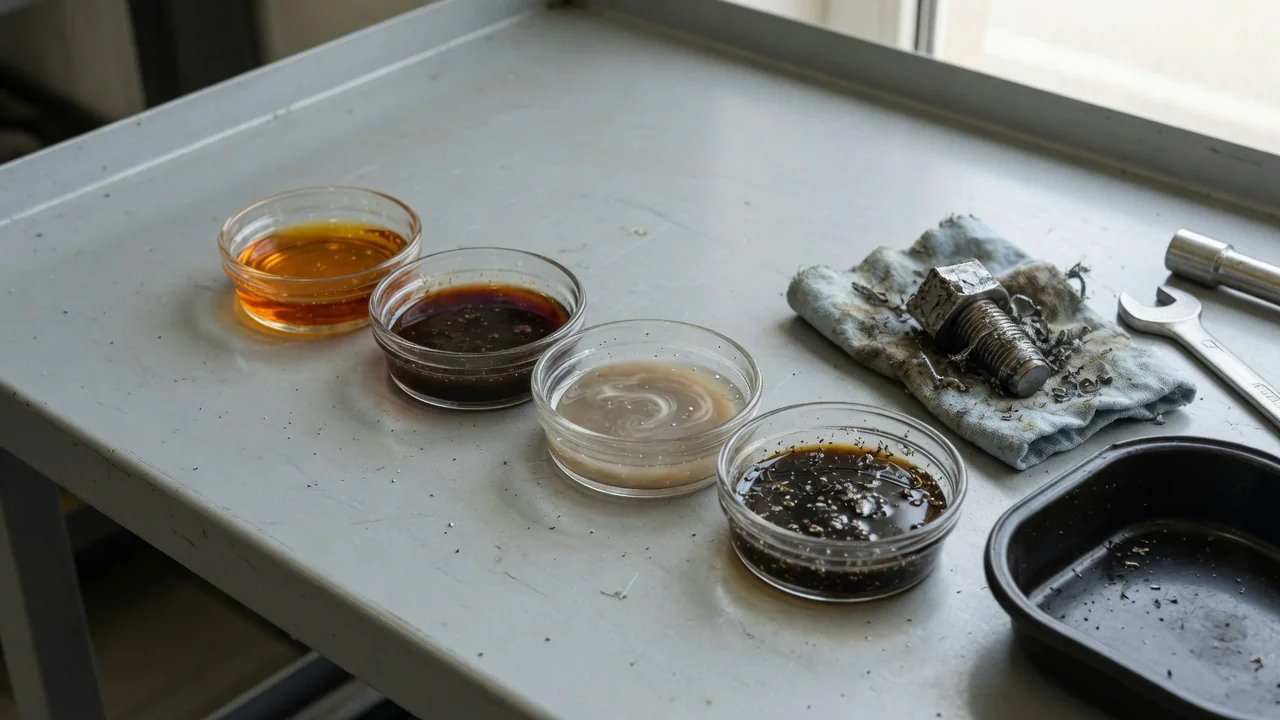
Differential fluid color can hint at condition, but it is not a complete diagnosis. Fresh gear oil is often clear amber or honey-colored, yet dyes and formulations vary, so front and rear axle fluids do not share one universal color. Dark, dirty, milky, or sulfur-smelling samples, metal debris, and a suspected leak color each need careful interpretation with service history rather than color alone.
What Healthy Front and Rear Differential Fluid Can Look Like
Many fresh gear oils look clear amber or honey-colored on a clean sample. Some formulations and dyes produce green, red, or darker tints even when the lubricant is new, so the question of what color is differential fluid has no single answer. Front differential fluid color and rear differential fluid color are not set by axle location. The same vehicle can use similar gear oil at both ends, or different products if the manufacturer specifies them.
Color alone cannot confirm the correct fluid specification, remaining service life, or differential health. A honey-colored sample can still be the wrong viscosity or additive package, and a slightly darker one can still meet the intended lubricant if that product darkens in use. Check the vehicle documentation and the specified product information for the expected appearance of new oil. That baseline is more useful than comparing a sample to a generic rear differential fluid color chart.
Differential Fluid Color Chart: Amber, Brown, Black, and Cloudy Oil
A practical differential fluid color chart is a set of observations, not a diagnosis. Clear amber often matches unused or lightly used gear oil, though dyes can change that starting point. Dark brown can accompany normal use, oxidation, or suspended wear particles. Black or opaque oil may be heavily oxidized, loaded with debris, or simply dirty differential fluid after a long interval. None of these appearances by itself proves a gear or bearing has failed.
Cloudy or milky conditions belong on the same chart because they suggest possible water contamination rather than ordinary darkening. Visual diagnosis still has limits: lighting, sample depth, and a dirty pan can make serviceable oil look darker or murkier than it is. An appropriate next step is to record the appearance, compare it with the expected product color, and have a technician check level, specification, and contamination if the sample is unusually dark, opaque, or cloudy. Do not schedule service by shade alone.
Milky Differential Fluid Needs Prompt Assessment
Persistent milky differential fluid, sometimes described as creamy or coffee-with-cream, can indicate water mixed into the gear oil. Aeration can make a freshly drained sample look frothy or slightly hazy for a short time, especially if the oil was agitated, but that haze often settles differently than a stable emulsion. A visual check cannot confirm the cause. Persistent cloudiness that remains after the sample rests is more concerning than brief foam at the surface.
Suspected water contamination warrants prompt professional assessment because lubrication and corrosion protection may be compromised. Water can reduce film strength, promote rust on gears and bearings, and change how additives work. Report recent flooding, water crossings, or prolonged standing water without assuming how moisture entered the housing. A technician can inspect for water, check the fluid, and evaluate whether the differential needs further inspection. Do not wait for louder differential noise before having a milky sample evaluated.
Sulfur and Burnt Odors: What Differential Fluid Smell Can Tell You
Differential fluid smell is easy to notice because many gear oils use sulfur-containing additives that produce a strong sulfur odor even when the oil is still serviceable. That pungent scent on a fresh or recently changed sample is not, by itself, a failure. A burnt odor is different. Heat-related deterioration can leave a scorched or acrid smell, especially if the fluid is also dark and accompanied by noise or debris. Smell still cannot establish fluid level, lubricant suitability, or the condition of gears and bearings.
Treat odor as one observation among others, not a stand-alone verdict. Do not deliberately inhale fumes or touch hot fluid. Use the smell already available from a safely handled sample taken during a scheduled drain or by a shop. If a burnt odor appears with grinding, whining, vibration, or metal debris, have the assembly inspected rather than attributing the smell to additives alone. If the only finding is a typical sulfur odor on otherwise expected-looking oil, note it and rely on the specified service guidance.
Metal Paste, Glitter, and Shavings on the Drain Plug
A magnetic drain plug often collects a small amount of fine gray paste from normal wear particles. How much that paste matters depends on service history, mileage since the last drain, and the particular assembly. A light film after a long interval can be expected. Visible flakes, glitter-like sparkle, sharp metal shavings in differential fluid, chips, or chunks are different findings. Metal shavings in rear differential fluid, or the same debris from a front unit, warrant professional inspection rather than a guess about which gear failed.
A magnet captures magnetic debris and cannot reveal every type of wear material. Brass, aluminum, and some friction materials may not stick, so a clean magnet does not prove the oil is free of metal in differential fluid. Photograph the plug and any particles, note accompanying noise or vibration, and keep the drained sample if a shop requests it. Avoid diagnosing a specific gear or bearing from a photograph or a handful of shavings. A technician needs the housing, pattern of debris, and operating symptoms.
Identifying a Suspected Differential Fluid Spot
A suspected leak from differential fluid may look amber, brown, or dark on pavement, similar to other gear oil. Ground dirt, rain, and weathering quickly change that appearance, so a faded or blackened stain is not a reliable color chart. Location helps: a spot under the center of the rear axle or near a front differential housing is a clue, especially if an incidentally noticed gear-oil odor is present. Those clues still require confirmation; other fluids can drip in overlapping areas.
Photograph the spot and note where the vehicle was parked. Do not crawl underneath an unsupported vehicle to chase the source. Identification stops at documenting color, location, and any noticeable odor. A suspected active fluid loss should go to a shop for source and level checks, because a low differential can lose lubrication quickly. This is an identification and assessment step, not a leak-repair guide. Leave sealing, gasket, and cover work to a technician who can also verify the fluid specification after inspecting the housing.
What to Do After Finding Abnormal Differential Fluid
Give a technician the fluid observations, maintenance history, recent water exposure, and any new whining, grinding, or vibration. Mention milky appearance, burnt smell, metal paste or shavings, and how the sample compared with expected gear oil color. Professional checks may include fluid level and specification verification, contamination assessment, and inspection for internal wear. Those steps interpret the evidence. Dark or dirty oil, debris on the plug, or an unusual odor are reasons to inspect, not proof that a particular part has already failed.
Stop safely and arrange professional assistance for severe grinding, binding, smoke, or substantial active fluid loss. Driving further can worsen damage if lubrication is already compromised. Fresh fluid cannot reverse mechanical damage already present in gears or bearings. Use the vehicle's specified lubricant and maintenance guidance rather than choosing a drain interval by color alone. A rear differential fluid color chart, or any visual comparison, is a screening tool. Confirmed water, heavy debris, or abnormal noise still needs inspection even if the oil is replaced.