Diesel Turbo Intercooler: Function, Location and What to Check
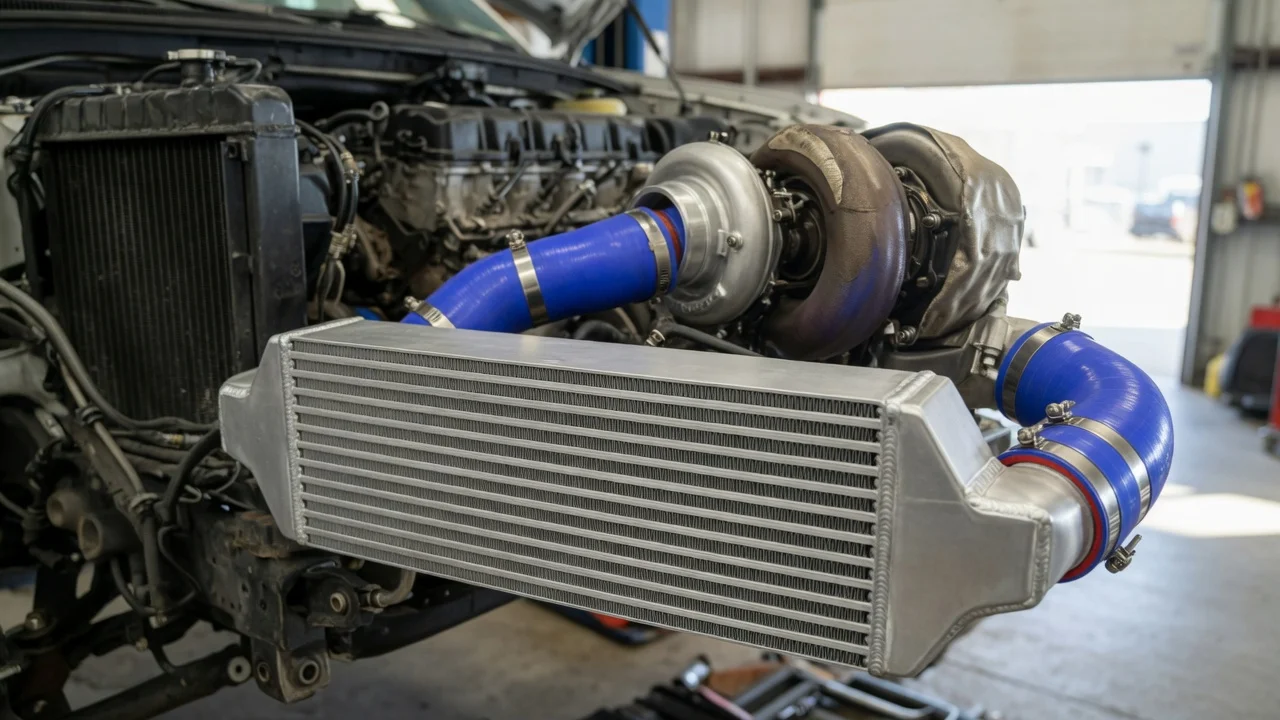
What a diesel turbo intercooler does
A diesel turbo intercooler is a heat exchanger placed in the intake path after the turbocharger. Its core job is to cool the compressed intake air before that air enters the engine. Cooling the charge air makes it denser, so a given cylinder volume contains more oxygen. That supports cleaner combustion, helps control exhaust gas temperature, and reduces the chance of heat-related knock or component stress. In practical terms, an efficient intercooler helps a turbo diesel make consistent power instead of losing output as intake temperatures climb.
Why compression raises intake temperature
Compressing air increases its temperature as a physical side effect. A turbocharger compresses intake air to raise boost pressure, which can push the charge air well above ambient temperature. The intercooler sits downstream of the compressor outlet and upstream of the intake manifold. It rejects some of that heat to outside air, or in some designs to engine coolant, before the air reaches the cylinders. Without this cooling stage, the engine would receive hotter, thinner air, and the benefit of higher boost would be partly cancelled.
Common intercooler layouts
Two main layouts appear on turbo diesel vehicles. An air-to-air intercooler uses ambient airflow, usually at the front of the vehicle, to cool the charge air. This is the most common setup on production turbo diesel cars, utes and trucks. An air-to-water intercooler uses engine coolant and a separate low-temperature circuit or heat exchanger to cool the intake charge. Water-to-air packaging can shorten intake piping, but it adds coolant circuit complexity and may have lower peak heat rejection than a well-placed air-to-air unit under sustained load.
Where the component is located
Location varies by model. Many front-mounted intercoolers sit directly behind the bumper or grille, often below or beside the radiator. Some turbo diesel models use a top-mounted intercooler fed by a bonnet scoop or duct. The turbo diesel intercooler diagram for a specific engine will show the charge-air route from turbo compressor outlet into the intercooler and then to the intake manifold or throttle body. Checking the routing is useful before diagnosing a boost leak or planning an upgraded cooler.
Typical materials and construction
Production intercoolers are usually aluminium with bar-and-plate or tube-and-fin internal construction. Bar-and-plate cores tend to be heavier and stronger, with good heat soak resistance. Tube-and-fin cores are often lighter and can have lower pressure drop, but may be more vulnerable to physical damage. Plastic end tanks are common on original equipment units, while aftermarket diesel intercoolers frequently use welded aluminium end tanks for strength under higher boost.
Turbo diesel intercooler versus turbo diesel terminology
The terms refer to different things. A turbo diesel is a diesel engine fitted with a turbocharger. A turbo intercooler, or intercooled turbo diesel, describes a turbo diesel that also has an intercooler in the intake system. Many modern turbo diesel engines are intercooled from the factory, but not all older turbo diesels were. When a specification says turbo diesel intercooler, it normally means the vehicle or engine has both forced induction and charge-air cooling. If a listing says only turbo diesel, an intercooler may or may not be present depending on the year, platform and market.
Symptoms of a failing or leaking intercooler
A damaged intercooler or leaking charge pipe can produce several symptoms. A visible split, cracked end tank or oil residue around joints may indicate a boost leak. Under load, a leak can cause reduced power, increased smoke, higher exhaust gas temperature, a hissing or whooshing noise, and sometimes a fault code for underboost. An internally restricted intercooler may raise intake air temperature and lower performance without an obvious external leak. Diagnosis should include a pressure test of the charge-air system and a check for oil pooling inside the cooler.
Why oil can collect inside the intercooler
A small amount of oil in the intake path is normal on many turbo diesel engines because the crankcase ventilation system may introduce oil vapour into the intake. Over time, oil mist can condense inside the intercooler. A thin film is not automatically a fault. A large pool of oil, or oil dripping from a split tank, is more concerning and may point to excessive crankcase pressure, turbocharger seal wear, or a restricted breather system. The oil itself can also reduce heat transfer if the inside of the cooler is heavily coated.
Important variations by model and generation
Intercooler size, end-tank design, pipe routing and sensor placement are not universal. A TDI badge on one Volkswagen Group model may indicate a specific generation of turbocharged direct-injection diesel, but the intercooler can still differ between transverse and longitudinal engines, or between standard and performance variants. Always confirm the exact engine code, model year and market before ordering a replacement or upgrade. Aftermarket parts listed as fitting multiple platforms should be checked against the original unit's dimensions, inlet and outlet positions, and mounting points.
When an upgraded intercooler is worth considering
A larger or more efficient intercooler can be useful when a diesel engine runs higher sustained load or increased boost. Towing heavy loads, repeated hard acceleration, hot climates and engine tuning all raise intake temperatures. An upgraded intercooler may lower those temperatures and help keep power stable. The trade-off can be added weight, increased intake volume, changed boost response, or more work to fit behind the standard bumper. For a stock daily-driven diesel, the factory intercooler is usually adequate if it is clean, undamaged and receiving proper airflow.
Maintenance and inspection points
Routine checks should include the core face, end tanks, hose connections and mounting brackets. Look for bent fins, stone damage, cracks, oil staining and loose clamps. Clean blocked external fins carefully so airflow is restored. Check that ducts and seals direct air through the core rather than around it. If the system has been opened, confirm all clamps are torqued correctly and that no tools or rags remain in the intake path.
Practical next step
The appropriate next step depends on the vehicle's condition and the reader's goal. If performance has dropped or a boost leak is suspected, start with a visual inspection and a charge-air pressure test. If the engine is modified or used for heavy towing, monitor intake air temperature and consider whether the current intercooler is keeping temperatures stable. For a replacement, match the part to the exact engine code and vehicle specification rather than relying on a generic fitment listing.