Diesel Losing Coolant Without a Visible Leak or Overheating
Direct answer
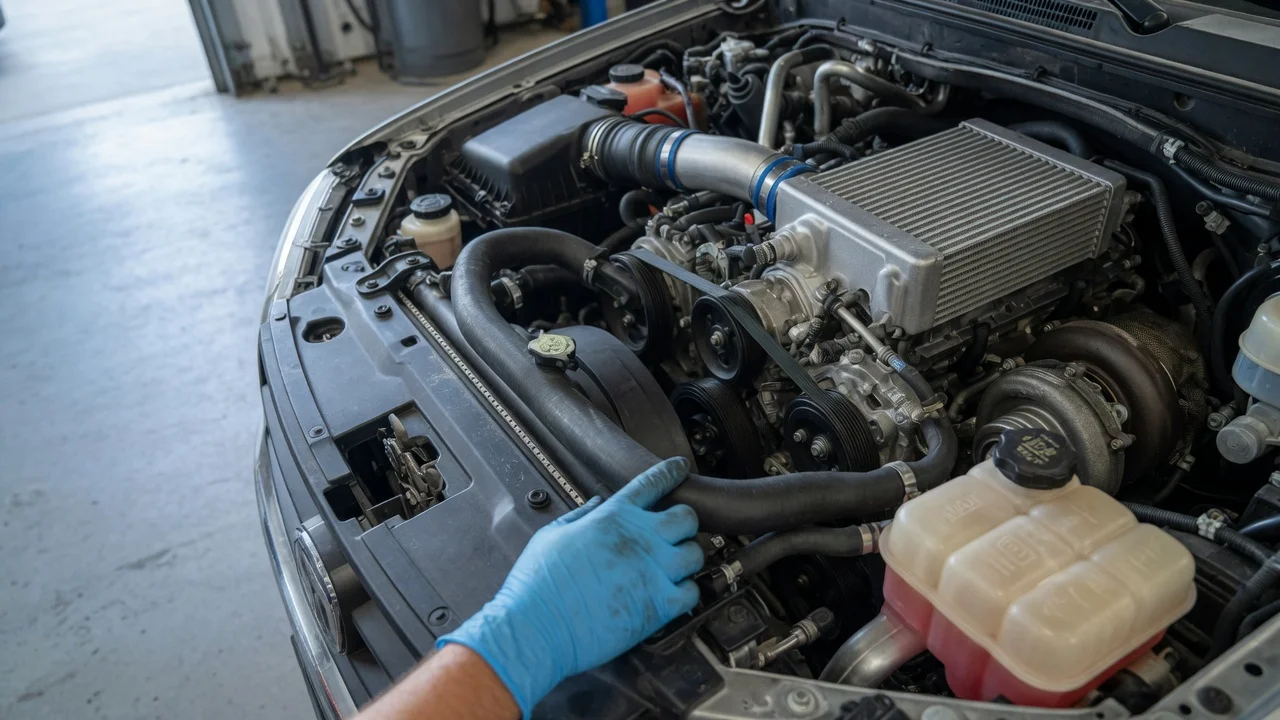
On a diesel that is losing coolant but shows no visible puddle and no overheating, the coolant is usually escaping as vapor, leaving through the exhaust, or being lost internally under pressure. The most common routes are an exhaust gas recirculation (EGR) cooler leak, a head gasket or exhaust gas leak into the cooling system, a leaking expansion tank cap or tank seam, a heater core leak, or a small leak that only opens when the engine is hot and pressurized.
The main qualification is that no overheating does not rule out a serious problem. Diesel cooling systems often operate below the warning threshold while losing small amounts of coolant over days or weeks. The lack of an external drip also does not mean the leak is absent; it usually means the coolant is disappearing somewhere other than the ground.
Why the leak can be invisible
Coolant can escape without leaving a puddle in several ways. Under pressure and engine heat, a small weep can evaporate from a hot surface before enough liquid collects to drip. A leak inside the exhaust stream is converted to white vapor and pushed out the tailpipe. A leak inside the engine or cooling system may force coolant into the oil, a cylinder, or an EGR passage where it is consumed during combustion or converted to steam.
EGR cooler leak
Many modern diesel engines use an EGR cooler, a heat exchanger that reduces exhaust gas temperature before the gas enters the intake. If the cooler develops an internal crack, coolant can pass into the exhaust side. A small leak can disappear as steam through the exhaust, especially during warm-up or low-speed driving. At a later stage, you may notice white vapor at the tailpipe, a sweet coolant odor in the exhaust, or coolant loss that accelerates after highway use.
This fault is vehicle- and cooler-specific. Some diesel applications have known failures in the EGR cooler, while others use different cooler designs. The model year, engine, and market configuration affect where the cooler is mounted and how it can be pressure-tested.
Head gasket or combustion leak
A head gasket failure does not always cause oil-and-coolant mixing or immediate overheating. In some cases, combustion pressure enters the cooling system, pushes coolant out through the expansion tank or pressure cap, and leaves no obvious drip once the engine has cooled. In other cases, coolant can enter a cylinder in a small enough amount to be burned without producing a continuous overheating event.
Signs can include excessive pressure in the cooling system after the engine has cooled, coolant residue around the expansion tank, a slow coolant loss after loaded driving, or bubbling in the expansion tank when the engine is running. A chemical test for exhaust gas in the cooling system or a cylinder leak-down test may be needed to confirm the direction of the failure, because diesel combustion pressures can make the leak behave differently depending on load.
Expansion tank cap and system pressure
A weak or aged expansion tank cap can release coolant vapor at highway temperature while still appearing dry at rest. If the cap does not hold the rated pressure, the boiling point of the coolant falls, and the system can vent vapor through the cap or overflow. The coolant loss may be small enough that the temperature gauge remains normal, especially when driving conditions are light.
The tank itself can also crack along a seam or around a fitting. A crack may open only when the plastic expands under heat and pressure, then close as it cools. This makes the leak intermittent and difficult to see as a puddle.
Heater core and cabin leaks
A leaking heater core can leak into the HVAC housing or evaporator drain rather than onto the ground. The first noticeable sign may be a sweet smell inside the cabin, a film on the inside of the windshield, or damp carpet near the front footwell. Since the HVAC drain can carry a mix of water and coolant away, the leak may not produce an obvious colored puddle under the vehicle.
Small leaks that appear only when hot
Some hoses, radiator end tanks, gaskets, and coolant flanges leak only after the engine reaches full operating temperature. The thermal expansion opens a gap, and the coolant evaporates quickly from a hot metal or plastic surface. Once the engine cools, the gap closes and the evidence disappears. This pattern explains why an owner can top up coolant, inspect the parked vehicle, and find no wet spot.
Practical checks
Pressure-test the cooling system cold first, then again with the engine warm, because some leaks only open with heat. Check the expansion tank cap for cracks, a weak seal, or residue around the overflow area. Inspect the expansion tank seams and the upper and lower coolant hoses after a loaded drive. Look for white residue or dried coolant streaks on hot surfaces such as the EGR cooler, turbocharger lines, and hose connections. Check the exhaust for persistent white vapor after the engine is warm, as well as any sweet odor. Look at the oil level and oil appearance for signs of coolant entering the crankcase, since this is a different internal leak route. Examine the cabin for a sweet smell, window film, or damp front carpet if a heater core leak is suspected.
Where to start
If the diesel is losing coolant without overheating and without a visible leak, start with the expansion tank cap, tank seams, and a pressure test. If those do not show a leak, the next focus is usually an internal EGR cooler or combustion-related leak. Do not use the absence of overheating as proof that the engine is safe to ignore; a slow internal coolant loss can become a large loss after sustained load, towing, or highway climbs.