Dielectric Grease on Spark Plugs: Where to Apply It and Why
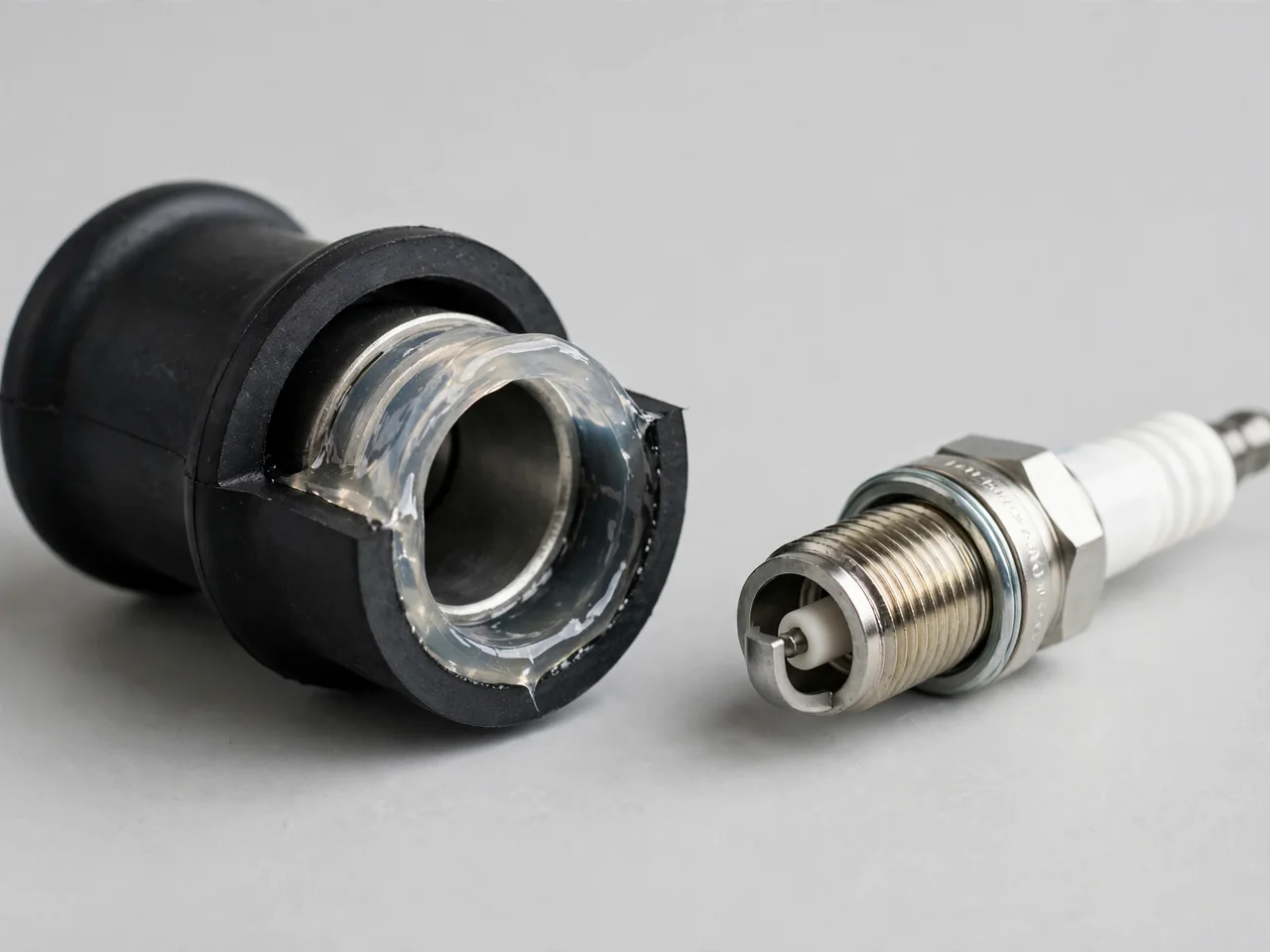
Dielectric grease for spark plugs is often misunderstood in ignition tune-ups. It does not make the spark stronger or improve conductivity. A thin film at the spark plug boot can help seal out moisture and keep rubber from sticking to the ceramic insulator. Too much grease, or grease in the wrong place, can keep the boot from seating properly. Knowing where it belongs, when to skip it and which mistakes to avoid prevents trouble.
What Dielectric Grease Does at the Spark Plug Boot
Dielectric grease is usually a silicone-based compound that insulates rather than conducts. That is the reason for using it. When you put dielectric grease on spark plugs, it is not there to carry ignition current to the terminal. That job belongs to the metal-to-metal contact between the clip or spring inside the boot and the plug terminal. The grease works around that connection. It helps the rubber boot seal against the ceramic insulator so moisture and contaminants have a harder time reaching the high-voltage path.
Grease also makes the boot easier to remove later. After many heat cycles, a boot can bond to the ceramic insulator, which makes it hard to pull and likely to tear. A thin film of approved silicone dielectric grease can reduce that sticking. Grease cannot fix anything that is already wrong, though. It will not restore cracked insulation, repair carbon tracking on a boot, or cure a misfire caused by a weak coil, worn plug or damaged wire. It helps prevent problems but does not repair them.
Check Whether the Boot Needs Grease
Before you use any grease, check the service procedure for your vehicle and any instructions that came with the replacement boot, coil or plug wire set. Some manufacturers specify dielectric grease at the boot, while others call for a particular compound or none at all. Many new coil boots and wire sets come with lubricant already applied inside, so adding more may be unnecessary or discouraged. A quick look at the packaging avoids guesswork on an ignition connection that carries very high voltage.
When grease is called for, use a product labeled as suitable for ignition boots and compatible with the boot material. General-purpose greases, petroleum-based lubricants and anti-seize are made for other jobs. They can harm boot materials or change how the boot seats. Also, do not assume every ignition system needs grease at every spark plug service. If you are reusing an intact coil boot that still has its factory treatment, a clean, careful reinstall may be all it needs.
Where a Thin Film Belongs
The usual place for grease is the boot's inner sealing lip, the part that grips the upper section of the spark plug's ceramic insulator. That is where the moisture seal and the anti-stick benefit matter most. Boot designs vary, so follow the manufacturer's directions. Apply a light, even film instead of a measured amount, because no single quantity suits every boot. If the grease sits in a visible lump or squeezes out heavily when you push the boot on, you have used more than the seal needs.
The metal terminal connection needs a different approach. The contact between the plug terminal and the spring or clip inside the boot depends on proper mechanical engagement. Never use grease to fill a loose or sloppy connection. Keep grease well away from the firing tip and electrode, and keep it off the plug threads entirely. Thread treatment, anti-seize and torque are separate topics covered by the plug and engine manufacturers' instructions, and they are outside the scope of this guidance on insulating grease at the boot.
Apply Grease Without Compromising Boot Seating
Work only with the engine off and cool. Follow the vehicle's procedure for safely reaching the plugs, which may mean removing covers or other parts first. Once you can reach a boot, inspect its surfaces in good light. Look for moisture, oil, dirt or debris inside the boot and on the plug insulator. Check the rubber for cracks, tears, hardening or burn marks that suggest carbon tracking. If you find any of these, the job is no longer a simple grease application. It becomes a question of cleaning or replacement.
If the boot is clean and sound and the procedure allows grease, spread a thin film onto the sealing lip with a clean applicator. A lint-free swab or a clean gloved fingertip works well. Do not pack the boot cavity or fill the terminal opening. Then seat the boot as the service procedure describes. This often means pushing it straight on until the terminal engages, and some designs give a click you can feel or hear. If access is awkward or you cannot confirm the boot is fully engaged, stop instead of guessing.
Common Application Mistakes and Their Consequences
Using too much grease is the most common mistake. A boot packed full can trap air and grease between the terminal and the clip, which can keep the boot from seating fully. The boot may also get pushed back slightly so it never locks on. Extra grease collects dirt and leaves residue on nearby surfaces. Another mistake is applying grease over contamination. Grease does not neutralize oil, water or grit inside a boot. Instead, it can hold them against the insulator. Fix the source first, such as a leaking valve cover gasket or water in the plug well.
Grease is also no substitute for good parts. A torn boot, a corroded or bent terminal, or a boot that fits loosely on the plug needs to be replaced. A layer of grease will at best hide the problem for a while. Take the same care when removing a boot. Pull a plug wire by its boot, never by the wire. Do not pry or yank a boot that is stuck to the insulator, because that can tear the boot or damage the coil. If gentle twisting does not free it, have a technician take over.
When Symptoms Need Ignition Testing
Rough running, hesitation when accelerating and an illuminated malfunction indicator lamp can point to the ignition system. They can also come from many other causes, including fuel delivery problems, air leaks, sensor faults and mechanical issues. If symptoms appear right after spark plug service, recheck the work. Confirm that each boot is fully seated and look for a disturbed connector. The timing is a useful clue, but it does not prove the grease caused the problem. A stored misfire code is evidence to interpret, not proof that a specific part has failed.
Owners should limit their checks to visual inspection with the engine off. Look at connector latches, boot seating, visible damage and signs of moisture or oil. Do not check for spark or handle ignition parts with the engine running, because ignition voltage can cause a serious shock. Get a professional diagnosis if symptoms persist, a boot is damaged or you are unsure the terminal is engaged. If the malfunction indicator is flashing and the engine runs very rough, ease off, pull over and stop when it is safe, because continued driving can damage the catalytic converter.