Diagnose Jeep Grand Cherokee check engine light
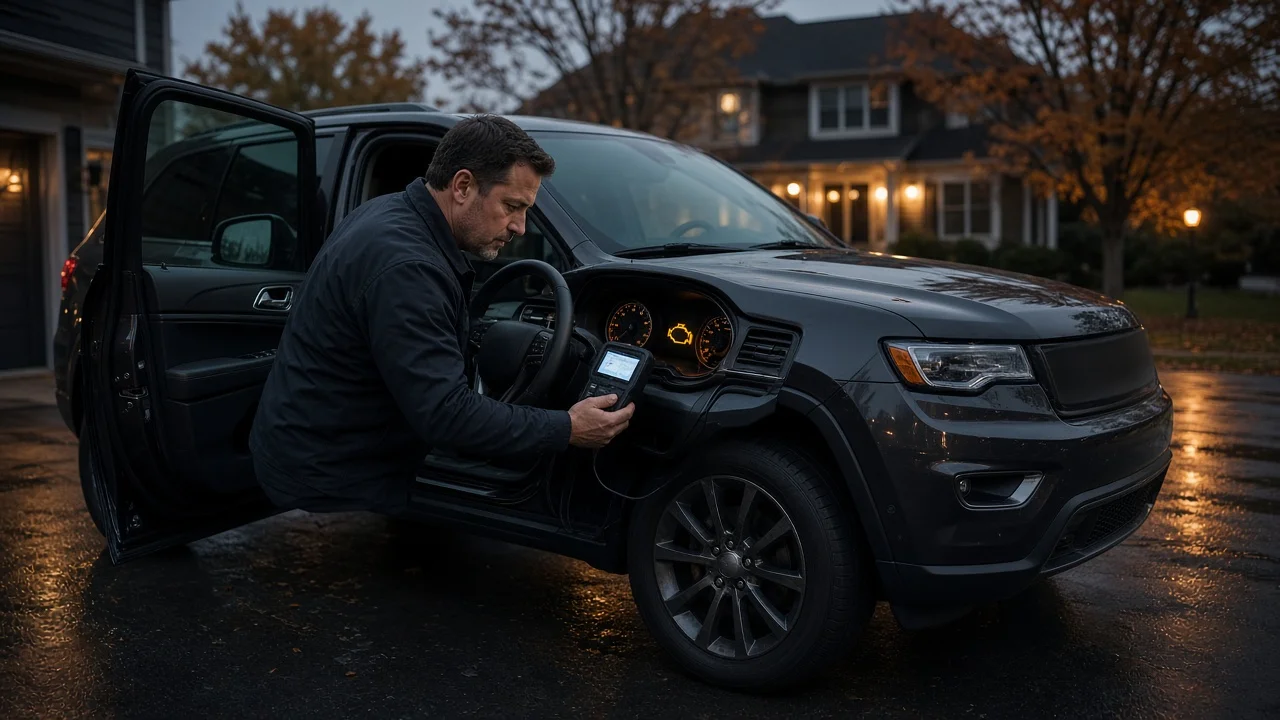
A glowing check engine light in a Grand Cherokee can mean anything from a loose fuel cap to a misfire that is actively damaging the catalytic converter. The light is the powertrain control module asking for a scan tool because it stored a trouble code and often captured freeze-frame data showing the conditions when the fault appeared. Reading that code is the first diagnostic step, but the code alone is not a repair verdict. Systematic interpretation of the stored information, live data, and symptom conditions gives a more reliable answer than guessing at a part.
Essential answer
The essential answer is that a Grand Cherokee check engine light means the onboard diagnostic system detected a condition outside expected engine or emissions parameters. The vehicle stores at least one diagnostic trouble code that points toward a circuit, sensor, calibration, or mechanical issue. Because Chrysler and Jeep use many manufacturer-specific codes, a stored number is not universal proof that a particular sensor or actuator has failed. Correct diagnosis starts with retrieving the code and noting when the light appeared.
The scope of the problem can be broad. A steady light usually indicates a fault that should be checked soon, while a flashing light often signals an active misfire that may overheat the catalyst. The same illuminated warning can appear with rough idle, reduced power, poor fuel economy, or no noticeable change in driving. That is why the code and freeze-frame data matter more than the warning itself. They narrow the search across ignition, fuel, emission, and engine-control systems.
Diagnosing a problem
When a check engine light appears, begin with observable conditions rather than replacing parts immediately. Note whether the problem happens cold or hot, under acceleration, at highway speed, or only after refueling. A loose or damaged fuel cap can cause an evaporative system leak code on some models, and tightening it may allow the monitor to pass after several drive cycles. If the vehicle is misfiring, stalling, or losing power, the cause may be ignition related, fuel delivery related, or tied to a sensor that is feeding incorrect data.
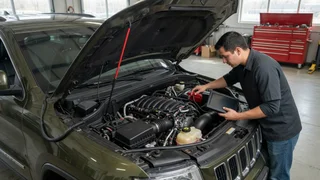
A scan tool should be used to read the stored code and any freeze-frame information, then compared with live data from relevant sensors. For example, a random misfire code may point to a vacuum leak if fuel trims are strongly positive at idle, while a specific cylinder misfire may suggest a coil, plug, injector, or compression concern. A fault code is evidence to interpret, not proof that a part has failed. If a flashing light, overheating, or severe driveability problem occurs, stop driving and arrange professional diagnosis before continued use risks further engine or catalyst damage.