Dexron and Mercon ATF for Power Steering: Find the Required Grade
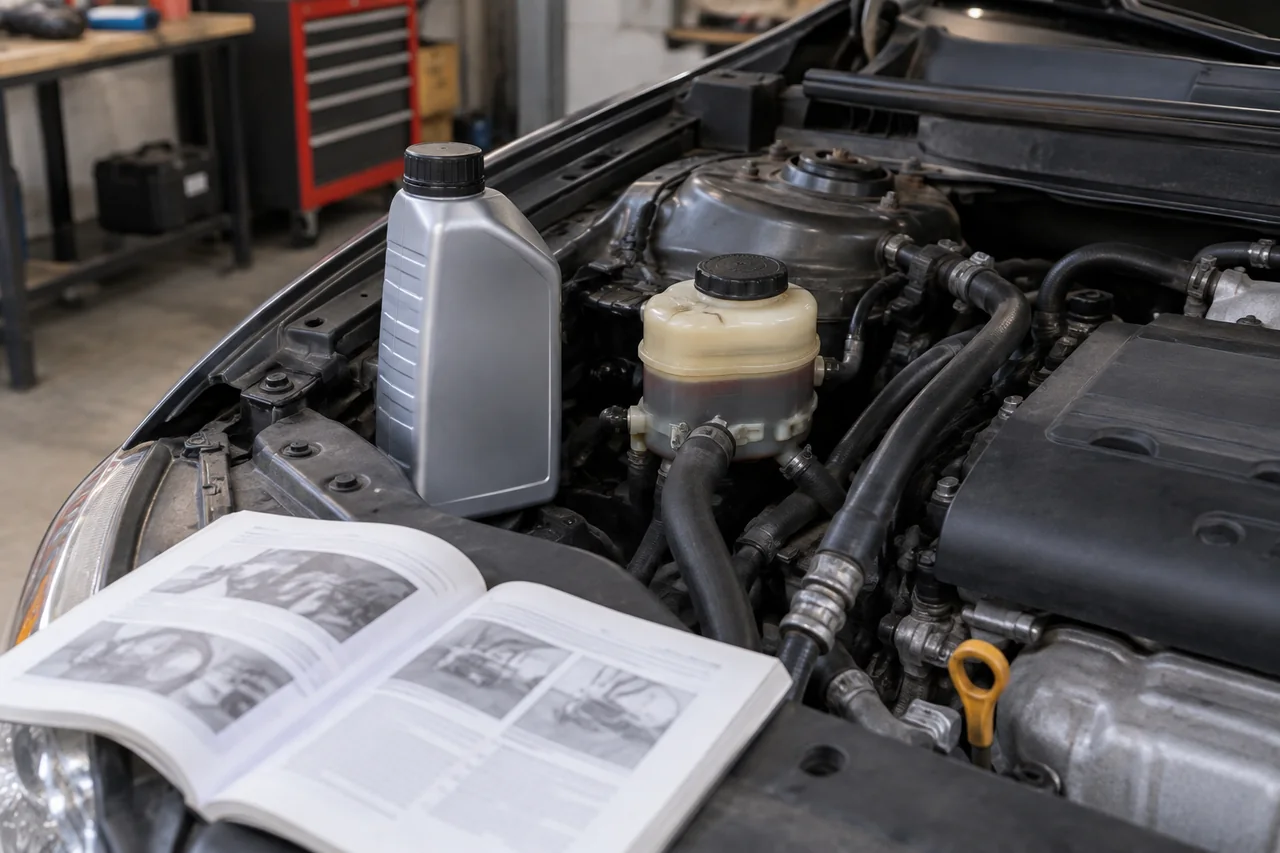
Many drivers looking for Dexron power steering fluid find that the bottle on the shelf says automatic transmission fluid, not steering fluid. That is not a mistake, because some hydraulic power steering systems are designed to run on a specific ATF grade. The real task is matching the exact fluid specification your manufacturer lists. Dexron II, Dexron III, Dexron VI and Mercon labels are not interchangeable promises.
When Dexron ATF Is Specified for Power Steering
Some hydraulic power steering systems call for automatic transmission fluid instead of a dedicated steering oil, and the requirement may name a particular Dexron grade. In these systems the steering pump pressurizes the fluid. That same fluid lubricates the pump's internal parts and contacts the seals in the rack or gearbox and the control valve. The manufacturer chose a fluid whose viscosity, seal-conditioning additives and foam resistance suit that hardware. So when a manual calls for Dexron ATF power steering fluid, it is naming a deliberate engineering choice, not offering a loose suggestion.
Dexron is a family of fluid specifications that has been revised many times. The word Dexron on its own therefore does not prove that a product suits your car. Also, a fluid sold mainly for transmissions can still be correct for steering when the manufacturer approves it for that job. Whether it applies always depends on the exact steering system. A vehicle with electric power steering and no hydraulic circuit has no steering fluid reservoir at all, so no ATF requirement applies to its steering.
Find the Fluid Requirement for Your Exact Vehicle
Start with the owner's manual. Recommended fluids and capacities are usually listed in the maintenance or specifications section. Find the power steering entry itself rather than assuming the transmission fluid line applies. Then look at the reservoir cap and the reservoir body. Either may be molded or labeled with a fluid type, such as ATF or a named specification. Write down the wording exactly as printed, including any suffix, number or manufacturer part reference. Small differences in that text can mark the line between two separate requirements.
To confirm the requirement you also need the model year, model, market and steering-system configuration. One nameplate can use different pumps, different fluids or even electric assist depending on the engine, the region and the build date. Before you trust any list of cars that supposedly call for a certain grade, check it against manufacturer documentation for your specific vehicle. If the manual is missing, the cap is unreadable or sources disagree, a dealer, a qualified shop or manufacturer service information can look up the current specification by VIN and flag any superseded one.
Choosing Fluid for a Dexron II Steering Specification
Older vehicles may list Dexron II, sometimes with a suffix letter or an extra specification printed next to it. Take that full wording with you when you shop, because the suffix and any companion requirement are part of what the manufacturer documented. Dexron II ATF power steering fluid requirements show up mostly in older service literature. It can be hard to find a bottle that still carries that exact label, so owners of these vehicles often have to decide what to use instead.
The fact that a newer grade is on the shelf does not tell you which replacement your vehicle's manufacturer allows. Before you add a different fluid to a system originally specified for Dexron II, look for written support for that change in that steering application. That could be an updated manufacturer fluid recommendation or a product data sheet that clearly names use in Dexron II steering systems. The standard is confirmation for your exact steering system. A general claim of backward compatibility is not enough.
Reading Dexron III Power Steering Fluid Labels
Searches for dex 3 power steering fluid, dex III, Dexron 3 and the mistyped Dexron 111 usually mean the same thing: Dexron III, which labels and manuals may print as Dexron III or Dexron-III. Power steering oil marked Dexron III is still not automatically right for your car. The bottle has to match what your vehicle's documentation lists for the steering system. That includes any extra specification or manufacturer note that comes with the grade, not just the headline name printed largest on the front label.
Labels also make different kinds of claims. A formal manufacturer approval or license means the product was submitted to that program and accepted. A line such as suitable for use where Dexron III is specified is the blender's own performance claim, and not every product carries an active license. Check the product's technical data sheet for the exact specification wording. Also check whether the sheet lists power steering as an approved use or excludes certain steering systems, since some fluids limit where the manufacturer supports them.
Confirming Dexron VI and Dexron/Mercon Steering Applications
Questions about Dexron VI power steering fluid often come up because Dexron VI is a current grade, while older names are being phased out. Some transmission guidance describes Dexron VI as a replacement for earlier Dexron fluids. That guidance covers transmissions, though, and it does not automatically allow the same swap in power steering. The steering pump and seals were designed around the fluid originally specified. Use Dexron VI in a system that lists an earlier grade only when manufacturer information or the product's steering-use statement clearly supports it.
Combined Dexron/Mercon labels call for the same care. A bottle marked for both Dexron and Mercon applications is making the blender's suitability claims, and you still need to check those claims against your vehicle's exact requirement. Mercon is its own set of separate specifications, and a combined label may cover some Mercon versions but not others. If your manual names a particular Mercon grade for the steering system, treat it as a specific requirement. Confirm the product lists that exact grade, and don't assume a broad multi-application label covers it.
Safe Checks Before Topping Up or Correcting a Fluid Mistake
Before topping up, follow the level-check procedure in your owner's manual. Some reservoirs have separate hot and cold marks. The manual may also say whether the engine should be running, off or at operating temperature, and whether the wheels should point straight ahead. Checking under the wrong conditions can lead to overfilling, which may cause foaming or push fluid out through the cap vent. Don't use color to identify what is already in the reservoir: dyes vary, fluid darkens with age, and color cannot prove specification or compatibility.
Visible leaks, foam in the reservoir, a new whine or groan from the pump, and steering effort that changes or feels uneven are all reasons to have the system inspected. None of these signs alone proves that a specific part has failed. If the wrong fluid or an unknown fluid has been added, don't attempt a do-it-yourself flush. Have a qualified technician check the system before you keep driving. If steering assist suddenly changes or turns heavy on the road, slow down, pull over when it is safe and arrange an inspection.