Derale Transmission Coolers: Choosing a Compatible Model
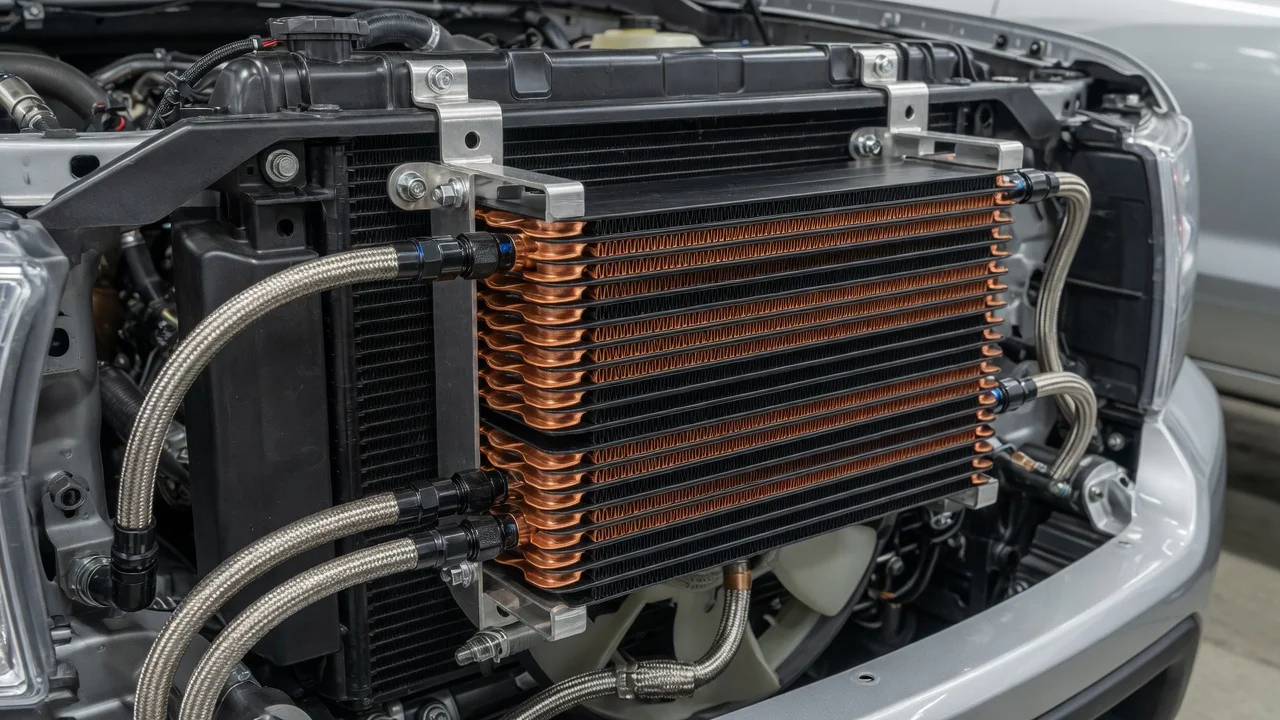
A Derale Performance transmission cooler can help an automatic transmission shed heat when you tow, haul or drive in stop-and-go traffic. It only helps if the model matches the vehicle, the fluid circuit and the way the vehicle is actually used. This guide covers how to narrow the choice, which specifications decide fitment, and when an auxiliary cooler is the wrong answer for a transmission problem.
Define the job the product must do
Start with the reason you want extra cooling. Heat is the main enemy of automatic transmission fluid. As temperature climbs, the fluid oxidizes faster, friction materials wear and seals harden. Towing a trailer, carrying heavy loads, climbing long grades, plowing or spending hours in slow traffic all push fluid temperatures up. A commuter car that never tows may gain little from an auxiliary cooler. A pickup pulling a camper through the mountains is the classic case for one.
Write down the vehicle year, make, model, engine and transmission type, and note what you tow and how often. Record the space available in front of the radiator or condenser, whether the vehicle already has a factory auxiliary cooler or tow package, and your own installation skill. Those answers decide whether you need a compact add-on unit, a larger cooler with more surface area, or a fan-equipped remote setup mounted elsewhere. If the transmission already slips, engages harshly or late, or has stored diagnostic codes, diagnose that first. A cooler protects a healthy unit, but it does not repair worn clutches, a failing solenoid or a faulty torque converter.
Check compatibility
Fitment is more than physical size. Measure the open area where the cooler will mount, and allow room for airflow and mounting hardware. Make sure the cooler will not block more of the radiator, A/C condenser or intercooler than necessary. Some coolers are sold as universal units with generic mounting hardware, and others come in application-specific kits. Go by the listed fitment and dimensions for your exact vehicle rather than judging from a product photo.
Next, check the line connections. Factory transmission cooler lines vary in diameter and fitting style. Coolers may use barbed hose ends or threaded fittings, such as AN or pipe threads. Match the cooler's inlet size to your lines and use hose rated for transmission fluid at the temperatures involved. On many vehicles the auxiliary cooler is plumbed in series after the factory heat exchanger in the radiator. Many newer transmissions use thermal bypass valves, fluid warmers or electronically managed cooling circuits, and some CVTs and dual-clutch units have their own requirements. On those, read the service information before cutting any lines, because bypassing a warm-up circuit can change shift behavior and fluid temperature control.
The cooler does not change the fluid specification. Keep using the fluid the transmission manufacturer specifies, and plan for the extra volume the cooler and new hoses will hold. Check the level with the factory procedure afterward. On many modern units that procedure requires a specific fluid temperature.
Features that affect the choice
Core design is the biggest functional difference between models. Tube-and-fin coolers are simple and inexpensive, and they suit lighter duty. Plate-and-fin and stacked-plate designs generally pack more internal surface area into a given size, so they are often chosen for towing and heavy work, though they usually cost more. Larger cores move more heat but need more frontal area and hold more fluid. When comparing a transmission cooler from Derale with others, check the capacity or rating stated in the listing, which is often expressed as gross vehicle weight or towing capacity. Choose with margin for your real use rather than the smallest unit that technically qualifies.
An electric fan kit helps when the cooler cannot sit in direct airflow or the vehicle spends long periods at low speed. A thermostat or temperature-controlled bypass keeps fluid from running too cool in winter. That matters in cold climates, because fluid that rarely reaches operating temperature can collect moisture and may affect how the transmission shifts. Treat labels such as heavy duty or maximum cooling as prompts to look for actual numbers: core dimensions, fitting size and the stated rating. A clear published spec tells you more than a superlative.
Limitations and ownership costs
Budget for more than the cooler. Depending on the kit, you may need extra hose, clamps or fittings, mounting hardware and fluid to top off. A transmission temperature gauge or a scan tool that reads fluid temperature lets you see whether the cooler is doing its job. Installation means opening the cooling lines, so expect some fluid loss and careful level checks afterward. Every added connection is a potential leak point. Inspect the hoses and clamps after the first few heat cycles and periodically after that, and keep the fins clear of bugs and debris.
An auxiliary cooler cannot fix a transmission that is already slipping, flaring between gears or setting codes, and it does not replace scheduled fluid and filter service. If the transmission has a history of overheating, check the fluid's condition and smell, inspect the filter where serviceable, and scan for stored codes before or alongside the upgrade. Repair options for an internal fault range from solenoid or valve body work to a rebuild, and the cooler then protects the repaired unit. Changes to factory cooling lines may also affect warranty coverage, so check your terms before installing.
Build a practical shortlist
Narrow the field with a short checklist rather than a ranking. For each candidate, confirm the following. It suits your vehicle and transmission type, or your measurements match its universal dimensions. Its core design and stated rating cover your heaviest towing or load. Its fitting style and size match your factory lines. Check whether a fan or thermostat is included or available, what mounting hardware comes in the box, and how the cooler will connect to any factory heat exchanger or thermal bypass.
Then weigh the choice against your service history and the transmission's current condition. The right candidate is a healthy transmission with fresh fluid of the correct specification. If you are unsure about plumbing on a late-model vehicle, have a transmission shop review the routing or do the install. That cost is small compared with replacing a transmission because a warm-up circuit was bypassed or a fitting leaked. Once those points are checked, the choice between two compatible Derale models usually comes down to available space, budget and how much margin you want for hard use.