DB Electrical Starters: Choosing a Compatible Replacement for Your Car
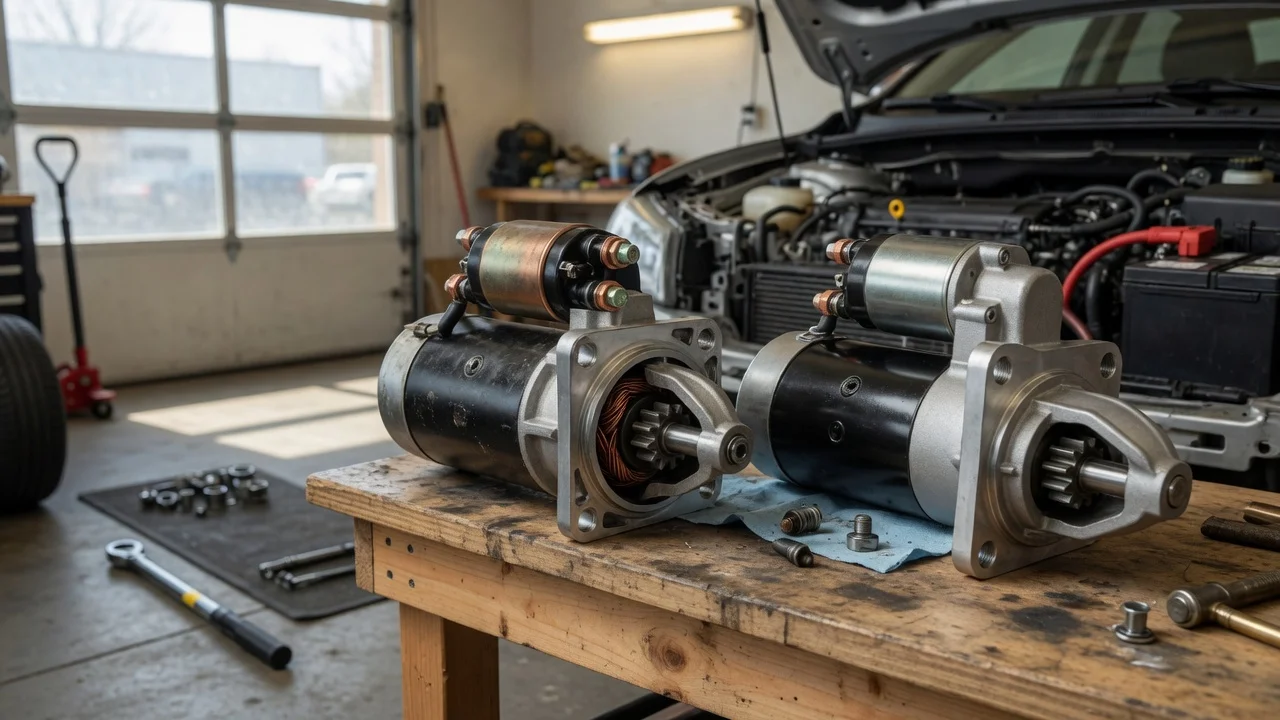
What a compatible replacement actually is
A DB Electrical starter is a suitable replacement when it matches the engine’s mounting flange, pinion gear, solenoid clocking and electrical terminals for your specific powertrain. Year, make and model alone do not settle the choice. The same vehicle line often uses different starters by engine code, transmission, production date and market, so a listing that names the car can still be wrong for the engine in it.
That answer changes if the no-start is not a failed starter. A weak battery, corroded cables, a failed ignition or neutral-safety switch, or a seized engine can mimic a dead starter. Replacing the motor will not restore cranking until those causes are ruled out. Without your vehicle’s year, market, trim, engine and transmission, no single DB Electrical part number can be named here.
Identify the starter you already have
The surest path is to match from the original unit or from a complete vehicle description, then look up the DB Electrical application against that identity. A VIN-based OEM number is stronger than a generic year-and-model search because it captures mid-year engine and transmission changes.
OEM or aftermarket part number stamped on the housing, solenoid or a tag; Model year, make, model and market, because regional engines and emissions packages can use different starters; Engine family, displacement, fuel type and engine code; Transmission type, including whether the vehicle is manual or automatic; Starter architecture marked on the unit, such as gear-reduction or direct-drive, when that marking is present
If the old starter is missing or the stamp is unreadable, have the original number pulled from a dealer or parts catalog using the VIN. Search DB Electrical listings by that number rather than by a broad body-style description.
Fitment details that decide compatibility
A catalog “fits” line can still leave you with a unit that bolts on poorly, grinds the ring gear, or will not connect. Compare the candidate starter with the original on every point below before you pay. Specifications only support a match when they refer to the same engine, transmission and market version.
Mounting flange shape, bolt count and bolt pattern; Pinion tooth count and pinion diameter, which must match the flywheel or flexplate ring gear; Nose-cone or drive-housing profile and how it registers in the bellhousing; Solenoid clock position: the angle of the solenoid relative to the mounting flange; Terminal layout: battery B+ post, solenoid trigger terminal and any ground stud; System voltage, which is 12 V on typical passenger cars and light trucks and 24 V on some commercial and agricultural equipment; Starter type, gear-reduction versus direct-drive, when the original design is known
If any of those differ, the unit may appear to fit in a photo and still fail to engage, sit at the wrong depth, or leave the battery cable short or fouled on the exhaust. Clocking errors are a frequent aftermarket miss: the motor may bolt up while the solenoid points at a crossmember, oil pan or steering component.
Confirm the starter is the real problem
Buy a starter only after the cranking circuit has been checked. Several faults produce a slow or silent crank and will waste a new motor if they are ignored.
Battery state of charge and a load test; a weak battery is the most common false starter failure; Clean, tight positive cables and engine grounds, including voltage drop on both the feed and the ground path; Clutch, park/neutral or security interlocks that never send the start signal to the solenoid; A single click with a sound battery and cables, which points more toward the solenoid or motor, versus rapid clicking, which points back to voltage supply; An engine that will not turn by hand or is hydrolocked, which can stall and overheat a good starter
What to check before you commit to a purchase
Suitability for the intended engine comes first, then the condition of the unit and listing, then the full cost of diagnosis, the part, and installation. Advertised prices are not completed invoices: they often omit shipping, tax, core charges, fluids, related parts and labor, and they change by seller, date and currency. No street price is quoted here because those figures are not established for a specific market and date.
Application text that names your exact engine and transmission, not only the body style or a range of years; A cross-reference to the OEM starter number you recorded; Whether the unit is sold as new or remanufactured, and whether a core return is required; Return policy if clocking, tooth count or terminals are wrong on arrival; many starters cannot be returned after they have been installed or have had cables attached; Whether bolts, heat shields, dust covers and the battery cable are reused from the original install; Access and labor: some starters unbolt from below in a straightforward job, while others sit under intake, exhaust or subframe parts that dominate the bill; Warranty terms in writing, including what is covered and whether labor is included; Ring-gear condition on the flywheel or flexplate; a chipped or worn ring gear will destroy a new pinion
If the listing cannot confirm tooth count, clocking and terminal layout against your original, treat it as unverified. A lower purchase price does not offset a second order, a damaged ring gear, or shop time spent correcting a mismatch.
Installation and ownership trade-offs
An aftermarket starter is a practical route when the original unit is discontinued, slow to obtain, or priced far above a correctly matched replacement. The trade-off is that you, or the installer, must verify fitment. An OEM unit usually matches clocking and connectors with less interpretation. A mismatched aftermarket unit that needs another shipment, a modified cable or ring-gear work becomes the more expensive path even if the box price looked lower.
If you are fitting the starter yourself, disconnect the battery, support the vehicle securely, and note cable routing and heat-shield position before the old unit comes out. Compare the new and old starters side by side on flange, pinion, solenoid angle and terminals before the new unit is raised into the bellhousing. Do not force a pinion that will not mesh, and do not omit a heat shield that was on the original if the starter sits near an exhaust manifold.
What still has to be filled in
A correct DB Electrical part number depends on model year, market, trim, engine and transmission, and on the starter already fitted. Those identifiers are not in the query, so this article does not assign a SKU, tooth count, output rating or price. Take the OEM number and the fitment checklist to a listing and reject any unit that disagrees on mounting, pinion or clocking. If those details still conflict across catalogs, resolve the difference against the physical original or a VIN-based OEM record before you order.