Damaged Inner CV Joint Symptoms: What You Need to Know
What is the direct answer to my question?
A damaged inner constant velocity (CV) joint typically produces a vibration or shudder that is felt through the vehicle during acceleration, especially when turning from a stop or when the suspension is compressed. Unlike a failed outer CV joint, which usually makes a rhythmic clicking or popping sound during sharp turns, an inner CV joint failure often shows up first as a shake under load. The inner joint connects the driveshaft to the transaxle or differential, and its wear can also cause clunking when shifting from Park to Drive or Reverse, or a heavy vibration at highway speeds. The exact symptom depends on the vehicle configuration and how the joint has worn.
What could explain this result, and what check would distinguish the causes?
A vibration under acceleration has several possible causes, so separating observations is important before replacing the inner CV joint. Worn engine or transmission mounts can allow the powertrain to move and produce a similar shudder under load, while a failing inner joint creates a vibration that is more consistent with driveshaft rotation rather than engine firing. A bent axle shaft or an out-of-balance tire can also cause a speed-related vibration, but a damaged inner joint commonly becomes most noticeable during hard acceleration from low speed or when climbing a hill.
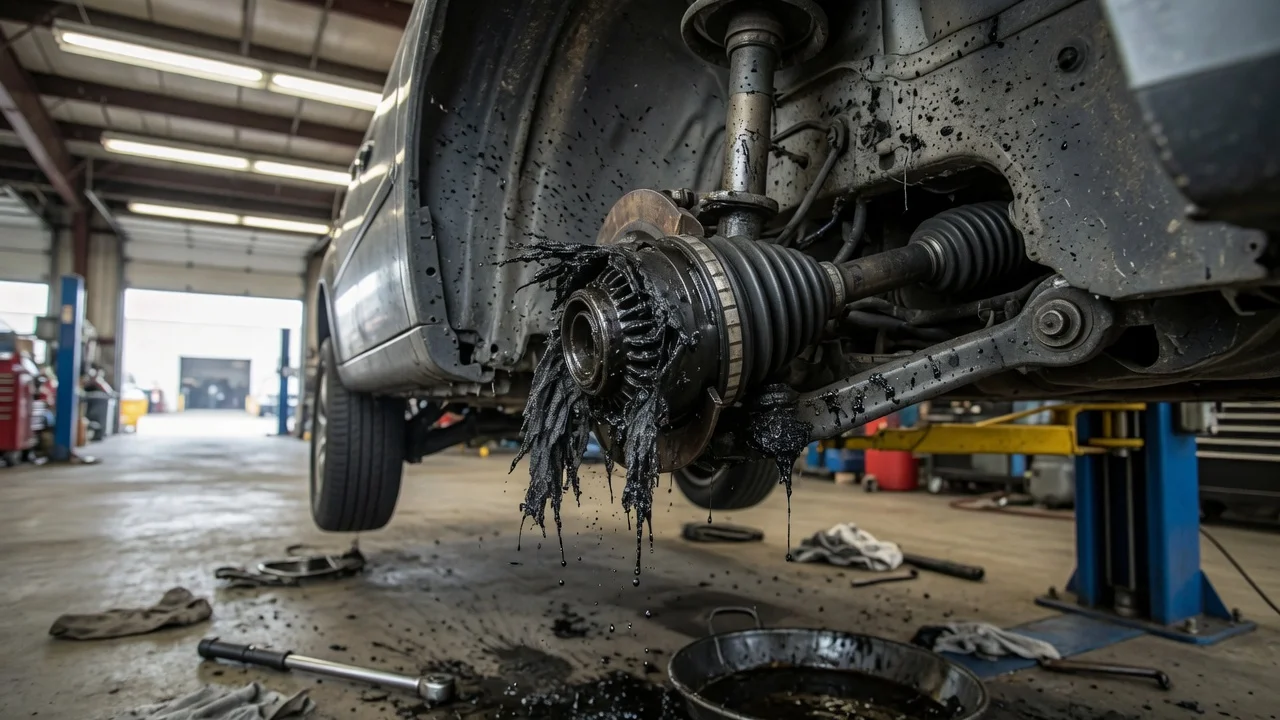
A practical sequence of checks helps distinguish these causes. First, inspect the inner CV joint boot for tears, splits, or grease leakage. A torn boot allows dirt and moisture to enter, which is a primary cause of inner joint wear. If the boot is intact but the joint is noisy, the damage may have started from internal wear or a lack of lubrication. Second, observe when the vibration occurs. Accelerate gently on a straight, empty road, then accelerate harder. If the shudder is strongest under load and fades when you lift off the throttle, the inner joint is suspect. If the vibration continues at a steady speed regardless of throttle position, check tire balance and axle straightness first.
Third, check for play in the joint. With the vehicle safely supported and the transmission in Neutral, grasp the driveshaft near the inner joint and try to move it up and down, side to side, and in and out. A small amount of movement is normal for a plunge-type inner joint, but a loose, clunky feel or excessive radial play indicates wear. Compare the feel to the opposite side if possible. A clunk when shifting from Park to Drive or Reverse can also point to a damaged inner joint, but automatic transmission fluid level and engine or transmission mount condition should be verified first because low fluid or a failed mount can produce the same clunk.
A diagnostic trouble code alone is not proof that an inner CV joint needs replacement. Most inner CV joint failures do not set a fault code because the joint is a mechanical component without electronic monitoring. If a code appears for a wheel speed sensor or traction control issue, the cause may be a damaged tone ring on the outer joint or a wiring fault, not the inner joint itself. In that case, inspect the reluctor ring and sensor wiring before condemning the driveshaft. The operating conditions required to interpret any code should match the manufacturer's test criteria for the specific vehicle.
When to suspect the inner joint over other parts
The inner CV joint is typically a plunge joint, meaning it allows the driveshaft to change length slightly as the suspension moves. This makes it sensitive to angular misalignment and axial movement. Vehicles with higher mileage, lifted suspensions, or frequent hard acceleration are more likely to show inner joint wear. Front-wheel-drive cars and all-wheel-drive vehicles with independent rear suspension can both have inner joints, though the location and design vary.
If the symptom is a sharp clicking noise during low-speed turns, that points to the outer CV joint rather than the inner. If the symptom is a steady thrum or vibration that increases with speed and does not change with throttle, check the wheels, tires, and wheel bearings. If the symptom is a shudder that is worst only under hard acceleration and the inner boot is torn or has leaked grease, the inner CV joint is the primary suspect. Replacing the boot alone is not sufficient once the joint has been run contaminated; the joint internals may already be scored.
Practical next step
Because inner CV joint damage can progress to a complete joint separation, which would strand the vehicle, address a confirmed torn boot or persistent load-related shudder promptly. If you are unsure whether the inner joint or a mount is causing the symptom, have the driveshaft inspected on a lift where the joint can be articulated and felt for roughness or excessive clearance. Replacement driveshafts are often the most practical repair because rebuilding an inner joint requires specialty tools and clean conditions. The exact part and procedure depend on the model year, engine, and market configuration, so verify fitment before purchase.